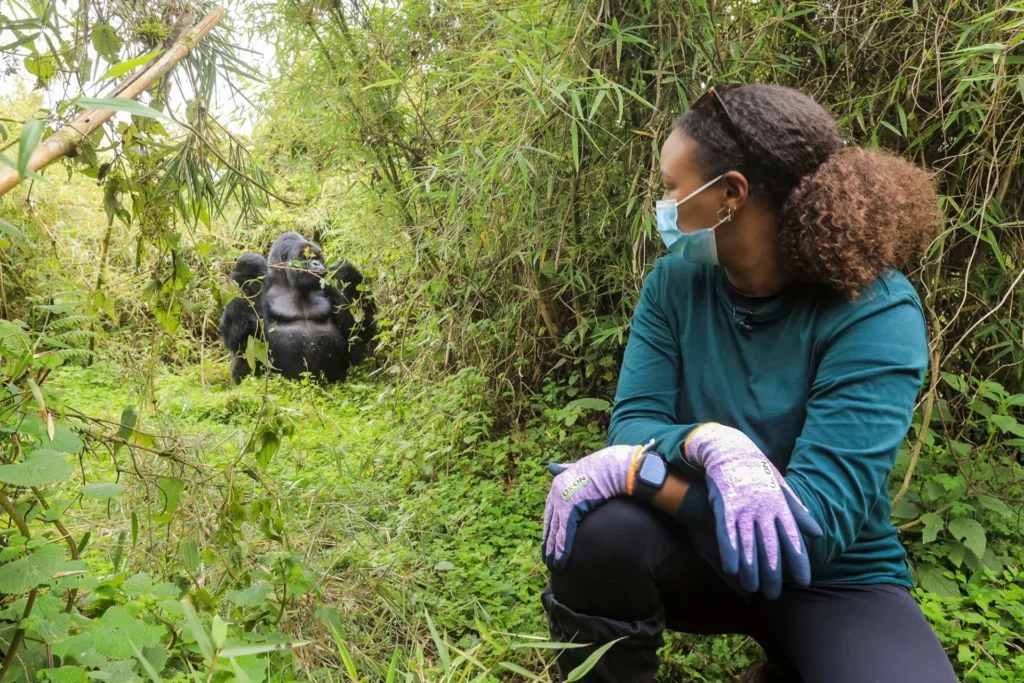
1 Day Bwindi Gorilla Trek
A one-day mountain gorilla trek in Bwindi for travellers who are already in southwestern Uganda.
View SafariHandpicked Kenya Safari Tours for Every Traveler
The diversity of wildlife experiences in Rwanda is one of the country's greatest attractions.
Rwanda lies within a region where several important African ecosystems meet. Its elevation changes from relatively low eastern savannah to high volcanic mountains, producing substantial differences in vegetation, rainfall and animal habitats.
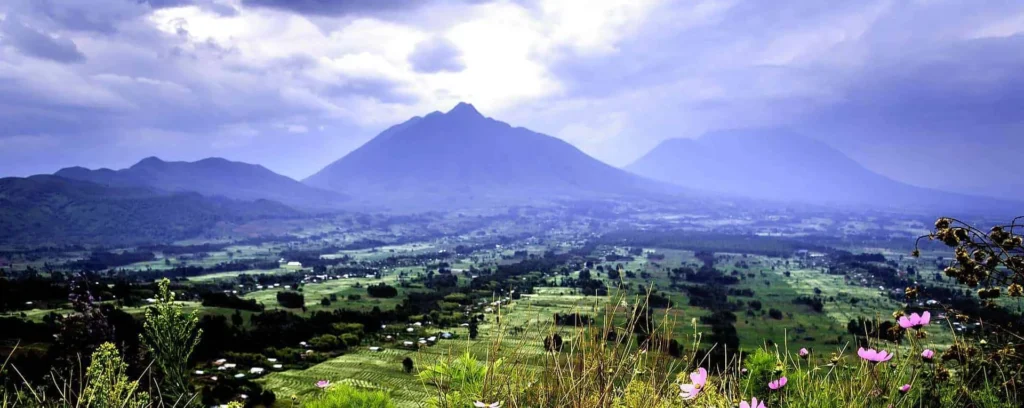
In the east, Akagera's grasslands, woodland and wetlands support large mammals traditionally associated with African safaris. In the northwest, the Virunga Mountains provide habitat for specialised high-altitude wildlife, including mountain gorillas. Southwestern Rwanda contains extensive montane rainforest, where chimpanzees, forest monkeys and numerous bird species live among dense vegetation.
This ecological variety allows travellers to experience different forms of wildlife observation during one holiday. A gorilla encounter may involve walking through bamboo forest, while a lion sighting in Akagera may take place from a vehicle overlooking open grassland.
The experience also reflects Rwanda's investment in conservation, protected-area management and wildlife restoration. Tourism supports these efforts through regulated access, park revenue and employment opportunities, although visitor behaviour remains essential to protecting sensitive habitats.
Showing 1–12 of 222 safaris
A one-day mountain gorilla trek in Bwindi for travellers who are already in southwestern Uganda.
View SafariA single day in Kampala for the kasubi and palace area, a cultural show, and a market or…
View SafariA full day in Kigali covering the Genocide Memorial, a neighborhood market, and one or two museums.
View SafariA single day on Mount Bisoke, with the crater lake as the turnaround point.
View SafariThe 1 Day Rwanda Family Safari offers an exciting and educational wildlife adventure for families visiting Rwanda.
View SafariThe 3 Day Rwanda Gorilla and Akagera Safari combines mountain gorilla trekking in Volcanoes National Park with wildlife…
View SafariThe 4 Day Rwanda Gorilla and Nyungwe Safari combines mountain gorilla trekking in Volcanoes National Park with chimpanzee…
View SafariThe 1 Day Rwanda Gorilla Trekking Safari offers an unforgettable opportunity to encounter endangered mountain gorillas in their…
View SafariThe 1 Day Rwanda Honeymoon Safari offers couples a romantic escape to the beautiful shores of Lake Kivu,…
View SafariThe 1 Day Rwanda Luxury Safari offers an exclusive wildlife experience in Akagera National Park, Rwanda's premier Big…
View SafariThe 1 Day Rwanda Primates Safari offers an exciting opportunity to encounter Rwanda's endangered golden monkeys in the…
View SafariThe 1 Day Rwanda Wildlife Safari offers an exciting opportunity to explore Akagera National Park, Rwanda's premier savannah…
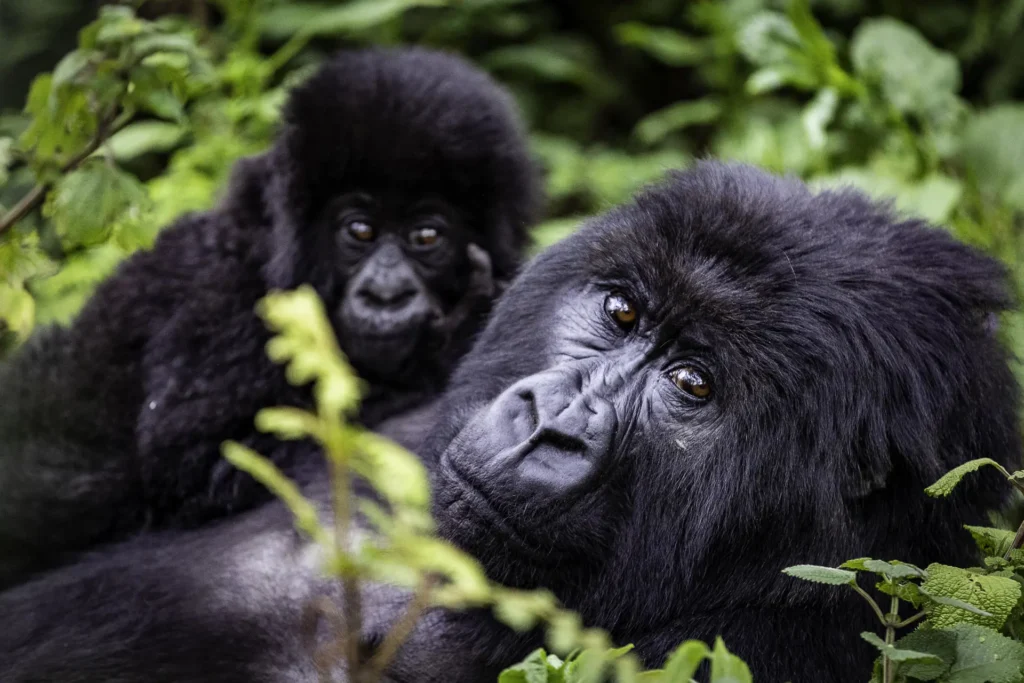
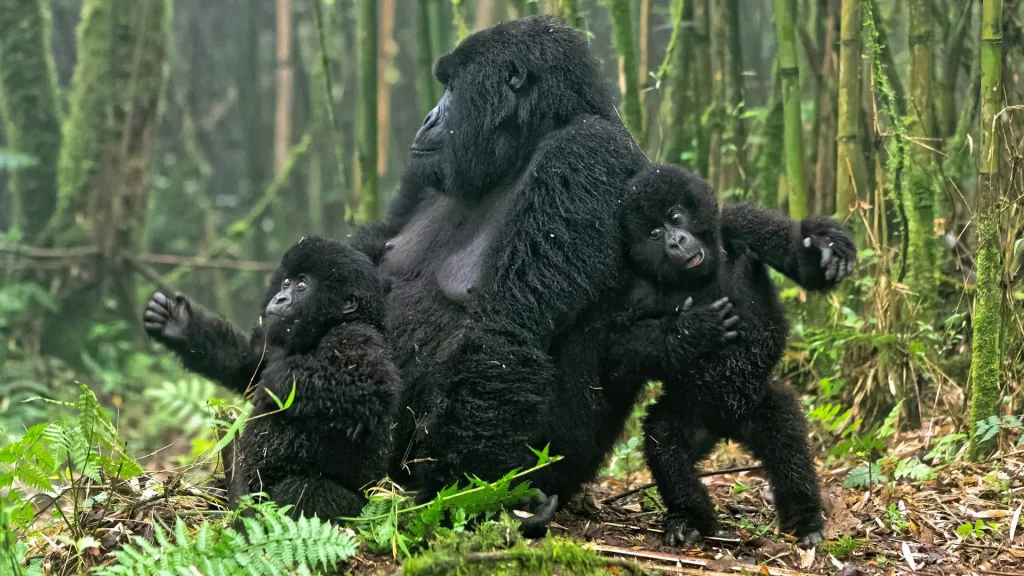
View SafariThe mountain gorilla is Rwanda's most internationally recognised wildlife species. These powerful great apes inhabit the Virunga mountain forests, where they live in social groups led or influenced by mature males known as silverbacks.
Mountain gorilla trekking in Rwanda takes place in Volcanoes National Park. Visitors join professional park guides and trackers to locate a habituated gorilla family, following established conservation rules.
Mountain gorillas are a subspecies of eastern gorilla, scientifically classified as Gorilla beringei beringei. They have thick fur adapted to cooler mountain conditions and are primarily herbivorous, feeding on leaves, stems, shoots and other vegetation.
Their social lives are especially fascinating. A family group may include a dominant silverback, other mature males, adult females, juveniles and infants. Visitors may observe feeding, grooming, resting and playful behaviour, providing insight into the relationships that hold the group together.
Unlike animals observed from safari vehicles, mountain gorillas are encountered within their forest environment. The vegetation, altitude and walking conditions form an integral part of the experience.
A regulated Rwanda gorilla trekking experience begins with an early briefing, followed by a guided forest walk. Trackers monitor habituated groups, but the gorillas move freely, so the time required to find them varies.
Once the gorillas are located, visitors generally have up to one hour to observe them. Guides control the encounter and explain appropriate behaviour.
Wildlife sightings cannot be guaranteed because the gorillas remain wild. Visitors must maintain the distance required by park authorities, avoid flash photography and follow health precautions designed to reduce disease transmission.
Mountain gorillas have faced serious threats from habitat loss, disease, poaching-related hazards and human pressure around their limited habitat. Their conservation depends on sustained protection across the wider Virunga landscape and Bwindi ecosystem.
Responsible gorilla tourism helps fund protected-area management and creates economic opportunities for surrounding communities. However, the animals' welfare must remain more important than photographic opportunities or visitor expectations.
Golden monkeys in Rwanda are another distinctive wildlife attraction in Volcanoes National Park. These primates are recognisable by their golden-orange colouring and lively behaviour.
They are associated with the Virunga ecosystem and frequently use bamboo-rich habitats. Their movements can be rapid and energetic, making them especially interesting to observe.
Golden monkey trekking involves a guided walk to locate habituated groups. Visitors may observe monkeys feeding on bamboo, moving between vegetation and interacting with one another.
The activity differs considerably from gorilla trekking. Golden monkeys are smaller, more active and often occur in larger visible groups. Photography can be challenging because they move quickly through shaded vegetation.
A separate permit or activity booking is generally required. Travellers should verify current age requirements, fees and park procedures before arranging the experience.
Golden monkeys are part of the Virunga region's specialised biodiversity. Protecting their habitat also benefits other species dependent on mountain forests and bamboo vegetation.
Their presence demonstrates why Volcanoes National Park wildlife should not be understood exclusively in terms of gorillas.
Chimpanzee tracking in Rwanda is principally associated with Nyungwe National Park, one of Africa's important montane rainforest ecosystems.
Chimpanzees are highly intelligent and socially complex primates. They live in communities with changing subgroups, communicate through vocalisations and gestures, and travel through large areas of forest.
Chimpanzees generally move faster than gorillas and spend considerable time in trees. They may travel through the canopy, feed in fruiting trees or communicate from different parts of the forest.
This means that chimpanzee tracking in Nyungwe can involve more movement and less predictable viewing conditions than observing a relatively settled gorilla family.
Visitors may hear loud calls before seeing any animals. Dense vegetation and forest lighting can also make photography challenging.
Chimpanzee tracking activities often begin early in the morning. Accommodation location and travel time to the designated starting point are therefore important.
Visitors should be prepared for uneven forest trails, changing weather and walking distances that depend on chimpanzee movements.
A confirmed activity booking does not guarantee that chimpanzees will remain visible for a particular duration.
Rwanda's forests support a wider variety of primates beyond mountain gorillas, chimpanzees and golden monkeys.
Black-and-white colobus monkeys are among the most visually striking forest primates, recognised by their contrasting coats and long tails. Nyungwe is particularly known for colobus monkeys, which may form large groups.
L'Hoest's monkeys are another important montane forest species. Their darker colouring and distinctive white throat markings make them recognisable to experienced guides.
Blue monkeys, vervet monkeys and other primates inhabit different habitats across Rwanda.
The presence and visibility of each species depend on the park, vegetation, time of day and animal behaviour. Visitors interested in specialist primate photography should discuss target species with a knowledgeable guide rather than assuming that every monkey can be encountered during one walk.
Akagera National Park provides Rwanda's principal traditional savannah safari experience. Its varied landscapes include grasslands, woodland, wetlands, lakes and rolling hills.
The park supports the Big Five: lion, leopard, elephant, buffalo and rhinoceros. It also contains numerous other mammals, birds and reptiles.
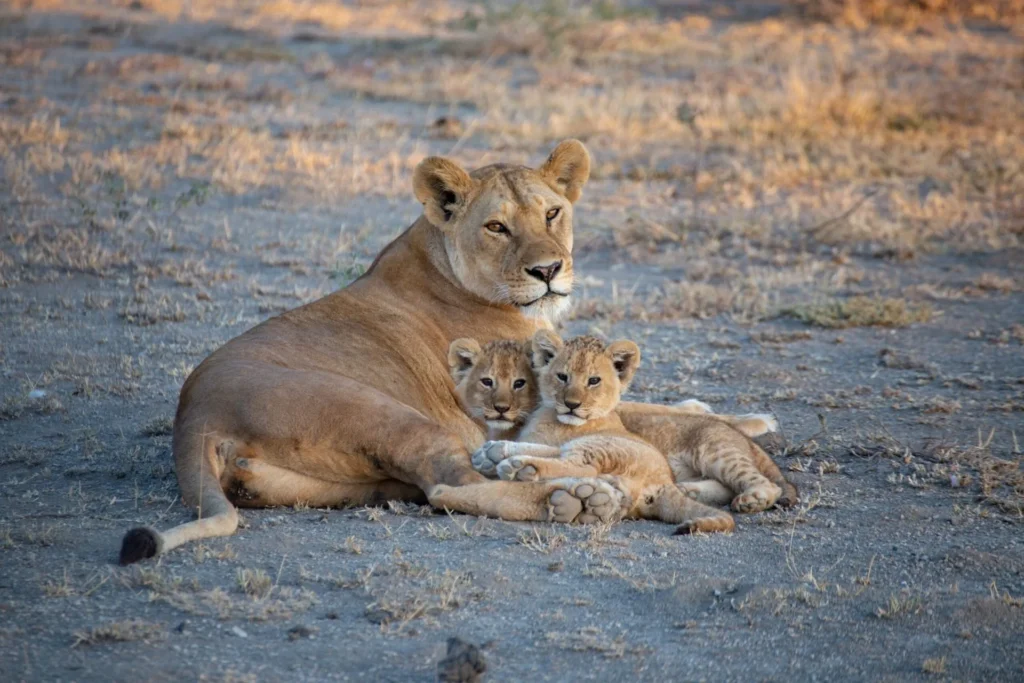
Lions in Rwanda are an important part of Akagera's conservation recovery. The species was reintroduced to the park in 2015 after an absence.
Lions may be encountered resting in grassland, moving through woodland or searching for prey. They are wild predators with large territories, so sightings are not guaranteed.
Visitors should remain in vehicles where required and never attempt to attract or approach predators.
Akagera is also important for the restoration of rhinoceroses in Rwanda. Eastern black rhinoceroses were reintroduced in 2017, while southern white rhinoceroses were introduced subsequently.
The two species differ in feeding ecology and behaviour. Black rhinoceroses are primarily browsers, feeding on shrubs and woody vegetation, whereas white rhinoceroses are predominantly grazers.
Rhinoceroses can be difficult to locate because they move through large areas of habitat. Their protection requires intensive monitoring and security.
African elephants are among Akagera's most impressive mammals. Visitors may encounter individuals or family groups near grassland, woodland and wetland areas.
Elephants play an important ecological role by influencing vegetation structure, dispersing seeds and creating pathways through habitats.
Observing elephants responsibly requires maintaining appropriate distance, particularly around calves or animals displaying signs of agitation.
African buffaloes are substantial herd animals and an important part of Akagera's savannah ecosystem.
They may be observed grazing, resting or moving between feeding and watering areas. Large herds can create memorable photographic opportunities.
Buffaloes should never be approached on foot without authorised guidance.
Leopards in Akagera are elusive predators that often use woodland, thickets and other areas offering cover.
Their secretive behaviour means that sightings are less predictable than those of many herbivores.
Experienced guides may recognise tracks, territorial signs or suitable habitats, but no operator can promise a leopard encounter.
Beyond the Big Five, Akagera offers opportunities to observe several classic African savannah species.
Giraffes are particularly recognisable for their height, patterned coats and browsing behaviour. They feed on leaves from trees and shrubs, often moving slowly through woodland and open habitats.
Zebras occur in open and mixed savannah landscapes. Their social behaviour, group movements and contrasting stripes make them attractive subjects for photography.
Antelope species include impala, topi, waterbuck, bushbuck, reedbuck and others associated with different habitats.
The diversity of herbivores is important because these animals form part of the food web supporting predators and scavengers.
Akagera's lakes and wetlands support important populations of aquatic and semi-aquatic wildlife.
Hippopotamuses spend much of the day in water and may become more active on land during cooler periods. Despite their appearance, they are powerful wild animals requiring considerable caution.
Nile crocodiles inhabit suitable aquatic environments and may be seen resting near water or moving through lake habitats.
A Lake Ihema boat safari offers an opportunity to observe wildlife from the water under controlled conditions.
Boat excursions can be especially rewarding for viewing hippos, crocodiles and waterbirds. They also reveal the relationship between aquatic habitats and the surrounding savannah.
Visitors should use authorised boats, follow safety instructions and avoid disturbing wildlife.
Birdwatching in Rwanda is a major attraction for specialist naturalists and general wildlife enthusiasts.
The country's bird habitats include montane rainforest, bamboo forest, highland vegetation, savannah, woodland, lakes and papyrus wetlands.
Nyungwe birdwatching is particularly important for species associated with the Albertine Rift.
Dense vegetation makes bird identification challenging, but experienced guides can help visitors recognise calls, feeding behaviour and preferred habitats.
Forest birdwatching often requires patience and a slower walking pace than ordinary sightseeing.
Akagera supports raptors, waterbirds, woodland birds and species associated with open grassland.
The park's lakes and wetlands are especially attractive for observing herons, kingfishers, cormorants and other aquatic birds.
Some specialist birdwatchers also search for elusive wetland species, although their presence does not guarantee a sighting.
The Virunga Mountains support birds adapted to high-altitude and forest environments.
Birding excursions can complement gorilla trekking, particularly for visitors who want to understand the broader biodiversity of the park.
Gishwati-Mukura National Park protects two forest areas in western Rwanda and represents an important conservation and habitat-restoration landscape.
The park supports several primate species, forest birds and other wildlife associated with montane vegetation.
Its significance lies not only in the animals present but also in the wider effort to protect and reconnect forest ecosystems affected by historical habitat loss.
Travellers interested in Rwanda conservation tourism may find this destination particularly meaningful.
However, visitor access, available activities and the feasibility of observing particular species should be checked in advance. The presence of chimpanzees does not necessarily mean that the park offers the same established tourist tracking arrangements as Nyungwe.
Rwanda wildlife photography presents different challenges in each ecosystem.
In Volcanoes and Nyungwe, photographers must manage low light, dense vegetation, rain and unpredictable animal movement. In Akagera, longer viewing distances, open landscapes and changing light conditions are often more important.
Gorilla photography benefits from equipment that performs well in shaded forest conditions. Flash is not permitted, and photographers must follow ranger instructions at all times.
The observation period is limited, so visitors should prepare equipment before reaching the gorillas.
Akagera provides opportunities for photographing mammals in open habitats. A suitable telephoto lens can help capture animals without approaching too closely.
Early morning and late afternoon light may create attractive conditions, although weather and animal movements remain unpredictable.
Bird photography generally requires patience, appropriate lenses and knowledge of animal behaviour.
A specialist birding guide can improve the chances of finding suitable habitats while minimising disturbance.
Wildlife viewing in Rwanda is possible throughout the year, but conditions differ between destinations.
The relatively drier periods from June to September and December to February are popular for gorilla trekking and outdoor activities.
Rainforest wildlife remains present throughout the year, although heavy rainfall can make forest trails more difficult.
In Akagera, vegetation, water availability and seasonal conditions influence animal movements and visibility.
Birdwatching interests may also be affected by breeding activity and migratory species.
The best travel period therefore depends on whether the priority is gorillas, chimpanzees, savannah mammals, birdlife or photography.
Responsible behaviour is essential to protecting Rwanda's wildlife and national parks.
Visitors should follow park rules, maintain appropriate distances, avoid feeding animals and never leave litter in protected habitats.
Disease prevention is especially important during great ape tourism because gorillas and chimpanzees are vulnerable to some human illnesses.
Tourism also has an economic dimension. Local guides, porters, accommodation staff and community enterprises can benefit from well-managed visitor activity.
Choosing responsible operators and respecting wildlife regulations helps ensure that tourism supports conservation rather than creating additional pressure.
Rwanda supports mountain gorillas, chimpanzees, golden monkeys, lions, leopards, elephants, buffaloes, rhinoceroses, giraffes, zebras, antelope, hippos, crocodiles and numerous bird species.
Volcanoes National Park is Rwanda's established mountain gorilla trekking destination.
Yes. Akagera National Park supports all five Big Five species, although individual sightings cannot be guaranteed.
Nyungwe National Park is Rwanda's principal established chimpanzee tracking destination.
Some game drives and nature activities are suitable for families, but primate tracking experiences have specific age restrictions.
Yes, by visiting both Volcanoes National Park and Akagera National Park, with sufficient time for travel and activities.
No. Animals move freely within their habitats, and sightings depend on natural conditions.
Yes. Its combination of rainforest, highland, savannah and wetland habitats provides excellent opportunities for birdwatchers.
Photography is generally permitted subject to park rules. Flash photography is prohibited during gorilla encounters, and special commercial filming requirements may apply.
Follow ranger instructions, respect wildlife distances, choose reputable guides and avoid activities that disturb animals or damage habitats.
At Gorilla Rwanda Safaris, we help travellers discover the diversity of wildlife experiences in Rwanda, from mountain gorillas and chimpanzees to Big Five mammals, rare primates and forest birds.
Our team can advise on the most suitable national parks, wildlife activities, guiding arrangements and travel seasons for your interests.
Contact us to plan a responsible Rwanda wildlife safari that prioritises meaningful encounters, conservation awareness and time spent appreciating the country's remarkable ecosystems.