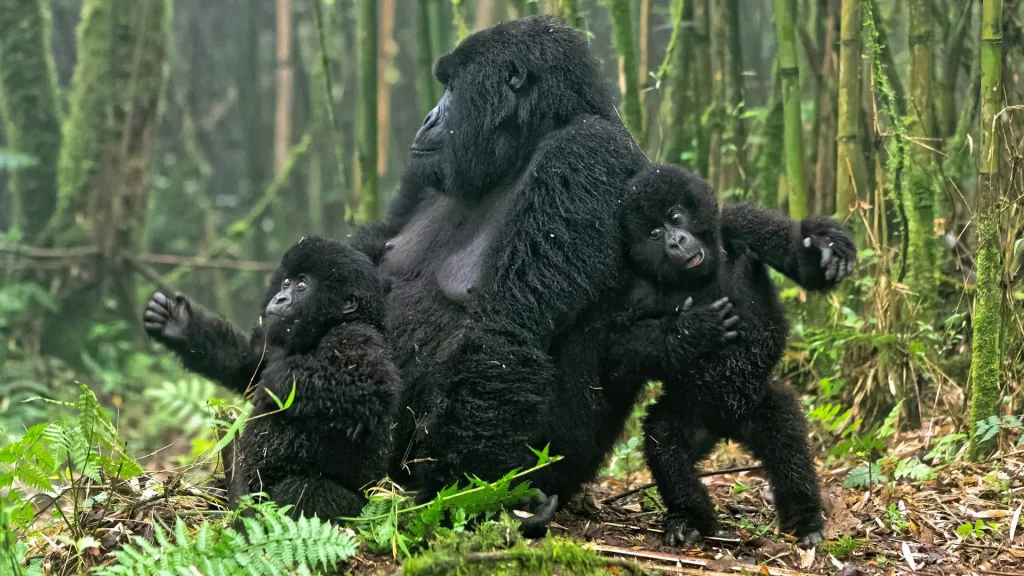

1 Day Bwindi Gorilla Trek
A one-day mountain gorilla trek in Bwindi for travellers who are already in southwestern Uganda.
View SafariHandpicked Kenya Safari Tours for Every Traveler
Understanding safari seasons in Rwanda is essential when planning a wildlife holiday, especially if your interests include mountain gorilla trekking, chimpanzee tracking, Big Five game drives, rainforest hiking or birdwatching.
Rwanda lies close to the equator, but its high elevation moderates temperatures across much of the country.
The country is often described as the Land of a Thousand Hills, reflecting its mountainous and undulating landscape.
Altitude, rainfall and local geography create different climatic conditions.
The main relatively dry period generally extends from June to September.
This is one of the most popular times for gorilla trekking and outdoor travel.
Rain remains possible, particularly in mountain and rainforest environments.
A second relatively dry period generally occurs from December to February.
This can be a favourable time for trekking, wildlife viewing and sightseeing.
The principal rainy period generally occurs from March to May.
Rainfall can be substantial, especially in forested highland areas.
A shorter rainy period generally occurs around October and November.
The intensity and timing of rainfall vary between years and locations.
Weather does not follow fixed calendar boundaries.
Rain may fall during the dry season, and sunny days are possible during wetter months.
Travellers should treat seasonal descriptions as planning guidance rather than precise forecasts.
Showing 1–12 of 216 safaris
A one-day mountain gorilla trek in Bwindi for travellers who are already in southwestern Uganda.
View SafariA single day in Kampala for the kasubi and palace area, a cultural show, and a market or…
View SafariA full day in Kigali covering the Genocide Memorial, a neighborhood market, and one or two museums.
View SafariA single day on Mount Bisoke, with the crater lake as the turnaround point.
View SafariThe 1 Day Rwanda Family Safari offers an exciting and educational wildlife adventure for families visiting Rwanda.
View SafariThe 3 Day Rwanda Gorilla and Akagera Safari combines mountain gorilla trekking in Volcanoes National Park with wildlife…
View SafariThe 4 Day Rwanda Gorilla and Nyungwe Safari combines mountain gorilla trekking in Volcanoes National Park with chimpanzee…
View SafariThe 1 Day Rwanda Gorilla Trekking Safari offers an unforgettable opportunity to encounter endangered mountain gorillas in their…
View SafariThe 1 Day Rwanda Honeymoon Safari offers couples a romantic escape to the beautiful shores of Lake Kivu,…
View SafariThe 1 Day Rwanda Luxury Safari offers an exclusive wildlife experience in Akagera National Park, Rwanda's premier Big…
View SafariThe 1 Day Rwanda Primates Safari offers an exciting opportunity to encounter Rwanda's endangered golden monkeys in the…
View SafariThe 1 Day Rwanda Wildlife Safari offers an exciting opportunity to explore Akagera National Park, Rwanda's premier savannah…
View SafariGorilla trekking in Rwanda is available throughout the year, subject to park operations and permit availability. Our best time for gorilla trekking in Rwanda page covers this topic in more depth.
The experience takes place in Volcanoes National Park, where mountain gorillas inhabit forested volcanic slopes.
Relatively dry conditions can make trails less muddy.
This may improve walking comfort, particularly on steep slopes.
However, gorilla trekking remains physically demanding because the animals move freely and may be located far from the starting point.
The rainy season can bring slippery paths, wet vegetation and challenging walking conditions.
Visitors should prepare with waterproof clothing and sturdy footwear.
Nevertheless, gorilla encounters remain possible.
Mountain gorillas do not disappear during the rainy season.
Their movements depend on feeding, habitat and other natural factors.
Trackers work to locate habituated groups throughout the year.
No single month guarantees easier trekking or better sightings.
The most suitable period depends on weather preferences, fitness, availability and budget.
The June to September dry season is particularly popular among international travellers.
These months often provide relatively favourable outdoor conditions.
June generally marks the transition towards drier weather.
Forest trails may become less muddy as rainfall decreases.
July is a popular month for gorilla trekking.
Accommodation and permit demand can be high.
August often offers relatively dry conditions.
Travellers should book early when dates are fixed.
September can remain favourable for outdoor activities, although rainfall may increase towards the end of the month.
The December to February period provides another popular travel window.
December can be attractive for holiday travellers.
Demand around Christmas and New Year may affect accommodation availability.
January often offers relatively favourable conditions for trekking and sightseeing.
February can provide comfortable opportunities for outdoor travel, although rainfall remains possible.
Popular accommodation and gorilla permits should be reserved in advance.
The March to May rainy season brings increased rainfall to many parts of Rwanda.
March often marks the beginning of wetter conditions.
Forest trails may become more challenging.
April is generally among the wetter months in many parts of Rwanda.
Visitors should prepare for muddy paths and rain.
Rainfall may remain substantial, although conditions can improve towards the end of the month.
Forests are lush and green.
Photographers may appreciate dramatic cloud formations and misty mountain scenery.
Some accommodation properties may offer seasonal rates, although this is not guaranteed.
Trekking may require more physical effort.
Rain can affect visibility, comfort and outdoor schedules.
October and November generally fall within Rwanda's shorter rainy period.
Rainfall may increase following the relatively dry months.
The landscape often becomes greener.
November can be wet, particularly in forested areas.
Visitor demand may differ from peak dry-season periods.
Waterproof equipment and flexible expectations are important.
Akagera National Park offers Rwanda's principal savannah wildlife experience.
The park supports the Big Five and numerous other species.
Seasonal conditions influence vegetation, road access and animal movements.
Relatively dry weather can improve visibility in some areas because vegetation may be less dense.
Animals may concentrate around suitable water sources, although this varies.
Rain produces green landscapes and may influence animal distribution.
Some roads can become more challenging.
Akagera's wildlife is resident.
There is no equivalent of the large seasonal wildebeest migration associated with the Serengeti-Mara ecosystem.
Visitors can enjoy game drives throughout the year.
The number and duration of game drives can influence the overall experience as much as the season.
A longer stay provides more opportunities to explore different habitats.
Lions inhabit Akagera throughout the year.
Their movements depend on prey, temperature and other factors.
Morning and late afternoon drives may provide opportunities to observe active animals.
However, lions can rest for long periods and may be difficult to locate.
No season guarantees sightings.
Akagera supports eastern black and southern white rhinoceroses.
Their visibility depends on habitat use, movements and the areas accessible to visitors.
Rhino sightings cannot be guaranteed during any month.
Travellers should avoid selecting dates based on promises of particular encounters.
Chimpanzee trekking in Nyungwe Forest is influenced by rainfall, terrain and chimpanzee movements.
Nyungwe is a montane rainforest, so wet conditions can occur throughout the year.
Relatively dry periods may make some forest trails more manageable.
Wet conditions can make walking more difficult.
Chimpanzees move through the forest according to food availability and social behaviour.
They may travel quickly or remain in the canopy.
Chimpanzee sightings are not guaranteed.
The experience depends on the animals' movements and tracking conditions.
Golden monkey trekking in Volcanoes National Park is available according to official park arrangements.
The relatively drier periods may provide more comfortable walking conditions.
However, golden monkeys inhabit the region throughout the year.
Their movements are influenced by feeding and habitat conditions rather than a fixed tourist season.
Nyungwe offers guided nature walks, birdwatching and the canopy walkway.
Relatively dry conditions may make trails easier to navigate.
Rain can make slopes slippery and increase the physical demands.
Rainfall may influence water levels and the appearance of waterfalls.
Operations can be affected by weather and safety considerations.
Travellers should confirm activity arrangements before departure.
Rwanda birdwatching can be rewarding throughout the year.
The country's habitats include rainforest, savannah, wetlands and highland forest.
Nyungwe is particularly important for forest birds and Albertine Rift species.
Akagera offers wetland, grassland and woodland birdwatching.
Some migratory species are present during particular periods of the year.
Bird behaviour can change with rainfall and breeding cycles.
Dedicated birdwatchers should plan around target species and seek guidance from experienced local bird guides.
Lake Kivu provides opportunities for relaxation, kayaking, boat excursions and lakeside sightseeing.
Relatively dry conditions can be favourable for outdoor activities.
Rain and wind may affect boat trips and kayaking.
Waterfront hotels operate across different seasons, although prices and availability vary.
Clouds, mist and changing light can create attractive photography opportunities throughout the year.
Kigali can be visited throughout the year.
The city offers museums, cultural attractions, restaurants and markets.
Rainfall may affect outdoor sightseeing but does not necessarily prevent indoor activities.
Travellers should allow sufficient time for transfers because traffic conditions can vary.
Families often travel during school holidays.
This can coincide with popular safari periods.
The minimum age for gorilla trekking is generally 15 years.
Families with younger children can consider suitable wildlife drives, cultural experiences and lakeside activities.
Family rooms and suitable properties should be booked in advance.
A relaxed schedule is especially important when travelling with children.
Couples may prefer the relatively drier months for outdoor experiences.
However, rainy-season landscapes can also be romantic and atmospheric.
The best time depends on the desired combination of wildlife, luxury accommodation and relaxation.
Lake Kivu can provide a peaceful complement to gorilla trekking.
Photography conditions vary throughout the year.
Cloud cover can create soft light, while rain may complicate equipment handling.
Dry conditions may improve visibility in some habitats.
Rainy periods often produce vivid green scenery.
Animal movements are unpredictable and should not be treated as fixed seasonal events.
Accommodation rates may change according to demand.
Popular dry-season periods can attract higher occupancy.
Some properties may offer seasonal promotions during quieter months.
However, travellers should not assume that all lodges reduce prices during the rainy season.
Official park fees and permit tariffs follow separate rules. See our Rwanda safari prices guide for a full cost breakdown.
Gorilla permits are limited.
Popular dates may sell out well in advance.
Travellers with fixed holiday dates should check availability before making non-refundable arrangements.
A quieter travel season may offer more flexibility, but availability must still be confirmed.
Even during relatively dry months, mountain weather can be cool and wet.
Visitors should bring sturdy walking boots, long trousers, rain protection and warm layers.
Sun protection is useful for savannah and lakeside activities.
Waterproof jackets, suitable boots and protective bags for electronics are particularly important.
Quick-drying clothing can improve comfort.
Travellers should also consider spare footwear and suitable luggage protection.
There is no single best month. June to September and December to February are popular for relatively dry conditions.
Gorilla trekking is available year-round, but drier periods may provide more comfortable walking conditions.
Yes, subject to permit availability and park operations. Prepare for potentially wet and muddy conditions.
Yes. Rainy-season travel offers lush landscapes and wildlife experiences, although outdoor activities may be more challenging.
Akagera can be visited throughout the year. Drier conditions may improve visibility in some areas.
No. Rwanda does not host the large seasonal wildebeest migration associated with Kenya and Tanzania.
Nyungwe is a rainforest environment, and rain can occur throughout the year.
Relatively dry periods are popular for outdoor activities, but the lake can be visited year-round.
Not automatically. Official fees and any concessions must be verified.
Yes. December is popular, particularly around the holiday period.
July is a popular month, but official gorilla trekking group sizes remain regulated.
Akagera supports the Big Five year-round, although sightings are not guaranteed.
March to May is generally Rwanda's principal rainy season.
June to September is generally the main relatively dry period.
Yes. Popular accommodation and gorilla permits can be in high demand.
Safari seasons in Rwanda influence trekking conditions, wildlife viewing, scenery and accommodation demand, but they do not limit Rwanda to a single short travel window.
The country's national parks offer rewarding experiences throughout the year.
At Gorilla Rwanda Safaris, we help travellers select dates according to their preferred activities, weather expectations and available budget.
Contact our team to discuss your intended travel month, number of travellers and wildlife interests.