1 Day Bwindi Gorilla Trek
A one-day mountain gorilla trek in Bwindi for travellers who are already in southwestern Uganda.
View SafariHandpicked Kenya Safari Tours for Every Traveler
Walking safaris in Rwanda offer an immersive way to explore the country's extraordinary natural environments, from mist-covered mountain forests and volcanic slopes to tropical rainforests, lakeside landscapes and selected savannah habitats.
A Rwanda walking safari provides a different perspective from observing scenery through a vehicle window. Walking encourages travellers to slow down, pay attention to their surroundings and develop a closer appreciation of the environment.
A knowledgeable guide may explain how different plants are used by wildlife, identify birds through their calls or describe the ecological relationships that support a forest ecosystem. In mountain environments, walking also reveals changes in vegetation, temperature and terrain that are less obvious during a road journey.
For travellers interested in conservation, guided walking experiences can be particularly educational. They provide opportunities to understand why habitat protection matters and how human activities influence wildlife.
Walking through a forest creates an immediate awareness of the surrounding environment. The sounds of birds, movement of leaves and changing light beneath the canopy contribute to an experience that cannot be fully replicated from a vehicle.
The pace is often slower, allowing visitors to appreciate details that might otherwise go unnoticed.
Rwanda's ecosystems support a wide variety of animals, including birds, butterflies, insects, reptiles and smaller mammals.
Although mountain gorillas, chimpanzees and golden monkeys attract international attention, many walking experiences are equally rewarding for their broader biodiversity.
Walking safaris can provide opportunities for exercise and outdoor exploration.
However, the difficulty varies enormously between activities. Some routes involve gentle walking, while others require several hours of strenuous hiking.
Travellers should select experiences according to their actual physical capabilities rather than assuming all guided walks are suitable for beginners.
Showing 1–12 of 216 safaris
A one-day mountain gorilla trek in Bwindi for travellers who are already in southwestern Uganda.
View SafariA single day in Kampala for the kasubi and palace area, a cultural show, and a market or…
View SafariA full day in Kigali covering the Genocide Memorial, a neighborhood market, and one or two museums.
View SafariA single day on Mount Bisoke, with the crater lake as the turnaround point.
View SafariThe 1 Day Rwanda Family Safari offers an exciting and educational wildlife adventure for families visiting Rwanda.
View SafariThe 3 Day Rwanda Gorilla and Akagera Safari combines mountain gorilla trekking in Volcanoes National Park with wildlife…
View SafariThe 4 Day Rwanda Gorilla and Nyungwe Safari combines mountain gorilla trekking in Volcanoes National Park with chimpanzee…
View SafariThe 1 Day Rwanda Gorilla Trekking Safari offers an unforgettable opportunity to encounter endangered mountain gorillas in their…
View SafariThe 1 Day Rwanda Honeymoon Safari offers couples a romantic escape to the beautiful shores of Lake Kivu,…
View SafariThe 1 Day Rwanda Luxury Safari offers an exclusive wildlife experience in Akagera National Park, Rwanda's premier Big…
View SafariThe 1 Day Rwanda Primates Safari offers an exciting opportunity to encounter Rwanda's endangered golden monkeys in the…
View SafariThe 1 Day Rwanda Wildlife Safari offers an exciting opportunity to explore Akagera National Park, Rwanda's premier savannah…
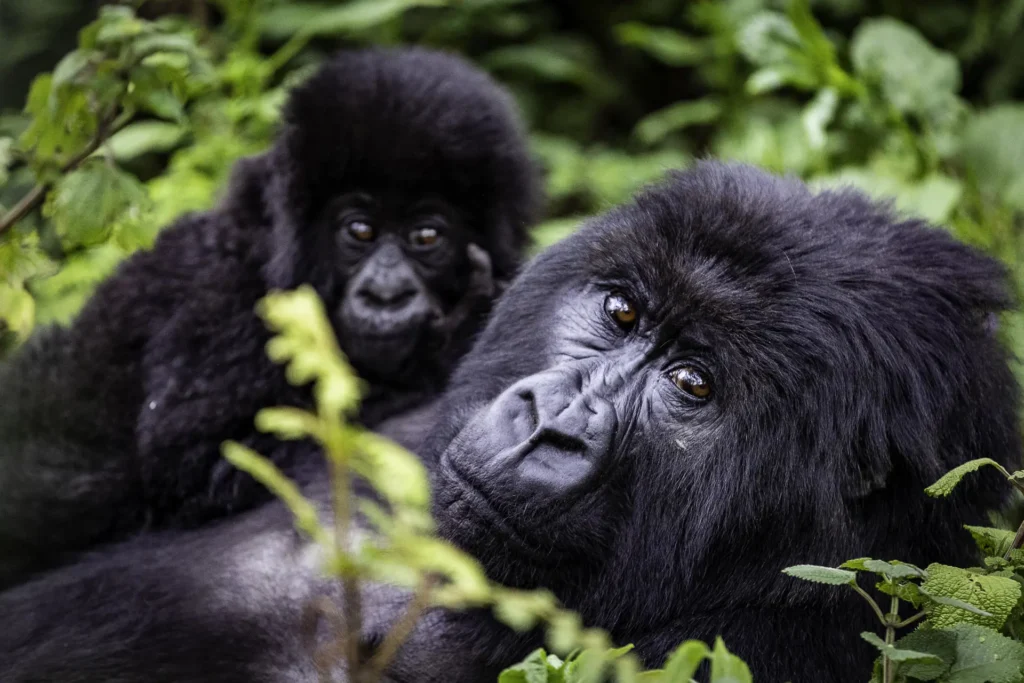
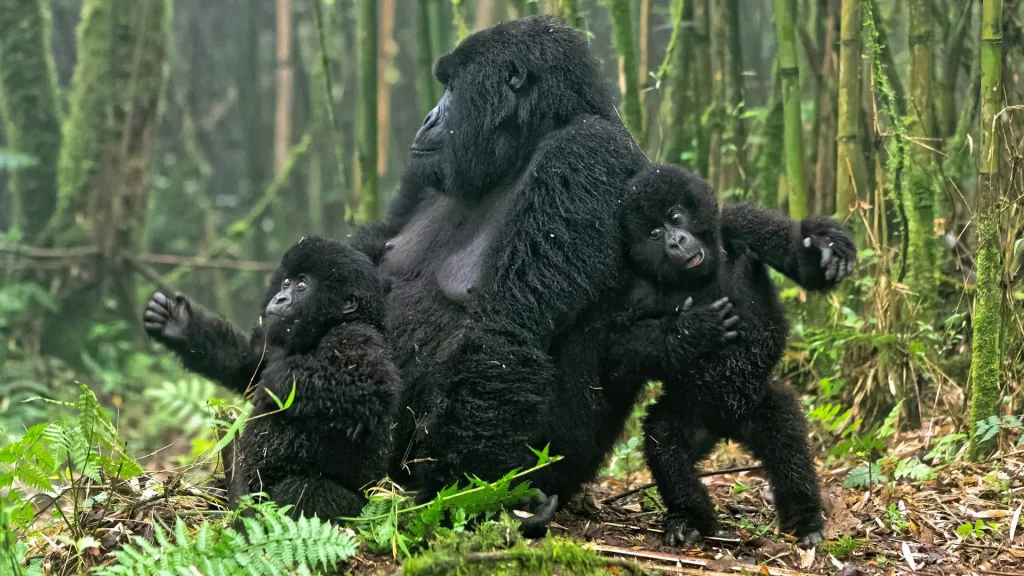
View SafariGorilla trekking in Rwanda is one of the country's most extraordinary wildlife experiences.
The activity takes place in Volcanoes National Park, a protected area in northwestern Rwanda that forms part of the greater Virunga mountain ecosystem.
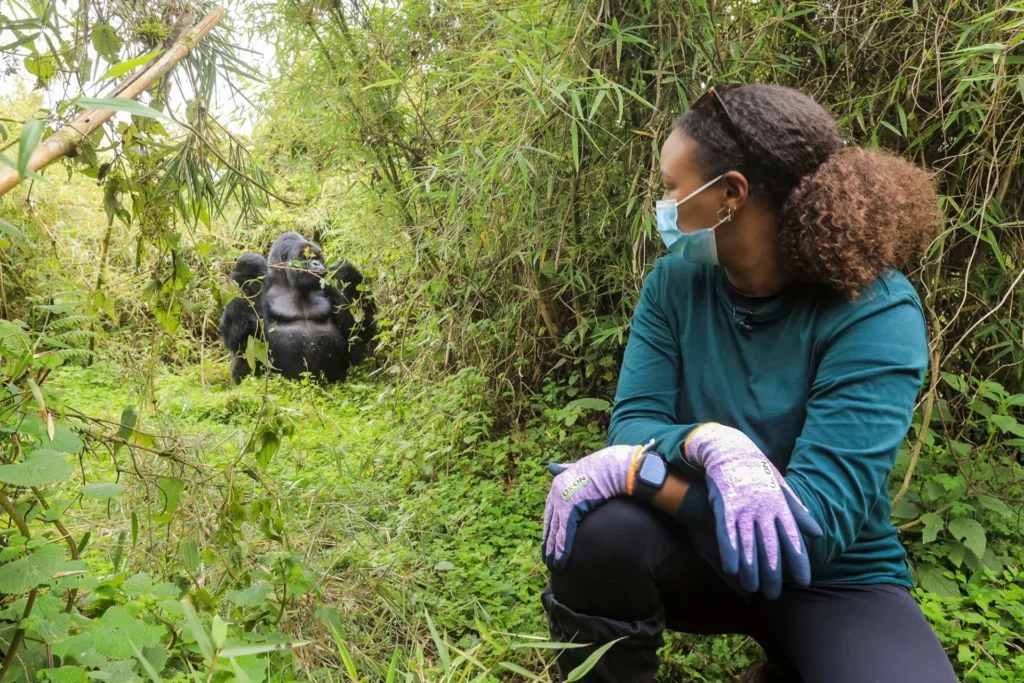
Visitors walk through forest habitats accompanied by professional guides and trackers in search of habituated mountain gorilla families.
Unlike a conventional nature walk, gorilla trekking has strict conservation regulations, limited daily permits and a controlled viewing period.
Visitors attend an early morning briefing organised by the park authorities.
The briefing explains trekking procedures, wildlife protection rules and appropriate behaviour.
Participants are assigned to a habituated gorilla family and accompanied by trained guides and trackers.
The duration of the walk depends on the location of the gorillas, weather conditions and terrain.
Some treks may be relatively short, while others involve several hours of walking through steep vegetation.
Once the gorillas are located, visitors normally spend up to one hour observing them.
The difficulty varies considerably.
The forest contains steep slopes, roots, rocks, muddy sections and dense vegetation.
Visitors may need to walk uphill for extended periods.
Rainfall can make the ground slippery, and altitude may increase fatigue.
Travellers should prepare for a potentially demanding activity rather than expecting an easy walk.
The standard international Rwanda gorilla trekking permit costs USD 1,500 per person, subject to current official regulations and applicable eligibility categories.
The minimum age is generally 15 years.
Permits are limited, and advance booking is recommended.
Porters are commonly available to carry bags and provide practical assistance on difficult sections.
Visitors with mobility concerns should communicate their requirements in advance.
However, neither an easy trek nor a particular gorilla family allocation can be guaranteed.
Golden monkey trekking in Rwanda provides an opportunity to observe another remarkable primate species in the Virunga highlands.
Golden monkeys are recognised by their distinctive golden-orange colouring and active behaviour.
They inhabit bamboo and forest environments.
The trekking experience differs from gorilla trekking because golden monkeys often move rapidly through vegetation and may be observed in groups.
The activity combines wildlife observation with a guided forest experience.
Visitors can appreciate the vegetation, volcanic landscape and smaller wildlife encountered along the way.
Some golden monkey treks may involve less demanding walking than certain gorilla treks.
However, conditions depend on the animals' location and the terrain.
Golden monkeys are active and can be difficult to photograph.
Visitors should prepare for changing light and movement through vegetation.
Golden monkey trekking requires the relevant official arrangements.
Current fees, age restrictions and availability should be confirmed before travel.
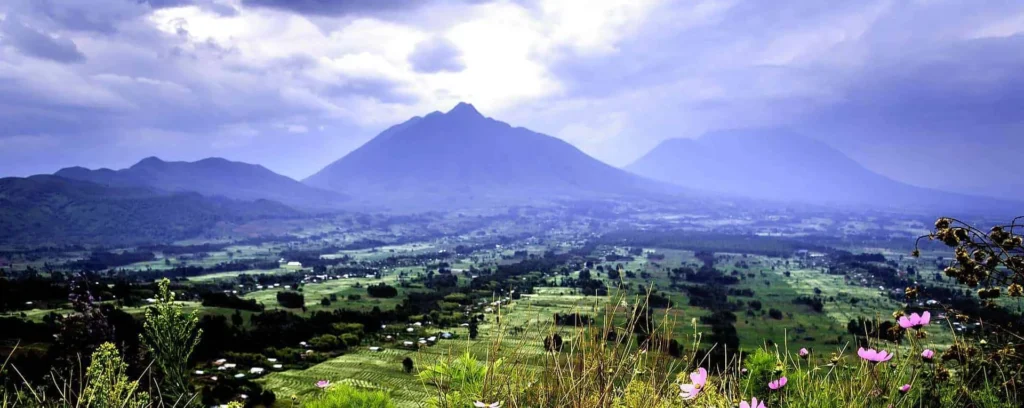
The Virunga Mountains offer some of Rwanda's most dramatic hiking environments.
The volcanic landscape includes forested slopes, high-altitude vegetation and challenging mountain terrain.
Hiking activities vary according to route, altitude and official access arrangements.
Mount Bisoke is a well-known volcanic hiking destination.
Its crater lake and mountain scenery attract adventurous travellers.
The hike is physically demanding and may involve steep, muddy terrain.
Suitable fitness, appropriate equipment and official guiding are important.
Mount Karisimbi is one of the highest volcanoes in the Virunga range.
Hiking the mountain is a demanding experience that requires careful preparation.
Conditions can be cold and wet, and altitude adds to the physical challenge.
This activity is better suited to experienced hikers than casual walkers.
The Volcanoes region is associated with the conservation work of Dian Fossey.
Guided visits connected with her research history can provide insight into mountain gorilla conservation.
Access arrangements and route conditions should be confirmed before booking.
Travellers should consider elevation gain, walking duration, trail conditions and fitness requirements.
A challenging volcano hike should not be scheduled immediately before another strenuous activity without adequate recovery time.
Nyungwe Forest National Park is one of the most important destinations for guided nature walks in Rwanda.
Located in southwestern Rwanda, the park protects extensive montane rainforest with remarkable biodiversity.
Its habitats support chimpanzees, colobus monkeys, numerous bird species and diverse plant life.
Nyungwe offers different trails, making it attractive to both experienced hikers and visitors interested in shorter forest experiences.
However, even comparatively short routes may involve steep sections, roots and slippery surfaces.
Walking through Nyungwe provides opportunities to observe the structure of a montane forest.
Different vegetation layers support distinct communities of plants and animals.
Guides can explain how rainfall, altitude and soil conditions influence the forest.
Nyungwe is an important birdwatching destination, particularly for species associated with the Albertine Rift.
Guided walks can focus on bird calls, feeding behaviour and habitat preferences.
The rainforest offers beautiful photographic opportunities, including moss-covered trees, ferns, waterfalls and filtered light.
Photography can be challenging because of low light and changing weather.
Nyungwe offers several established hiking experiences.
Trail access, duration and guiding requirements should be confirmed with park authorities.
The Igishigishigi Trail is associated with access to Nyungwe's famous canopy walkway.
It provides an introduction to the forest environment and is popular with visitors seeking a relatively focused experience.
The Isumo Waterfall Trail leads through rainforest scenery towards a waterfall.
The route involves uneven ground and changes in elevation.
It is attractive to hikers interested in forest landscapes and photography.
The Kamiranzovu Trail explores an important wetland environment within the forest landscape.
It can provide opportunities to learn about wetland ecology and plant communities.
Nyungwe also offers more demanding routes suited to experienced hikers.
These may involve extended walking, significant elevation changes and challenging conditions.
Travellers should not select a route based solely on distance because terrain can strongly influence difficulty.
The Nyungwe canopy walkway is one of Rwanda's best-known nature experiences.
Suspended above the rainforest, it offers elevated views of the surrounding vegetation.
The walkway is reached through a guided forest route.
Visitors gain a different perspective on the forest canopy.
The elevated position provides opportunities to appreciate the scale and structure of the rainforest.
The activity may not suit visitors with a strong fear of heights.
The approach walk also requires suitable mobility.
Visitors must follow official instructions and use the walkway according to park rules.
Weather conditions may influence operations.
Chimpanzee trekking in Nyungwe combines wildlife observation with active forest walking.
Chimpanzees move through complex habitats and may travel quickly.
Visitors must follow guides as they search for habituated communities.
Chimpanzee trekking can involve steep terrain and sustained walking.
The activity is not necessarily easier than gorilla trekking.
Chimpanzees are highly social and communicate through vocalisations and other behaviours.
They may remain in trees, making observation different from encounters with mountain gorillas.
Visitors must follow official viewing distances, health precautions and guide instructions.
The Congo Nile Trail is one of Rwanda's best-known long-distance outdoor routes.
It follows the scenic western region of Rwanda, connecting lakeside landscapes, hills, villages and agricultural areas.
The trail is associated with hiking and cycling experiences.
The route provides opportunities to experience rural Rwanda at a slower pace.
Visitors can observe landscapes, agriculture and communities that are less prominent on conventional national park safaris.
Sections of the route provide views of Lake Kivu and the surrounding hills.
The combination of water and mountains makes the region attractive for photography.
Responsible guided walks may include opportunities to learn about local agriculture, crafts and everyday life.
Travellers do not need to complete the entire route.
Selected sections may be suitable for shorter walking holidays.
However, route length, terrain and accommodation should be planned carefully.
Lake Kivu walking holidays offer a gentler alternative to mountain trekking in some locations.
The principal lakeside towns include Rubavu, Karongi and Rusizi.
Rubavu offers opportunities to explore selected waterfront areas and enjoy lake views.
Karongi's hills and bays provide attractive landscapes.
However, some routes are steep and require suitable footwear.
Local guides can introduce visitors to agriculture, markets and cultural activities.
Travellers should use appropriate routes, respect private property and follow local advice.
Akagera National Park is Rwanda's principal savannah wildlife destination.
It supports lions, leopards, elephants, buffaloes, rhinoceroses and numerous other species.
Most conventional wildlife viewing takes place from safari vehicles.
Authorised guided nature walks or ranger-led experiences may be offered subject to current park arrangements.
Visitors must confirm availability directly through the park or their safari organiser.
A self-guided walk through wildlife habitat should never be assumed to be permitted.
Akagera contains potentially dangerous large mammals.
Walking in such environments requires professional supervision, appropriate routes and strict safety procedures.
Where authorised, walking experiences can focus on tracks, vegetation, smaller wildlife and ecological relationships.
They should not be confused with an unrestricted walking safari among the Big Five.
Rwanda birdwatching walks can be particularly rewarding.
The country's habitats support forest birds, wetland species, raptors and grassland birds.
Nyungwe is important for forest birdwatching.
Akagera provides opportunities to observe savannah and wetland species.
The Volcanoes region supports highland forest birds.
Specialist bird guides can help visitors identify species through calls, behaviour and habitat.
Families can enjoy selected nature experiences in Rwanda.
However, age restrictions vary by activity.
Gorilla trekking generally requires participants to be at least 15 years old.
Other activities may have separate requirements.
Families with younger children should select suitable trails and avoid strenuous hikes beyond the children's capabilities.
Age alone does not determine whether a visitor can enjoy walking activities.
Some senior travellers are experienced hikers, while others prefer gentle nature walks.
The important factors are fitness, mobility, health and trail conditions.
Private arrangements may provide greater flexibility for suitable activities.
However, official national park treks operate under park authority rules.
Travellers should prepare according to the most demanding planned activity.
Regular walking, hill training and suitable footwear can improve comfort.
For strenuous hikes, cardiovascular fitness and balance are particularly important.
Visitors with relevant medical concerns should seek professional advice before travelling.
Suitable equipment makes a significant difference.
Sturdy walking boots with good grip are recommended for forest trekking.
Long trousers and long-sleeved clothing help protect against vegetation and insects.
Rain protection is essential because weather can change quickly.
A small backpack can carry drinking water, snacks and personal items.
Gloves may be useful when holding vegetation during gorilla trekking.
Walking poles may help on some trails, subject to park rules.
Rwanda can be visited throughout the year.
The relatively drier months of June to September and December to February are popular for outdoor activities.
The wetter seasons often bring lush scenery but can make forest paths slippery.
Rain remains possible in mountainous environments throughout the year.
Travellers should prepare for changing conditions regardless of season.
Accommodation should be selected according to the chosen walking destination.
Near Volcanoes National Park, visitors can choose from guesthouses, mid-range lodges and luxury properties.
Nyungwe offers accommodation in and around the forest region.
Lake Kivu has waterfront hotels and guesthouses suitable for walking holidays.
For longer trails, accommodation locations should be coordinated with daily walking distances.
Walking activities should respect wildlife and natural habitats.
Visitors must follow designated routes and guide instructions.
Plants should not be collected without authorisation.
Wild animals should never be fed or approached.
Litter should be carried out and disposed of appropriately.
Responsible walking tourism can support conservation and local guiding livelihoods.
Yes. Rwanda offers gorilla trekking, chimpanzee trekking, guided forest walks, volcano hikes and scenic walking trails.
Nyungwe is particularly well known for forest hiking, while Volcanoes National Park offers primate trekking and mountain hikes.
Only authorised guided activities are permitted. Visitors should not assume unrestricted walking is allowed in large-mammal habitats.
It is a regulated guided forest wildlife experience that involves walking to locate mountain gorillas.
Yes, selected routes may be suitable, but difficulty must be checked individually.
Yes, provided the activities match their fitness and mobility.
Yes. Selected sections can be explored without completing the entire route.
Relatively drier months often provide more comfortable trail conditions, although rain is possible year-round.
Official national park activities generally require authorised guiding. Local guides are also valuable on other routes.
Yes. Rwanda offers both forest walking experiences and vehicle-based wildlife viewing.
Walking safaris in Rwanda provide opportunities to explore the country's extraordinary landscapes at a slower and more personal pace.
From gorilla trekking in Volcanoes National Park and Nyungwe rainforest walks to Lake Kivu hiking and selected guided nature experiences, Rwanda offers outdoor adventures for different interests and fitness levels.
At Gorilla Rwanda Safaris, we help travellers select suitable activities, arrange permits and coordinate accommodation and transport.
Contact our team with your travel dates, preferred walking difficulty and interests. Relevant walking and trekking safari options can be displayed separately as tour cards or linked from this guide.