
1 Day Bwindi Gorilla Trek
A one-day mountain gorilla trek in Bwindi for travellers who are already in southwestern Uganda.
View SafariHandpicked Kenya Safari Tours for Every Traveler
Safari activities in Rwanda extend far beyond the country's famous mountain gorilla encounters.
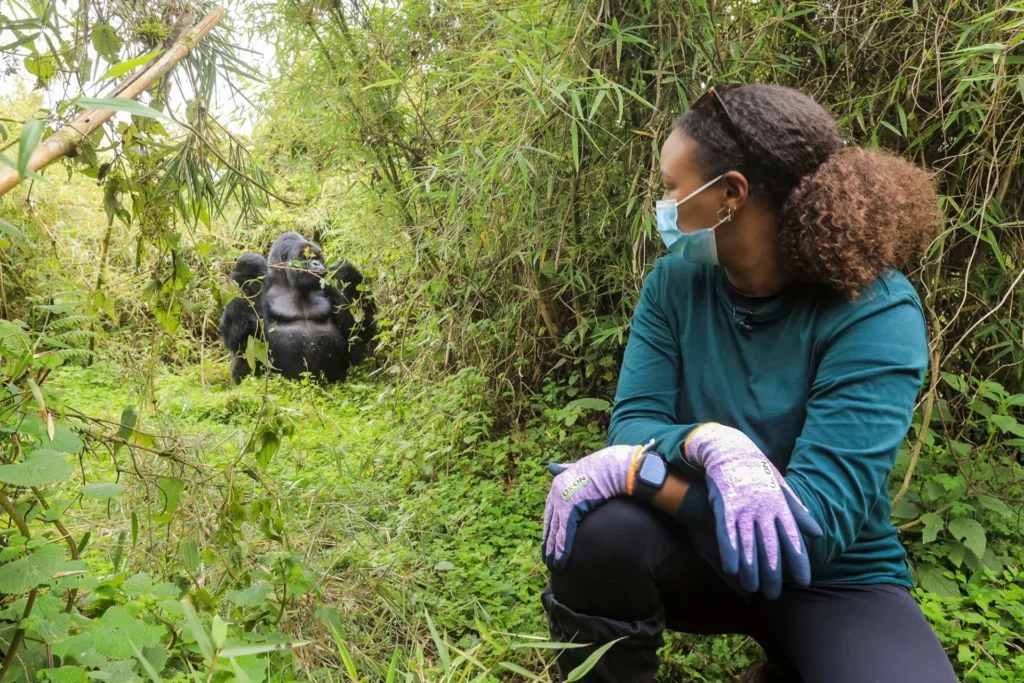
Rwanda gorilla trekking is the country's most celebrated wildlife activity and one of the most sought-after experiences in African tourism.
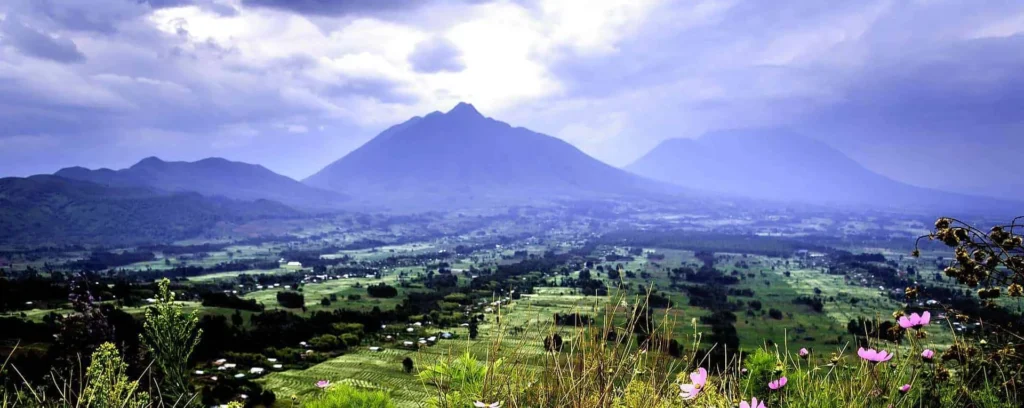
The activity takes place in Volcanoes National Park, which protects part of the Virunga mountain ecosystem in northwestern Rwanda. This volcanic landscape supports endangered mountain gorillas, along with golden monkeys, forest birds and other specialised wildlife.
Visitors gather at the park headquarters in Kinigi for an early briefing. Rwanda's official tourism authority identifies 7:00 a.m. as the normal gathering time, although guests should follow the instructions on their confirmed booking.
During the briefing, guides explain trekking procedures, conservation rules and the behaviour expected around mountain gorillas. Visitors are then assigned to a habituated gorilla family, taking account of operational factors and, where possible, physical ability.
The actual trek begins from a designated trailhead. Depending on the location of the gorillas, the walk may involve cultivated slopes near the park boundary, bamboo forest, muddy paths and steeper sections of montane vegetation.
Experienced trackers monitor gorilla movements and communicate with the guiding teams. However, because gorillas move naturally through the forest, neither the walking distance nor the time required to locate a family can be guaranteed.
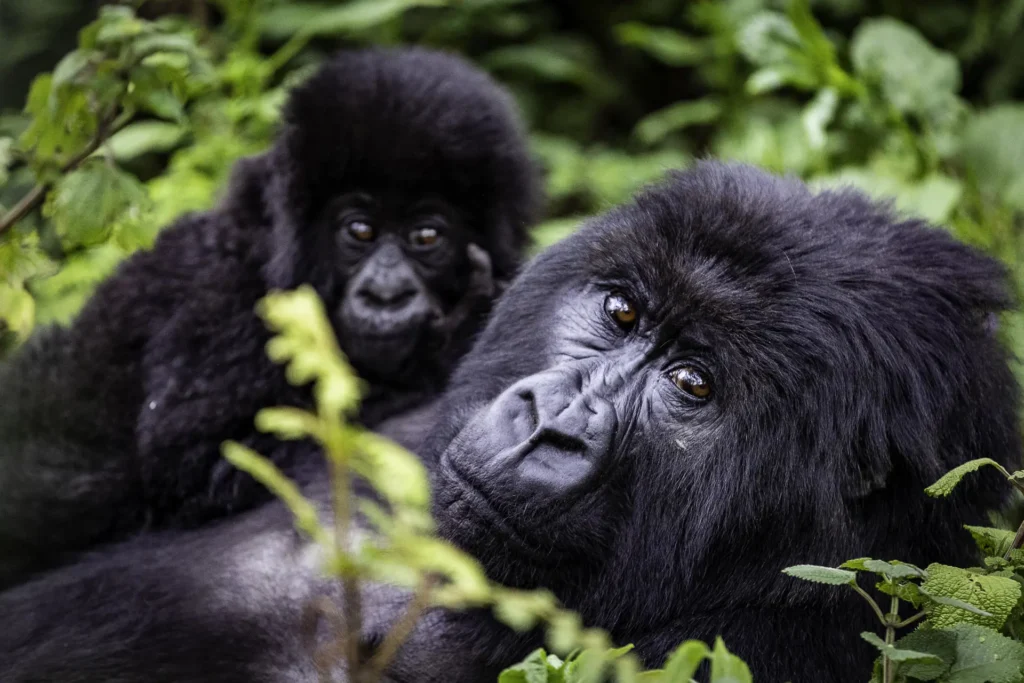
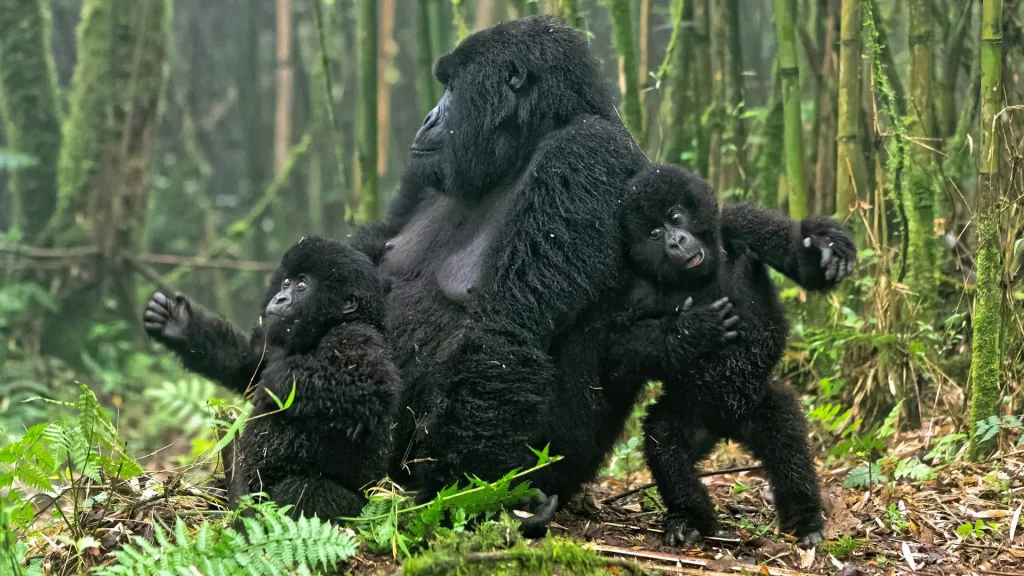
Once the gorillas are found, visitors normally have a maximum of one hour with them. During this period, they may observe silverbacks resting, juveniles playing, mothers carrying infants and family members feeding or grooming.
The standard international Rwanda gorilla trekking permit costs USD 1,500 per person, subject to official tariff changes and applicable eligibility-based rates.
The minimum trekking age is 15 years. Official guidance limits visitors to eight per habituated gorilla group per day.
Permits should be booked in advance, particularly during popular travel periods.
Gorilla trekking difficulty varies considerably. Some groups are encountered after manageable walks, while others require sustained climbing through wet and uneven terrain.
Visitors should have suitable hiking boots, long trousers, rain protection and reasonable mobility. Local porters can provide assistance and carry personal belongings.
Gorilla trekking is particularly suitable for travellers interested in primate behaviour, wildlife conservation and observing endangered animals in their natural habitat.
Showing 1–12 of 216 safaris
A one-day mountain gorilla trek in Bwindi for travellers who are already in southwestern Uganda.
View SafariA single day in Kampala for the kasubi and palace area, a cultural show, and a market or…
View SafariA full day in Kigali covering the Genocide Memorial, a neighborhood market, and one or two museums.
View SafariA single day on Mount Bisoke, with the crater lake as the turnaround point.
View SafariThe 1 Day Rwanda Family Safari offers an exciting and educational wildlife adventure for families visiting Rwanda.
View SafariThe 3 Day Rwanda Gorilla and Akagera Safari combines mountain gorilla trekking in Volcanoes National Park with wildlife…
View SafariThe 4 Day Rwanda Gorilla and Nyungwe Safari combines mountain gorilla trekking in Volcanoes National Park with chimpanzee…
View SafariThe 1 Day Rwanda Gorilla Trekking Safari offers an unforgettable opportunity to encounter endangered mountain gorillas in their…
View SafariThe 1 Day Rwanda Honeymoon Safari offers couples a romantic escape to the beautiful shores of Lake Kivu,…
View SafariThe 1 Day Rwanda Luxury Safari offers an exclusive wildlife experience in Akagera National Park, Rwanda's premier Big…
View SafariThe 1 Day Rwanda Primates Safari offers an exciting opportunity to encounter Rwanda's endangered golden monkeys in the…
View SafariThe 1 Day Rwanda Wildlife Safari offers an exciting opportunity to explore Akagera National Park, Rwanda's premier savannah…
View SafariGolden monkey trekking is another important wildlife activity in Volcanoes National Park.
Golden monkeys are distinctive forest primates associated with the bamboo habitats of the Virunga Mountains. Their golden-orange colouring, social behaviour and energetic movements make them appealing subjects for wildlife observation and photography.
Golden monkeys are particularly associated with bamboo-rich vegetation, although they also use other suitable forest habitats.
Their feeding behaviour includes consuming bamboo shoots, leaves, fruits and other available plant material. They move in social groups and may travel rapidly between feeding locations.
Unlike gorillas, which are often observed resting or feeding on the ground, golden monkeys can be highly mobile.
Visitors may see monkeys jumping between bamboo stems, interacting with other group members or searching for food.
Photography can be challenging because the animals move quickly and vegetation may obstruct the view.
The activity involves guided walking through protected forest habitat. Trail conditions vary according to weather and the monkeys' location.
Visitors should wear sturdy footwear and suitable outdoor clothing.
Golden monkey tracking is especially rewarding for people interested in Rwanda primate safaris, forest biodiversity and animal behaviour.
Chimpanzee trekking in Rwanda takes place primarily in Nyungwe National Park, one of the country's most important rainforest ecosystems.
Chimpanzees live in complex social communities and communicate through vocalisations, facial expressions, gestures and physical interactions.
Unlike mountain gorillas, chimpanzees frequently move through the forest canopy and can travel considerable distances while feeding.
Chimpanzees are highly intelligent primates that use different strategies to obtain food and maintain social relationships.
They may feed on fruits, leaves and other plant material, while also occasionally hunting smaller animals.
Grooming is important for maintaining relationships within chimpanzee communities.
Their calls can travel through the forest, sometimes allowing trackers to detect their presence before the animals become visible.
Official Rwanda tourism information describes early departures, with tracking sometimes beginning around 5:30 a.m.
The activity involves following authorised guides into suitable forest habitat. Trackers use knowledge of chimpanzee movements, vocalisations and feeding areas to help locate groups.
Walking conditions may include steep paths, dense vegetation, slippery roots and humid forest environments.
The tracking period varies, and chimpanzees may remain high in trees or move rapidly through the forest.
Once located, the permitted observation period is normally limited to one hour.
Nyungwe chimpanzee tracking is particularly rewarding for visitors interested in primatology, rainforest ecology and active wildlife experiences.
It can be more physically unpredictable than some visitors expect, so reasonable fitness and flexibility are useful.
Nyungwe is also known for its black-and-white colobus monkeys, among the most visually distinctive primates in Rwanda.
These monkeys have contrasting black-and-white fur and long tails. They spend much of their time in trees, feeding on leaves and other vegetation.
Colobus monkeys may occur in sizeable groups, making their social behaviour particularly interesting.
Visitors can observe feeding, movement through the canopy and interactions between group members.
Because they occupy forest habitats, sightings depend on vegetation, weather and the animals' movements.
The activity introduces travellers to the broader diversity of Rwanda's primates rather than focusing exclusively on great apes.
It is particularly suitable for naturalists, wildlife photographers and visitors spending additional time exploring Nyungwe.
Akagera National Park game drives offer Rwanda's principal traditional African savannah safari experience.
Akagera protects grasslands, woodland, wetlands and lakes along Rwanda's eastern border with Tanzania.
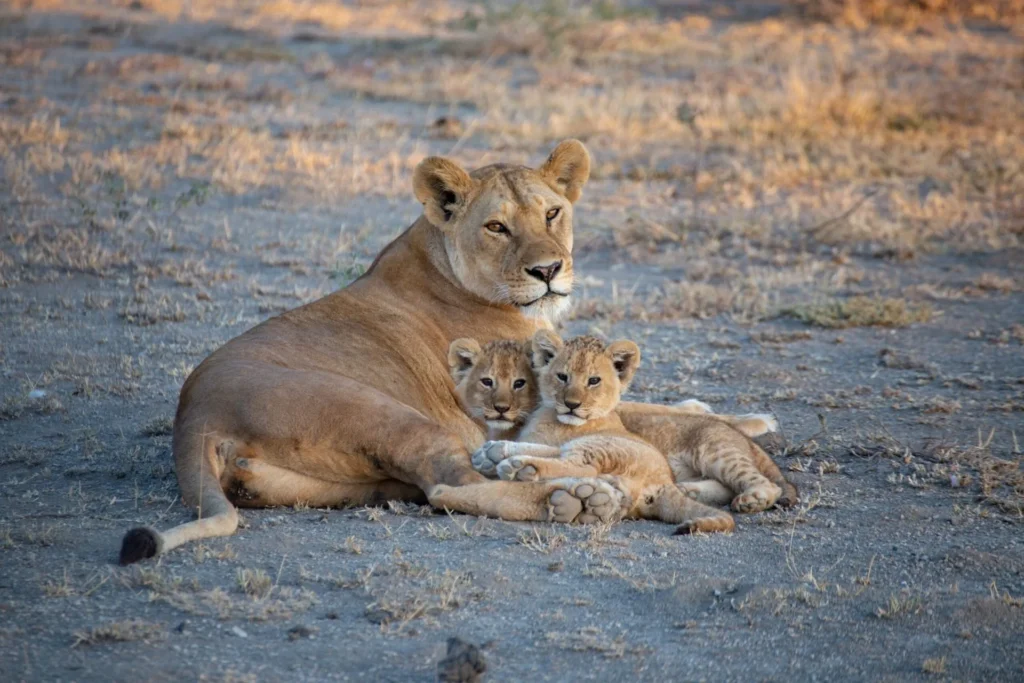
The park supports lions, leopards, elephants, buffaloes, rhinoceroses, giraffes, zebras, antelopes and numerous smaller mammals.
Early-morning drives can be rewarding because temperatures are often cooler and some wildlife species are more active.
Guides look for animal tracks, movement in vegetation and signs of recent activity.
Visitors may observe herbivores feeding, birds hunting or predators resting after periods of activity.
Afternoon drives provide opportunities to explore different habitats and observe changes in animal behaviour.
Lighting conditions may be particularly attractive for photography later in the day.
However, wildlife activity depends on temperature, rainfall and seasonal conditions.
A longer game drive provides time to explore multiple sections of the park.
Akagera's southern wetland areas and northern open landscapes offer different viewing opportunities.
A full-day excursion should allow appropriate breaks and account for driving distances, park regulations and the location of accommodation.
A knowledgeable guide can identify animal behaviour, explain ecological relationships and help visitors understand the park's conservation history.
Good guiding is not simply about locating the Big Five. It also includes identifying birds, recognising smaller animals and interpreting the relationship between vegetation and wildlife.
Akagera night game drives provide an opportunity to explore wildlife activity after daylight hours.
Some animals become more active during cooler evening conditions, while others are primarily nocturnal.
Depending on conditions, visitors may encounter animals that are less frequently observed during daytime drives.
Visibility is limited, and observations depend on authorised lighting equipment and guide experience.
Night drives are conducted under specific park arrangements rather than as unrestricted private driving after dark.
Availability, departure times, routes and fees should be confirmed with the park or authorised operator.
Lighting should be managed carefully to avoid unnecessary disturbance.
Visitors should remain in authorised vehicles and follow guide instructions.
Night drives are best approached as an opportunity to learn about nocturnal ecology rather than a guarantee of predator sightings.
Lake Ihema boat safaris are among the most distinctive activities in Akagera.
The lake forms part of the park's wetland system and supports aquatic wildlife, shoreline vegetation and numerous waterbirds.
Hippos spend much of the day in water and may be observed resting in groups.
They are powerful wild animals and should never be approached closely or disturbed.
Guided boat excursions allow visitors to observe them from an appropriate distance.
Nile crocodiles inhabit suitable freshwater environments and may be seen basking near shorelines.
Their presence illustrates the ecological importance of Akagera's lakes and wetlands.
Boat excursions provide opportunities to observe fish eagles, kingfishers, herons, cormorants and other water-associated birds.
Binoculars are especially useful because birds may be perched along distant shorelines.
Visitors should use authorised operators and follow all safety instructions.
Weather conditions, water levels and operational schedules can affect availability.
Rwanda birdwatching is a major attraction for specialist naturalists and travellers who enjoy observing wildlife beyond large mammals.
The country's forests, wetlands, savannah and mountains support a wide range of bird species.
Akagera is particularly important for savannah and wetland birds.
African Parks reports almost 500 bird species documented in the park, reflecting its diversity of habitats.
Visitors may encounter raptors, waterbirds, woodland species and birds associated with open grasslands.
Nyungwe is especially significant for birds associated with the Albertine Rift.
Forest birdwatching requires patience because dense vegetation can make species difficult to locate.
Experienced guides use calls, habitat knowledge and movement patterns to identify birds.
The Virunga landscape supports montane forest species and birds associated with higher elevations.
Guided birdwatching can complement other authorised nature activities.
Binoculars, suitable footwear, a field guide and weather protection are useful.
Photographers may benefit from telephoto lenses, but patient observation is often more valuable than equipment alone.
Nyungwe forest hiking allows visitors to explore one of Rwanda's most biologically important landscapes.
The park has an established network of guided walking trails ranging from relatively short forest excursions to demanding routes through steep terrain.
The Igishigishigi Trail is associated with the famous canopy walkway.
Official Rwanda hiking guidance describes it as approximately 2.1 kilometres long.
The trail introduces visitors to forest vegetation, tree ferns and elevated views.
The Isumo Trail leads through rainforest scenery towards a waterfall.
The route includes vegetation, changes in elevation and sections that may become slippery after rain.
It is particularly rewarding for travellers interested in forest landscapes and photography.
The Karamba Trail is recognised as an interesting birdwatching route.
Its vegetation and historical land-use features provide opportunities to learn about the changing relationship between people and the forest.
The Bigugu Trail explores higher elevations within Nyungwe.
It is suitable for travellers seeking a more physically demanding forest hiking experience.
Visitors should consider walking distance, elevation gain, weather, fitness and available time.
All activities should be arranged according to current park rules and guiding requirements.
The Nyungwe canopy walkway provides an unusual perspective on the rainforest.
The suspended walkway is approximately 160 metres long and reaches around 70 metres above the forest floor.
It allows visitors to appreciate the forest canopy, surrounding hills and vegetation from an elevated position.
Rainforest ecosystems contain several vertical layers, from the forest floor to the upper canopy.
An elevated walkway helps visitors understand how these layers differ in light, vegetation and wildlife activity.
Birds, butterflies and other wildlife may be observed, although sightings are unpredictable.
Visitors access the walkway through a guided forest route.
The approach may be muddy, and the suspended structure can be uncomfortable for people with a strong fear of heights.
Suitable footwear and rain protection are recommended.
The Virunga Mountains provide opportunities for demanding mountain hikes.
Mount Bisoke hiking is known for volcanic scenery and a crater lake near the summit.
The route involves significant climbing and can become muddy.
Visitors should prepare for cool temperatures, changing weather and sustained physical exertion.
Mount Karisimbi trekking is a more demanding high-altitude experience.
The mountain rises above 4,500 metres, making altitude and weather important considerations.
This activity requires appropriate equipment, fitness and authorised guiding.
The Dian Fossey hike introduces visitors to the history of mountain gorilla research and conservation.
It is particularly meaningful for travellers interested in primatology and the development of gorilla protection efforts.
Lake Kivu activities provide a scenic alternative to forest and savannah excursions.
The lake's shores include towns, villages, islands and mountainous landscapes.
Guided kayaking allows visitors to explore selected shoreline areas at a slower pace.
Appropriate safety equipment and reliable local operators are essential.
Boat trips offer views of lakeside settlements, islands and surrounding hills.
Activities vary according to the departure location.
The Congo Nile Trail is an important cycling and hiking route along the Lake Kivu region.
Rwanda's official tourism information describes the broader trail as approximately 227 kilometres long.
Visitors can explore selected sections rather than completing the entire route.
The Lake Kivu region is associated with coffee cultivation and rural agricultural landscapes.
Guided visits may introduce travellers to coffee processing, farming practices and local livelihoods.
Rwanda cultural activities provide opportunities to understand the country's history, traditions and contemporary society.
The Kigali Genocide Memorial is an important site of remembrance and education concerning the 1994 Genocide against the Tutsi.
Visitors should approach the memorial respectfully and allow sufficient time for reflection.
Community-based activities may introduce travellers to local crafts, food preparation, cultural performances and agricultural practices.
Responsible visits should involve meaningful community participation and fair economic benefits.
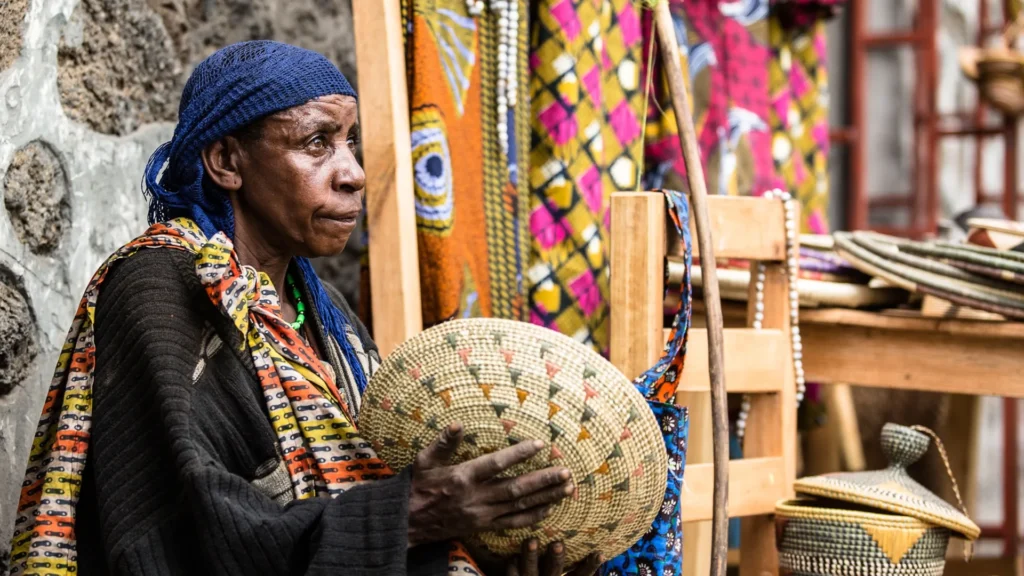
Rwandan basket weaving and other artistic traditions provide opportunities to learn about local skills and cultural expression.
Purchasing locally produced crafts can support artisans when transactions are fair and transparent.
Rwanda's protected areas provide opportunities to learn about wildlife conservation and ecological restoration.
In Volcanoes National Park, visitors encounter a conservation model built around mountain gorilla protection.
In Akagera, the restoration of lions and rhinoceroses illustrates the importance of long-term protected-area management.
In Gishwati-Mukura National Park, forest restoration efforts highlight the relationship between habitat protection and biodiversity recovery.
Travellers interested in conservation should seek authorised educational experiences rather than attempting to access sensitive wildlife research areas independently.
Not every Rwanda safari activity is suitable for every traveller.
Visitors seeking less physically demanding experiences may prefer game drives, boat excursions, cultural visits and scenic viewpoints.
Those comfortable with moderate walking may enjoy selected forest trails and guided nature experiences.
Travellers with strong fitness and hiking experience may consider more demanding volcanic hikes.
Physical ability, age restrictions, health conditions and weather should be discussed before reservations are confirmed.
Rainfall affects different activities in different ways.
During relatively dry periods, forest trails may be easier to navigate, although mountain rain remains possible.
In Akagera, seasonal vegetation and water availability influence wildlife distribution.
For birdwatching, breeding behaviour, migration and habitat conditions can affect observations.
There is no single month that guarantees ideal conditions for every activity.
Responsible Rwanda wildlife tourism requires visitors to respect animals, guides, local communities and protected habitats.
Maintain appropriate distances from wildlife, avoid feeding animals and never leave designated routes without authorisation.
Follow restrictions concerning flash photography, drones, litter and potentially infectious illnesses.
Choose operators that use authorised guides and support conservation-oriented tourism.
Gorilla trekking, Akagera game drives, chimpanzee tracking, golden monkey trekking, birdwatching and guided forest walks are among the leading activities.
Yes. Akagera supports lions, leopards, elephants, buffaloes and rhinoceroses, although sightings are not guaranteed.
Gorilla trekking, chimpanzee tracking and many protected-area activities require advance permits or authorised bookings.
Yes. Game drives, selected cultural experiences and some nature activities may suit families, but age restrictions vary. Gorilla trekking requires visitors to be at least 15 years old.
Chimpanzee tracking, colobus monkey observation, birdwatching, forest hiking and the canopy walkway are important attractions.
Authorised night game drives are available in Akagera, subject to current park operations.
Yes. Volcano hiking, forest trails, cycling and selected water activities offer opportunities for active travel.
Many activities operate year-round, but weather, permits and park conditions can influence availability.
Yes, under ranger instructions. Flash photography is prohibited.
Advance booking is particularly important for gorilla permits, chimpanzee tracking and activities with limited capacity.
The diversity of Safari Activities in Rwanda makes the country an exceptional destination for wildlife enthusiasts, nature lovers, photographers and active travellers.
From mountain gorilla trekking and Akagera game drives to Nyungwe rainforest walks, golden monkey encounters, birdwatching and Lake Kivu recreation, each activity reveals a different aspect of Rwanda's natural heritage.
Gorilla Rwanda Safaris helps travellers identify suitable activities, understand participation requirements and coordinate the necessary permits, transport and guiding arrangements.
Contact our team for expert guidance on choosing activities that match your interests, travel dates, fitness and preferred level of comfort.