
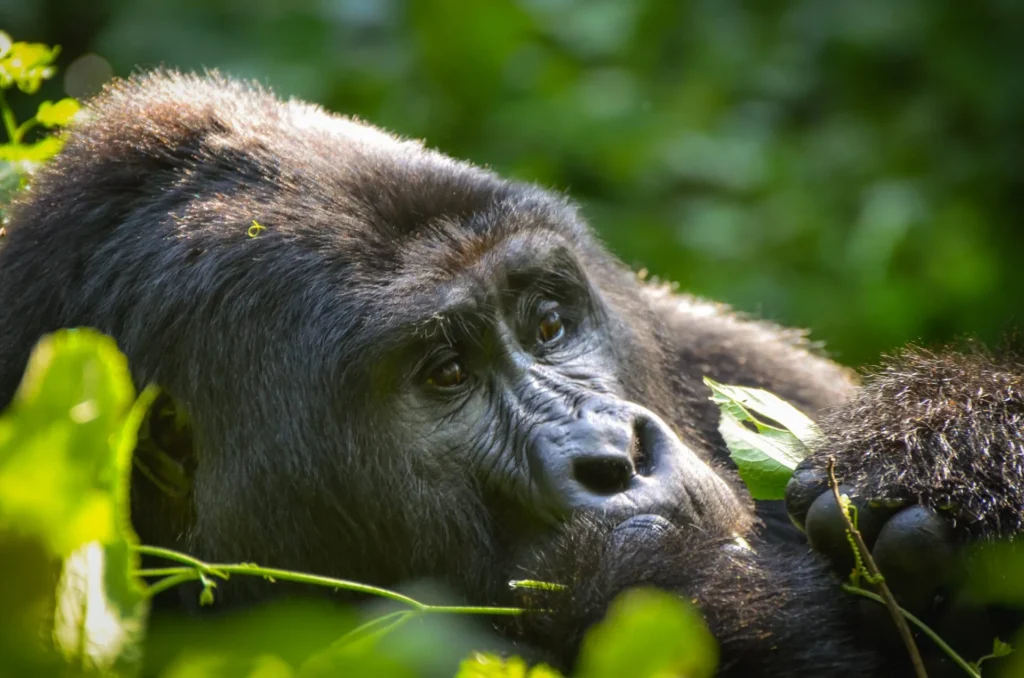
The Rwanda gorilla trekking age limit is one of the most important regulations to understand when planning a visit to Volcanoes National Park, particularly for families travelling with children, teenagers approaching their fifteenth birthday and multigenerational groups. Mountain gorilla trekking is a carefully managed conservation activity rather than an ordinary forest excursion, and the authorities apply specific participation requirements to protect both visitors and the endangered animals.
The minimum age for gorilla trekking in Rwanda is 15 years. This means that visitors must have reached their fifteenth birthday by the date of the scheduled trekking activity. Children younger than 15 cannot participate in the standard mountain gorilla trekking experience, even when accompanied by parents, guardians or an experienced private safari guide. The requirement applies to the official gorilla trekking activity inside Volcanoes National Park and should be confirmed before making permit payments or finalising family travel arrangements.
Understanding the age restriction is particularly important because Rwanda’s gorilla permits are expensive, availability is limited and accommodation near the national park can require advance reservations. Families sometimes plan their entire holiday around the opportunity to see mountain gorillas, only to discover that one child is too young to join the trek. Establishing the ages of all participants at the beginning of the planning process prevents unnecessary disappointment and allows suitable alternative experiences to be incorporated.
At Gorilla Rwanda Safaris, we help families, couples, teenagers and senior travellers understand the Rwanda gorilla trekking requirements, arrange suitable permits and plan wildlife experiences appropriate to each participant’s age, interests and physical abilities.
What Is the Minimum Age for Gorilla Trekking in Rwanda?
The official Rwanda gorilla trekking minimum age is 15 years. The requirement applies to visitors entering Volcanoes National Park for the regular tourist gorilla tracking experience. A traveller who is 15 or older may participate, provided the person meets the other applicable park requirements, while a child who has not yet reached the minimum age is ineligible.
The distinction between being 14 and being 15 is important because age eligibility is not determined by a child’s appearance, maturity or physical fitness. A particularly active 14-year-old who regularly participates in demanding outdoor activities is still below the minimum age. Similarly, a 15-year-old who is smaller or less experienced than other participants is not automatically excluded solely because of those characteristics, although physical readiness remains an important consideration.
Families should calculate eligibility using the exact trekking date rather than the child’s age at the beginning or end of the holiday. If a teenager celebrates their fifteenth birthday during a Rwanda safari, a trekking date after that birthday may be suitable, subject to the current official requirements and permit availability. A trekking date before the birthday would not meet the standard age restriction.
Can a 14-Year-Old Go Gorilla Trekking in Rwanda?
A 14-year-old cannot participate in regular Rwanda gorilla trekking under the established minimum-age requirement. This remains the case even if the child is accompanied by a parent, has previous hiking experience or is travelling as part of a private luxury safari. The restriction is established by the responsible authorities and cannot be overridden by a lodge, travel agent or private tour operator.
Families should be cautious about suggestions that an underage child might be admitted simply because they appear mature or are close to turning 15. Such assumptions create a risk of denied participation after substantial travel expenses have already been incurred. The correct approach is to plan the gorilla trek for an eligible date or arrange alternative activities for the younger traveller.
Can a 15-Year-Old Trek Mountain Gorillas?
Yes. A teenager who has reached the age of 15 can participate in the standard Volcanoes National Park gorilla trekking experience, provided all applicable requirements are satisfied. For many families, trekking with a 15- or 16-year-old becomes a memorable opportunity to learn about wildlife conservation, animal behaviour and the ecological importance of Rwanda’s mountain forests.
Nevertheless, meeting the age requirement does not guarantee that the physical experience will be easy. Some gorilla families are located relatively close to accessible forest paths, while others may require longer walks across muddy slopes and uneven mountain terrain. Parents should prepare eligible teenagers for the possibility of a physically demanding trek and explain the importance of following instructions throughout the activity.
Why Does Rwanda Have a Gorilla Trekking Age Limit?
The gorilla trekking age restriction in Rwanda forms part of a wider conservation and visitor-management framework. Mountain gorillas are endangered great apes that inhabit protected forests along the Virunga mountain range. Although selected families have gradually become accustomed to controlled human observation, they remain wild animals whose health and natural behaviour must be protected.
The minimum age is not simply a measure of how far a child can walk. It is a standardised eligibility rule within an activity that involves close observation of sensitive wildlife, unpredictable forest conditions and strict behavioural requirements. It also helps park authorities manage visitors consistently rather than making individual decisions based on subjective assessments of each child’s maturity.
Protecting Mountain Gorillas from Human Diseases
One of the most significant conservation concerns associated with great ape tourism is the possibility of infectious disease transmission between humans and gorillas. Mountain gorillas share substantial biological similarities with people, making them vulnerable to certain human pathogens, particularly respiratory infections. Illnesses that may seem relatively mild in a person can present serious risks to vulnerable wildlife populations.
The age requirement is one element of a wider precautionary system, but it is important not to misunderstand its purpose. Children are not the only people who can carry infectious diseases, and being over 15 does not make a visitor medically safe to approach gorillas. All participants must follow applicable health screening, hygiene and observation requirements. Visitors experiencing symptoms of potentially contagious illness should inform the appropriate authorities and should not participate when doing so could place the animals at risk.
Ensuring Visitors Can Follow Wildlife Instructions
During a gorilla encounter, authorised guides may instruct visitors to remain quiet, stand still, lower their position, move slowly or avoid particular movements. These instructions are based on the guides’ understanding of gorilla behaviour and the immediate circumstances of the encounter. Although habituated gorillas are accustomed to controlled human presence, their reactions cannot be predicted with certainty.
The minimum age establishes a standard threshold for participation in an experience where visitors must consistently follow directions. However, maturity and responsible behaviour remain essential for adults as well as teenagers. A visitor who disregards instructions can create unnecessary risks regardless of age.
Managing Difficult Mountain Terrain
Rwanda mountain gorilla trekking takes place in a high-altitude forest environment where the terrain can be steep, wet and physically challenging. Trekking routes may include exposed roots, thick vegetation, muddy paths and sections without constructed walking surfaces. The location of the gorillas changes as they move through their habitat, meaning the difficulty of an individual trek cannot be determined with complete certainty in advance.
Children below the minimum age may be capable of completing demanding hikes elsewhere, but physical ability alone does not override the official rule. For eligible participants, including teenagers and older adults, honest assessment of walking ability and preparation remains essential.
How Is the Gorilla Trekking Age Limit Checked?
Travellers arranging a Rwanda gorilla trekking permit should provide accurate personal details, including their full legal name, nationality and date of birth where required by the booking process. These details should correspond with the passport or other accepted identification document used during travel.
Park authorities may verify permit and identity information during the relevant registration procedures. Families should therefore avoid supplying approximate ages or assuming that an operator can resolve an eligibility problem after the visitors have arrived in Rwanda.
For children approaching the minimum age, the exact birth date should be disclosed when the initial inquiry is made. A responsible safari operator can then check whether the proposed trekking date is appropriate before proceeding with expensive reservations. This is especially important for families travelling during school holidays, when their available travel dates may be limited.
Can Children Under 15 Visit Volcanoes National Park?
The restriction on gorilla trekking for children under 15 should not be interpreted as a prohibition on every visit to the wider Volcanoes region. Families can stay in Musanze or Kinigi, enjoy views of the Virunga Mountains and participate in other activities for which the children meet the applicable requirements.
The important distinction is between visiting the destination and participating in a specific regulated national park activity. Gorilla trekking has its own minimum age, while other activities may have different age requirements, physical demands and safety considerations. Parents should verify the rules for each experience rather than assuming that all forest activities share the same eligibility conditions.
The wider Musanze area offers cultural experiences, scenic excursions and opportunities to learn about conservation. Families may also incorporate other destinations in Rwanda, particularly Akagera National Park, where wildlife viewing takes place mainly from vehicles, and Lake Kivu, where selected leisure activities can provide a more relaxed family experience.
Alternative Activities for Families with Younger Children
Wildlife Safaris in Akagera National Park
Akagera National Park is one of the strongest alternatives for families who want memorable wildlife encounters without relying exclusively on gorilla trekking. Located in eastern Rwanda, the park protects a varied landscape of savannah grasslands, woodland, lakes and wetlands. It supports elephants, buffaloes, giraffes, zebras, antelopes, lions, rhinoceroses and other wildlife species, although sightings of particular animals can never be guaranteed.
A guided game drive allows children to observe wildlife from a safari vehicle while learning about habitats, animal behaviour and conservation. Parents should select appropriate driving durations and confirm any age restrictions for additional activities. Shorter game drives with suitable breaks may be more enjoyable for younger children than spending an entire day in a vehicle.
Lake Kivu Family Holidays
Lake Kivu provides an attractive contrast to Rwanda’s mountain forests. Its lakeside towns, scenic hills and accommodation options make it suitable for families seeking relaxation after wildlife activities. Depending on the destination and service provider, visitors may arrange selected boat excursions, guided walks or cultural experiences.
Parents should confirm the suitability of water-based activities for each child’s age and ensure that appropriate safety equipment and supervision are available. The presence of a lake or a hotel swimming pool should never be treated as a substitute for active child supervision.
Kigali Cultural and Educational Experiences
Kigali offers opportunities for families to explore Rwanda’s contemporary culture, art, markets and history. Activities can be selected according to the children’s ages and interests, with an emphasis on experiences that are educational without becoming exhausting.
The Kigali Genocide Memorial is an important historical and commemorative site, but parents should consider the maturity of younger visitors and the nature of the material presented before including it. Some exhibitions address deeply distressing events and may not be suitable for every child.
Musanze Cultural Experiences
The Musanze region offers opportunities to learn about local communities, traditional crafts and the landscapes surrounding the Virunga Mountains. Carefully selected cultural experiences can help children appreciate that Rwanda’s conservation story involves both wildlife protection and the people living near protected areas.
Community visits should be organised respectfully, with appropriate local participation. Travellers should avoid activities that treat residents as exhibits or encourage intrusive photography.
Can Parents Trek Gorillas While Their Children Stay at the Lodge?
Yes, parents may arrange a family holiday in which eligible adults participate in gorilla trekking while younger children remain under suitable supervision. However, this requires advance planning. The fact that a lodge accepts families does not automatically mean that it provides professional childcare or that staff members are available to supervise children during a potentially lengthy trekking day.
Parents should ask the accommodation provider whether childcare services are available, what ages are accepted, whether supervision is provided by appropriately experienced staff and what activities are offered. The arrangements should be confirmed before travel rather than negotiated on the morning of the trek.
Another possibility is for parents to trek on separate dates, with one adult remaining with the children while the other participates. This can be practical for some families, but it may increase the number of nights required near the park and create additional logistical expenses. Each trekking adult still needs an individual permit.
For families with older and younger children, the best arrangement is often one that makes the non-trekking day enjoyable for the younger participants. A suitable cultural excursion, scenic activity or relaxed lodge experience can prevent them from feeling excluded from the holiday.
Is There a Maximum Age for Gorilla Trekking in Rwanda?
Unlike the minimum age of 15, Rwanda gorilla trekking does not generally have a fixed maximum age. Older adults can participate, including travellers in their sixties, seventies or beyond, provided they can undertake the activity safely and comply with the relevant requirements.
This does not mean that every senior traveller should attempt the trek. Age alone is a poor measure of physical ability. A fit older person accustomed to hiking may be better prepared than a younger traveller who rarely walks on uneven terrain. The more useful questions concern balance, stamina, mobility, cardiovascular fitness and the ability to manage unpredictable walking conditions.
Older visitors should also consider the effects of altitude, cool temperatures and potentially prolonged physical exertion. Anyone with a significant medical condition should seek individual medical advice before booking a demanding trekking activity.
Gorilla Trekking for Travellers Over 60
Gorilla trekking in Rwanda for seniors over 60 can be a rewarding experience, particularly for travellers who have maintained an active lifestyle. The key is to plan realistically and communicate any concerns before the trekking date.
A private safari can provide comfortable road transfers, accommodation near Kinigi and enough time to rest before and after the activity. However, the actual gorilla trek is controlled by the park authorities, and a private tour operator cannot guarantee a particular gorilla family or an easy walking route.
Gorilla Trekking for Travellers Over 70
Travellers in their seventies should consider the same factors as younger participants, with particular attention to their individual health and mobility. There is no universal rule that makes a person too old for gorilla trekking at 70, but it would be equally misleading to describe the activity as automatically suitable for everyone in this age group.
Some visitors may be comfortable walking for several hours in challenging conditions, while others may require additional assistance or may prefer alternative wildlife experiences. Discussing these considerations early allows the operator to explore appropriate arrangements without creating unrealistic expectations.
Gorilla Trekking for Travellers Over 80
For travellers over 80, careful individual assessment becomes especially important. The absence of a fixed maximum age does not remove the risks associated with steep terrain, fatigue and variable weather.
Specialised mobility support may be possible through advance local arrangements, but the details, suitability, costs and availability must be confirmed. Such services should not be described as guaranteed, and their availability does not replace the need for appropriate medical guidance.
Porter Services and Mobility Assistance
Rwanda gorilla trekking porter services can make the forest walk more manageable for eligible visitors. Porters may carry daypacks, water, rainwear and camera equipment, allowing trekkers to concentrate on walking safely. They may also provide practical assistance on difficult sections of the route.
Using a porter can be valuable for teenagers, older travellers and anyone who prefers not to carry additional weight. It also supports local employment associated with the national park tourism economy.
For visitors with significant mobility limitations, more specialised assistance may be considered through advance arrangements. The exact services available depend on local resources, terrain and operational circumstances. Travellers should describe their needs accurately rather than relying on general assurances that every mobility challenge can be accommodated.
How Difficult Is Gorilla Trekking for Teenagers and Older Adults?
The physical demands of Volcanoes National Park gorilla trekking depend on several factors that cannot be fully predicted before the activity. Mountain gorillas move through their habitat according to feeding opportunities, social behaviour and other natural influences. Consequently, the distance between a trailhead and the gorilla family may vary considerably from one day to another.
Some treks involve relatively moderate walking, while others require more sustained effort on steep slopes. Rainfall can make the ground slippery, and the mountain environment may be cooler than visitors expect from an equatorial African destination.
Teenagers should be prepared for the possibility that the walk will be longer or more demanding than anticipated. Older adults should consider their ability to manage uneven ground and maintain balance when tired. Both groups benefit from suitable footwear, walking practice and realistic expectations.
It is sometimes possible to communicate physical concerns to the park authorities during the briefing process. However, any allocation decisions remain subject to the authorities’ operational judgement, and no particular trekking difficulty can be guaranteed.
Health Requirements and Gorilla Conservation
Gorilla trekking health regulations are especially important because of the risk of transmitting human diseases to mountain gorillas. Visitors should not participate when suffering from potentially contagious illnesses, particularly respiratory symptoms that may threaten great apes.
The relevant authorities may apply screening procedures and additional protective requirements. Travellers should follow current instructions concerning observation distance, hygiene and protective equipment where required.
These precautions apply equally to teenagers, adults and senior travellers. A visitor’s age does not remove the obligation to protect the animals.
Travellers should also remember that gorillas are wild animals. Touching them, feeding them, deliberately attracting their attention or attempting to move closer for photographs is inappropriate. The experience is designed around respectful observation rather than physical interaction.
Gorilla Trekking Age Limits in Rwanda Versus Uganda
Families considering Rwanda versus Uganda gorilla trekking should understand that both destinations generally apply a minimum age of 15 for standard gorilla trekking.
In Rwanda, the activity takes place in Volcanoes National Park. In Uganda, gorilla trekking is available in Bwindi Impenetrable National Park and Mgahinga Gorilla National Park.
The two destinations differ in permit prices, transport arrangements, accommodation choices and trekking environments. Rwanda’s standard international gorilla permit costs USD 1,500, while Uganda’s standard foreign non-resident permit has been USD 800.
The age requirement should therefore not be the only factor influencing the decision. Families should compare the complete holiday, including driving distances, accommodation, suitable activities for younger children and the overall travel budget.
Any reported exceptions or special arrangements should be verified directly against current official regulations rather than assumed to apply across countries.
Does the Gorilla Trekking Age Limit Apply to Other Primate Activities?
Rwanda offers several primate experiences beyond mountain gorilla trekking, including golden monkey trekking in Volcanoes National Park and chimpanzee tracking in Nyungwe National Park.
Each activity operates under its own regulations. Families should not assume that the minimum age for gorilla trekking automatically determines eligibility for every other primate encounter.
Golden monkey tracking involves walking through forest habitat to observe active monkeys, often in bamboo vegetation. Chimpanzee tracking can be physically demanding because chimpanzees move rapidly and may travel considerable distances through the forest.
Parents should confirm the current minimum age, permit requirements and expected physical difficulty for every proposed activity before booking.
Gorilla Trekking Permits for Teenagers
A teenager who has reached the minimum age requires an individual Rwanda gorilla trekking permit. The standard international permit costs USD 1,500 per person per trek, subject to official changes and any applicable eligibility-based concessions.
Parents should not assume that a teenager receives a reduced permit rate simply because accommodation providers may classify the same traveller as a child for hotel pricing. National park permit categories and hotel room policies are separate matters.
Permit availability is limited because regular trekking groups contain a maximum of eight visitors per habituated gorilla family. Families travelling with several eligible teenagers should therefore secure the required permits as early as practical, especially during popular holiday periods.
Preparing a Family for Gorilla Trekking
Physical preparation should begin before the holiday. Regular walking, gentle hill training and practice on uneven terrain can help eligible family members become more comfortable with the demands of forest trekking.
Suitable hiking boots are important because muddy slopes and wet vegetation can make ordinary trainers inadequate. Long trousers, a waterproof jacket and gloves can provide protection against rain and vegetation. Visitors should also carry sufficient drinking water and any essential medication.
Parents should explain the expected behaviour during the gorilla encounter. Teenagers should understand that they must follow the guide’s instructions, remain calm and avoid sudden movements. Flash photography is prohibited, and visitors should never touch the animals.
A successful family experience depends not only on seeing the gorillas but also on appreciating the forest environment, the conservation effort and the privilege of observing endangered wildlife in its natural habitat.
Best Time for Families and Senior Travellers to Trek Gorillas
Rwanda gorilla trekking operates throughout the year, but seasonal conditions can influence comfort. The relatively drier periods of June to September and December to February are popular because forest paths may be less muddy than during wetter months.
However, rainfall can occur at any time in Volcanoes National Park. The Virunga Mountains have a highland climate, and visitors should prepare for changing weather regardless of the travel month.
Families with school-age teenagers often have limited travel windows, making advance permit booking particularly important. Senior travellers with more flexible schedules may have greater freedom to choose dates according to their preferred conditions and accommodation availability.
No season guarantees a short trek or a particular gorilla family. The animals’ movements remain unpredictable throughout the year.
Common Mistakes Families Make When Planning Gorilla Trekking
One of the most frequent mistakes is booking accommodation and international flights before confirming that every intended participant meets the minimum age. This can create expensive problems when a child is discovered to be ineligible.
Another mistake is assuming that a teenager who is nearly 15 will be allowed to participate. Eligibility should be established using the exact trekking date and the current official requirements.
Some families also underestimate the physical demands of the experience. Even when all participants are eligible, the forest walk may be challenging, particularly for those unfamiliar with hiking.
Finally, parents sometimes overlook the needs of younger children who cannot join the trek. A well-designed family safari should include appropriate supervision and worthwhile alternative activities rather than treating the younger travellers as an afterthought.
Frequently Asked Questions About Rwanda Gorilla Trekking Age Limits
What is the minimum age for gorilla trekking in Rwanda?
The minimum age is 15 years. Visitors must meet the requirement by the scheduled trekking date and comply with the other applicable park regulations.
Can a 14-year-old trek gorillas with their parents?
No. A child younger than 15 cannot join the standard Rwanda gorilla trekking activity, even when accompanied by parents or guardians.
Can a child trek gorillas immediately after turning 15?
A teenager who has reached the minimum age may be eligible, subject to the current official requirements and permit availability. The exact date of birth should be provided when booking.
Is there a maximum age for gorilla trekking in Rwanda?
There is generally no fixed maximum age. However, visitors should consider their fitness, mobility and medical circumstances before attempting a potentially demanding forest trek.
Can a 75-year-old go gorilla trekking?
Yes, age alone does not automatically exclude a 75-year-old. Suitability depends on the individual’s physical condition, ability to manage the terrain and any necessary support arrangements.
Can children under 15 visit the Volcanoes region?
Yes. Children can stay in the wider Musanze and Kinigi area and participate in other suitable activities where permitted, although they cannot join regular gorilla trekking.
Can parents arrange childcare during the trek?
Childcare may be available through selected accommodation providers, but it must be confirmed in advance. Parents should not assume that every lodge provides this service.
Do teenagers pay less for gorilla permits?
Not automatically. The applicable official permit category determines the price. The standard international rate is USD 1,500 per eligible person per trek.
Is the minimum age different in Uganda?
Uganda also generally applies a minimum age of 15 for standard gorilla trekking. Travellers should verify the current official regulations for their chosen destination.
Can a private safari operator make an exception?
No. Private tour operators cannot override the official national park minimum-age requirement.
Plan Your Rwanda Family Gorilla Safari
At Gorilla Rwanda Safaris, we help families and multigenerational groups plan Rwanda gorilla trekking holidays that account for every participant’s age, physical abilities and interests. Our team can assist with permit arrangements for eligible travellers, accommodation near Volcanoes National Park, private transfers and alternative experiences for younger children.
If your family includes teenagers approaching the minimum age, share their exact dates of birth and your preferred travel dates before making reservations. If you are travelling with older adults or anyone with mobility concerns, provide the relevant practical information early so suitable arrangements can be explored.
A carefully planned Rwanda family gorilla safari should allow eligible participants to enjoy an extraordinary mountain gorilla encounter while ensuring that younger children and non-trekking family members also experience the beauty, wildlife and culture of Rwanda.
END-OF: https://www.gorillarwandasafaris.com/gorilla-trekking/age-limit/