
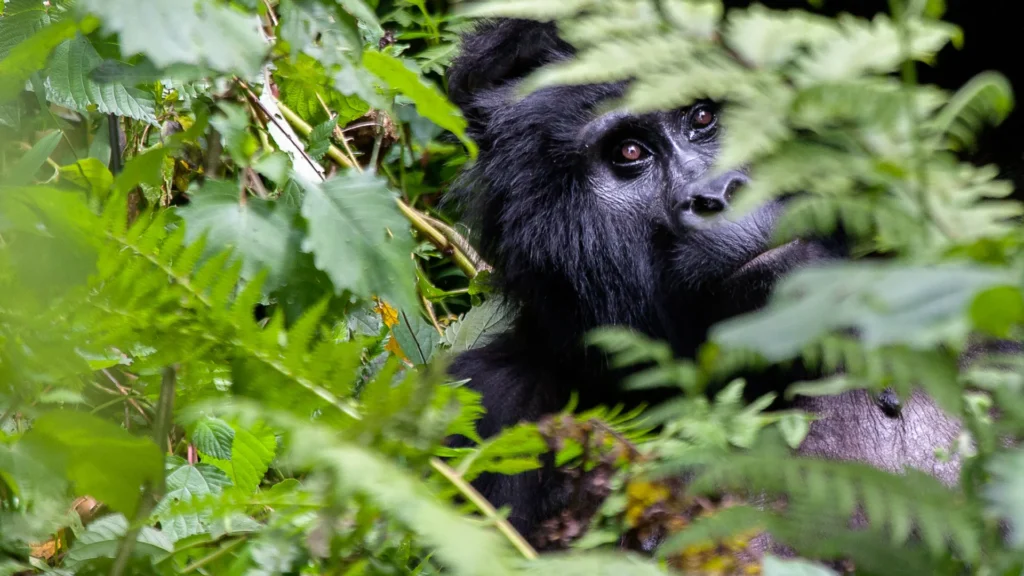
Preparing to observe Rwanda mountain gorillas involves more than selecting hiking boots and waterproof clothing. Visitors are entering the natural habitat of endangered primates whose survival depends on carefully managed conservation programmes, responsible tourism and strict visitor behaviour.
Mountain gorilla trekking in Rwanda takes place in Volcanoes National Park, where authorised guides lead small groups through forested mountain terrain to observe habituated gorilla families. The experience combines physical activity, wildlife photography and close observation of complex gorilla social behaviour.
Because mountain gorillas are vulnerable to human diseases and disturbance, packing decisions should consider both visitor comfort and animal welfare. Appropriate equipment allows travellers to remain comfortable without interfering with the gorillas or their environment.
This detailed Rwanda mountain gorillas packing guide explains how to prepare for a responsible wildlife encounter, including conservation-related health supplies, suitable photography equipment, protective clothing, low-impact travel accessories and practical arrangements for the forest.
Why Packing for Mountain Gorillas Is Different From Ordinary Wildlife Viewing
Many African wildlife experiences involve observing animals from a vehicle or designated viewing area.
Mountain gorilla trekking is different because visitors enter a forest environment where the animals move naturally.
The trek may involve several hours of walking, but the actual gorilla encounter is generally limited to one hour.
Visitors must therefore carry equipment suitable for both the physical journey and the carefully controlled observation period.
The Importance of Responsible Equipment Choices
Large, noisy or cumbersome equipment can interfere with group movement.
Bright flash photography can disturb wildlife and is prohibited.
Unnecessary food packaging creates additional waste.
Poorly managed personal belongings may distract visitors from ranger instructions.
A responsible gorilla trekking packing list should therefore prioritise compact, quiet and practical equipment.
Understanding Mountain Gorilla Conservation Requirements
Mountain gorillas are a subspecies of eastern gorilla and inhabit the Virunga Massif and the Bwindi-Sarambwe landscape.
Rwanda’s population lives within Volcanoes National Park, where conservation teams monitor habituated gorilla families.
Tourism provides financial and economic support to the wider conservation system, but human contact also introduces potential risks.
Why Human Health Matters
Gorillas share a close biological relationship with humans.
They can be susceptible to human respiratory infections, making disease prevention particularly important.
Research and field reports from Gorilla Doctors have documented respiratory disease outbreaks affecting mountain gorilla families.
Visitors must therefore take health precautions seriously.
Packing Face Masks
Carry suitable face masks and follow the current requirements of park authorities.
Masks should be clean and stored in a protective pouch before use.
Bring a spare mask in case the first becomes wet or damaged.
What If You Have Respiratory Symptoms?
Visitors experiencing fever, cough or other potentially contagious symptoms should inform their safari operator and park staff.
Do not attempt to conceal illness to participate in trekking.
The welfare of the gorillas takes priority over an individual visitor’s planned encounter.
Personal Hygiene Supplies for Gorilla Trekking
A small personal hygiene kit is useful during forest excursions.
Hand Sanitiser
Hand sanitiser can be convenient when handwashing facilities are unavailable.
However, it does not replace following park-specific hygiene procedures.
Tissues
Carry a small supply of tissues for personal use.
Used tissues must be stored and disposed of appropriately outside the forest.
Reusable Waste Bag
A small sealable bag can help contain personal waste until proper disposal facilities are available.
Never leave litter inside the national park.
Personal Medication
Carry prescribed medication and any necessary medical supplies.
Visitors with significant health conditions should obtain professional advice before travelling.
Choosing Clothing That Minimises Disturbance
Clothing for Rwanda mountain gorilla trekking should be comfortable, protective and suitable for the forest environment.
Earth tones and subdued colours are practical choices, although there is no need to purchase an entirely new wardrobe solely to achieve a particular colour scheme.
The most important considerations are durability, weather protection and freedom of movement.
Long-Sleeved Shirts
Long sleeves protect against vegetation and insects.
Choose breathable fabrics that allow comfortable walking.
Long Trousers
Long trousers provide protection against nettles, scratches and muddy vegetation.
Flexible outdoor fabrics are preferable to restrictive clothing.
Waterproof Jackets
A lightweight waterproof jacket is essential because rainfall can occur throughout the year.
Choose a design that allows quiet, comfortable movement.
Gloves
Gardening gloves protect the hands when moving through vegetation.
They should be easy to remove when necessary.
Hiking Boots for Mountain Gorilla Habitat
The terrain inside Volcanoes National Park can be uneven, steep and muddy.
Supportive hiking boots with reliable grip are recommended.
Traction
Choose soles designed for natural trails.
Good traction helps visitors move carefully across wet ground.
Comfort
Boots should fit properly and be worn during training walks before departure.
Poorly fitting footwear can cause blisters and fatigue.
Water Protection
Water-resistant or waterproof boots are useful because forest vegetation may remain damp.
Lower-Leg Protection
Long socks or gaiters can help prevent mud and debris entering footwear.
Responsible Gorilla Photography Equipment
Mountain gorilla photography in Rwanda is one of the highlights of the trekking experience.
However, photographers must work within strict conservation rules and the practical limitations of the forest.
Choosing a Camera
A DSLR, mirrorless camera or modern smartphone can produce excellent results.
The best choice depends on photographic experience, equipment weight and personal preferences.
Lens Selection
A versatile zoom lens allows photographers to adjust framing without changing position unnecessarily.
This is particularly useful because visitors must maintain the required distance from gorillas.
Low-Light Performance
Forest vegetation can reduce available light.
Cameras with good high-ISO performance and suitable lenses can help capture sharp images without flash.
Flash Photography
Flash photography is prohibited during gorilla encounters.
Disable automatic flash before approaching the animals.
Avoiding Excessive Equipment
Large camera bags and multiple lenses can become cumbersome.
Carry only the equipment you can manage comfortably.
Camera Settings for Mountain Gorilla Photography
The correct settings depend on lighting, subject movement and equipment.
Shutter Speed
Gorillas may remain still while resting or move quickly during social interactions.
A faster shutter speed helps reduce motion blur.
However, faster shutter speeds require sufficient light or higher ISO settings.
Aperture
A wider aperture can help in dim forest conditions.
It also produces a shallower depth of field, which may be useful for portraits.
ISO
Modern cameras can often produce usable images at higher ISO settings.
It is generally better to accept some image noise than to produce consistently blurred photographs.
Autofocus
Continuous autofocus can help track moving subjects.
For still portraits, accurate focus on the eyes is particularly important.
Exposure
Dark gorilla fur can challenge automatic exposure systems.
Review images occasionally, but avoid spending the entire encounter looking at the camera screen.
Photography Etiquette Around Mountain Gorillas
Photography must never interfere with ranger instructions.
Visitors should not move closer to obtain a better photograph.
Do not attempt to attract a gorilla’s attention by making noises or gestures.
Avoid sudden movements and unnecessary equipment handling.
If a gorilla approaches, follow the guide’s instructions rather than attempting to photograph from an unsafe position.
Respecting the Viewing Distance
Park authorities specify minimum separation requirements to reduce disturbance and disease transmission.
Follow the current distance communicated during the briefing.
The commonly referenced minimum is seven metres, although conservation recommendations and operational rules may require greater separation.
Photographing Young Gorillas
Young gorillas may be playful and curious.
Visitors should observe without encouraging interaction.
Never attempt to touch a juvenile or position yourself between family members.
Photographing Silverbacks
Silverbacks are powerful wild animals.
Maintain a calm posture and follow ranger instructions.
Avoid behaviour that could be interpreted as challenging or intrusive.
Packing Binoculars for Gorilla Trekking
Binoculars are not essential for most gorilla encounters because visitors may observe gorillas at relatively close range.
However, compact binoculars can be useful for birdwatching and other wildlife observations during the forest walk.
If you bring binoculars, choose a lightweight pair that can be carried comfortably.
Avoid large equipment that adds unnecessary weight.
Protecting Photography Equipment From Rain
The mountain forest can be damp even when rainfall is not occurring.
Carry waterproof camera covers or protective bags.
Use a clean lens cloth to remove moisture.
Keep spare batteries and memory cards in sealed compartments.
Avoid changing lenses unnecessarily in wet or dusty conditions.
Why Quiet Equipment Matters
The gorilla encounter is intended to minimise disturbance.
Avoid equipment that produces loud electronic sounds.
Disable unnecessary camera alerts and smartphone notifications.
Keep conversations quiet and follow ranger instructions.
A calm approach improves the experience for both visitors and wildlife.
Food, Water and Gorilla Conservation
Visitors should carry sufficient drinking water and suitable snacks for the walking portion of the excursion.
However, food must not be consumed near the gorillas.
Why Food Restrictions Matter
Human food can attract wildlife and create hygiene concerns.
Food packaging also presents a litter risk.
Visitors should follow guide instructions regarding where eating is permitted.
Reusable Water Bottles
Reusable bottles reduce unnecessary disposable waste.
Choose a bottle that closes securely.
Snacks
Carry compact foods that do not require complicated preparation.
Keep all wrappers and leftovers in your bag until proper disposal is possible.
Avoiding Single-Use Plastic and Litter
Responsible gorilla tourism includes reducing unnecessary waste.
Rwanda has strict policies concerning plastic carrier bags, and visitors should avoid bringing prohibited items.
Reusable containers and durable bags are practical alternatives.
Do not leave packaging, tissues, food scraps or other waste in the forest.
What About Biodegradable Waste?
Even biodegradable materials should not be discarded in the park.
Food scraps can attract wildlife and alter natural behaviour.
Carry all waste out.
Packing for Different Weather Conditions
The Virunga mountain environment experiences variable rainfall and temperature.
Relatively Dry Months
June to September and parts of December to February are commonly associated with relatively drier conditions.
Nevertheless, waterproof clothing remains necessary.
Wetter Months
March to May and October to November commonly experience more rainfall.
During these periods, gaiters, waterproof storage and spare clothing become particularly useful.
Cool Mornings
A lightweight fleece or insulating layer can improve comfort before the trek.
Remove unnecessary layers during strenuous walking to avoid overheating.
Health Preparation Beyond Packing
A responsible mountain gorilla trekking experience begins before arrival in Rwanda.
Travellers should review relevant travel health advice and ensure that routine vaccinations and destination-specific requirements are addressed.
Consult an appropriate healthcare professional for individual recommendations.
Travel Insurance
Choose insurance that covers the planned activities and relevant medical needs.
Check policy exclusions carefully.
Existing Medical Conditions
Visitors with cardiovascular, respiratory or mobility concerns should seek medical guidance before trekking.
Altitude Considerations
The mountain environment can make physical activity more demanding.
Fitness does not eliminate the risk of altitude-related illness.
Packing for Senior Gorilla Trekkers
Gorilla trekking for seniors is possible for many older visitors.
Equipment should prioritise comfort, balance and manageable weight.
Supportive footwear and porter assistance can be particularly useful.
Visitors with medical concerns should plan medication and accessibility requirements carefully.
Packing for Visitors With Mobility Limitations
Visitors requiring specialised assistance should communicate their needs before travelling.
Ordinary porter services may not meet every mobility requirement.
Specialised carrying arrangements may be possible in certain circumstances, but availability and suitability must be confirmed.
Personal mobility aids should be discussed with the relevant operator and park authorities.
What Not to Bring Near Mountain Gorillas
Avoid unnecessary food, loud electronic devices and equipment that interferes with movement.
Do not bring items intended to attract or interact with gorillas.
Flash photography equipment should not be used during the encounter.
Drones are not part of ordinary gorilla trekking and require appropriate authorisation.
Avoid carrying excessive luggage into the forest.
Understanding the One-Hour Gorilla Encounter
The standard gorilla viewing period is limited to one hour.
This time restriction helps manage human disturbance and disease exposure.
Visitors should organise their camera equipment before reaching the gorillas.
Constantly changing lenses or searching through bags can waste valuable observation time.
Remember that watching gorilla behaviour directly is often more rewarding than attempting to photograph every moment.
Gorilla Trekking Group Limits and Equipment Management
The standard maximum group size is eight visitors per habituated gorilla family.
Small groups help reduce disturbance and allow rangers to supervise visitor behaviour.
Keep equipment compact and avoid blocking other visitors.
Do not move independently to obtain a different photographic angle.
Mountain Gorilla Conservation and Visitor Responsibility
Rwanda mountain gorilla conservation depends on habitat protection, veterinary monitoring, ranger patrols and responsible tourism.
The animals are closely monitored by conservation teams.
Gorilla Doctors has documented the importance of preventing human-to-gorilla disease transmission.
Visitors contribute by following health rules, respecting separation distances and avoiding unnecessary disturbance.
Packing appropriate equipment is therefore part of responsible wildlife tourism rather than simply a matter of personal comfort.
Frequently Asked Questions About Rwanda Mountain Gorilla Packing
What should I pack to see mountain gorillas in Rwanda?
Pack supportive hiking boots, long protective clothing, waterproof outerwear, gloves, water, personal medication and suitable camera equipment.
Do I need a face mask?
Carry suitable masks and follow current park health requirements. Disease prevention is important for gorilla conservation.
Can I use flash photography?
No. Flash photography is prohibited during gorilla encounters.
What camera lens is best?
A versatile zoom lens is useful because it allows flexible framing without unnecessary movement.
Can I use a smartphone?
Yes. Smartphones can capture excellent images, particularly in favourable lighting.
Should I bring binoculars?
They are optional and may be useful for other wildlife observations.
Can I bring food?
Snacks may be carried for the walking portion, but eating near gorillas is not permitted.
Can I touch a gorilla?
No. Visitors must never attempt to touch gorillas.
How close can I get?
Follow the minimum separation distance and ranger instructions communicated during the briefing.
Are mountain gorillas dangerous?
They are powerful wild animals. Habituated families are accustomed to regulated observation, but visitors must follow all safety rules.
Do I need special photography equipment?
No. A suitable camera or smartphone is sufficient for many visitors.
Can I bring a tripod?
Large tripods may be impractical. Discuss specialist equipment with your guide before trekking.
What should I do if it rains?
Use waterproof clothing and protect electronics in suitable bags or covers.
Should I hire a porter?
Porter assistance can reduce the weight carried and provide support on difficult terrain.
What happens if I am ill?
Inform your operator and park staff. Do not conceal symptoms that could pose a risk to gorillas.
Final Advice for Responsible Mountain Gorilla Trekking
The best Rwanda mountain gorillas packing guide balances personal comfort with conservation responsibility.
Protective clothing, reliable hiking boots, waterproof equipment and a lightweight daypack help visitors manage the forest environment.
Suitable camera equipment allows memorable photography without disturbing wildlife.
Health precautions, waste management and respect for ranger instructions help protect endangered mountain gorillas.
A successful encounter is not measured by how close visitors approach or how many photographs they take. It is defined by the opportunity to observe wild gorillas responsibly while contributing to their long-term protection.
For assistance with Rwanda gorilla trekking permits, conservation-related visitor requirements or planning a responsible mountain gorilla trekking experience, contact Gorilla Rwanda Safaris.