
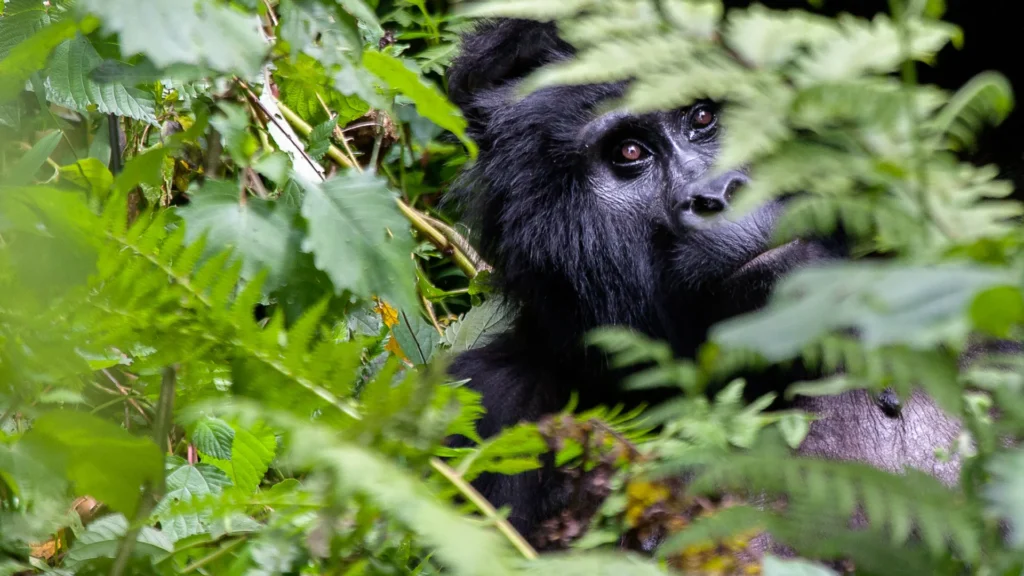
Volcanoes gorilla trekking transport requires careful coordination between accommodation, the official park headquarters and the starting location assigned for the day’s trek. Although Volcanoes National Park is relatively accessible from Rwanda’s capital, reaching the gorillas is not the same as driving to a conventional wildlife viewing area. The experience involves regulated reporting procedures, ranger-led allocation, vehicle movements and a final journey on foot into mountainous forest.
The park is located in northwestern Rwanda within the Virunga Mountains, a landscape of volcanic slopes, bamboo forests, montane vegetation and high-altitude ecosystems. Visitors normally approach through Musanze before reaching Kinigi, where the official gorilla trekking briefing takes place.
For travellers planning their first Rwanda mountain gorilla trekking experience, it is important to understand that Kinigi headquarters and the actual forest starting point may be different locations. After the briefing, trekking groups can be directed towards different access areas depending on the gorilla family assigned and operational conditions.
This Volcanoes Gorilla Trekking Transport Guide examines the park’s access geography, roads, briefing procedures, vehicle requirements, accommodation locations, seasonal conditions and practical considerations for reaching the forest safely and punctually.
Understanding the Geography of Volcanoes National Park
Volcanoes National Park protects part of Rwanda’s section of the Virunga volcanic mountain range.
The protected landscape is associated with five major volcanoes: Karisimbi, Bisoke, Sabyinyo, Gahinga and Muhabura.
These mountains create a complex environment of steep slopes, valleys, bamboo zones and forested terrain.
The park’s geography directly influences visitor transport because trekking starting locations are distributed around different sections of the protected area.
Unlike a national park where visitors drive along a network of game-viewing roads, gorilla trekking involves reaching a designated starting area and then continuing on foot with authorised personnel.
The location of the assigned gorilla family determines much of the day’s movement.
Why Gorilla Trekking Starting Points Vary
Mountain gorillas move naturally through their habitat in search of food and suitable resting areas.
Trackers monitor their movements, helping park personnel determine the appropriate approach for tourist groups.
Consequently, the same visitor may not use the same starting point on two different trekking days.
The route can also change according to weather, terrain and operational decisions.
This variability is one reason travellers should avoid planning transport around an assumed trekking route.
A reliable driver should be prepared to follow the instructions provided after the morning briefing.
Kinigi: The Main Visitor Reporting Location
Kinigi headquarters is the principal meeting point for standard tourist gorilla trekking in Volcanoes National Park.
According to official Rwanda tourism information, visitors gather at approximately 7:00 a.m. for the morning briefing and allocation process.
The headquarters serve as an important coordination point between tourists, park personnel, guides and transport providers.
Visitors should arrive with the required booking documents and identification.
The reporting time is an essential part of the activity rather than a flexible sightseeing appointment.
What Happens at the Headquarters?
Park personnel organise visitors into trekking groups and explain the regulations governing wildlife encounters.
The briefing includes information about appropriate behaviour, conservation rules and practical trekking arrangements.
Visitors may communicate relevant fitness or mobility concerns before group allocation.
The authorities determine the operational arrangements for the day.
Once the briefing is complete, groups proceed towards the appropriate starting locations.
The onward journey may involve additional vehicle transport before the walking section begins.
Why Drivers Should Remain Available
A driver who delivers visitors to Kinigi and immediately departs may create complications if further vehicle movement is required.
The exact transport arrangement should therefore be agreed in advance.
Visitors should confirm whether their driver will remain available for onward transfers and collection after the trek.
This is particularly important when using a separately booked taxi rather than a dedicated safari vehicle.
Getting from Musanze to Kinigi
Musanze is the principal urban gateway to Volcanoes National Park.
Visit Rwanda identifies the park headquarters at Kinigi as approximately 13 kilometres from Musanze.
The actual driving distance from an individual hotel depends on its location and the chosen road.
Visitors staying in central Musanze should allow enough time to reach Kinigi before the briefing.
Choosing a Morning Departure Time
The departure time should be calculated backwards from the official reporting requirement.
Allow for breakfast, loading the vehicle, possible road delays and the time needed to enter the visitor reporting area.
The aim should be to arrive comfortably before the briefing rather than at the final possible moment.
Travellers should confirm their collection time with the driver the previous evening.
Can You Walk from Musanze to Kinigi?
Although Musanze and Kinigi are relatively close by road, walking between them is not generally a practical substitute for a reliable morning transfer.
The distance, early reporting time and need to conserve energy for the forest trek make vehicle transport preferable.
Visitors should also consider road safety and the possibility of rain or poor visibility.
Walking may be appropriate for short local journeys around accommodation, but not as an improvised solution to reaching the official trekking briefing.
Access Roads Around Volcanoes National Park
The principal road connecting Kigali and Musanze is part of Rwanda’s established surfaced road network.
However, smaller roads leading towards rural accommodation, agricultural communities and trekking starting areas can have different surfaces and conditions.
Some access roads may be unsurfaced.
Rainfall can affect traction, drainage and the ease of travel.
Paved Roads Versus Rural Access Roads
A visitor may travel comfortably on paved roads for most of the journey and encounter rougher conditions near a particular lodge or trekking approach.
This is why vehicle suitability should be assessed according to the final destination.
Accommodation providers should be able to explain the condition of their access road.
Drivers familiar with the area can also advise on appropriate vehicle choices.
Road Conditions During Rain
Volcanoes National Park receives substantial rainfall because of its mountain environment.
Rain can create muddy surfaces, reduce visibility and increase the difficulty of driving on smaller roads.
Travellers should avoid assuming that dry-season journey estimates apply under every condition.
Where roads are challenging, additional travel time may be necessary.
Do You Need a 4×4 for Volcanoes Gorilla Trekking?
A four-wheel-drive vehicle for Volcanoes National Park can be useful, but it is not automatically required for every journey.
The main route to Musanze is generally accessible using conventional vehicles under suitable conditions.
However, certain rural access roads may be better suited to vehicles with higher ground clearance.
The appropriate vehicle depends on accommodation location, weather and the assigned transport requirements.
Conventional Cars
A well-maintained conventional vehicle may be suitable for paved roads and accessible accommodation properties.
Travellers should nevertheless confirm the road conditions at their final destination.
A small vehicle with limited ground clearance may be less suitable for rough or muddy sections.
SUVs and Four-Wheel-Drive Vehicles
An SUV or 4×4 can provide additional flexibility on uneven roads.
However, vehicle size alone does not guarantee safe travel.
Tyre condition, maintenance, driver experience and road conditions are equally important.
Visitors should choose a vehicle appropriate to the journey rather than paying for an unnecessarily expensive category.
Safari Land Cruisers
Some travellers use dedicated safari vehicles, including Toyota Land Cruisers, for broader East African journeys.
These can provide luggage space, ground clearance and comfort on longer routes.
For a short Volcanoes National Park visit, however, a large safari vehicle may not be necessary.
The best choice depends on the complete itinerary and passenger requirements.
How Gorilla Family Allocation Affects Transport
Gorilla family allocation in Volcanoes National Park is managed by the park authorities.
Visitors cannot assume that a particular family will be assigned based on the location of their hotel or the vehicle they have booked.
The authorities consider operational requirements and may take fitness-related information into account.
Different gorilla families occupy different parts of the forest.
The distance between Kinigi and the assigned trekking starting area can therefore vary.
Can You Choose a Nearby Gorilla Family?
Visitors may communicate relevant physical concerns, but a specific family or trekking difficulty cannot normally be guaranteed.
The gorillas’ movements are natural and may change from day to day.
Even a group considered relatively accessible may move into more challenging terrain.
Transport arrangements should therefore remain flexible.
Does a Luxury Lodge Provide Easier Trekking Access?
Staying at a luxury lodge does not determine which gorilla family a visitor will encounter.
The official trekking programme is managed independently of accommodation category.
A lodge closer to Kinigi may reduce the morning road journey, but it does not guarantee a shorter forest walk.
This distinction is important when comparing accommodation prices.
The Transition from Vehicle Travel to Forest Trekking
The final stage of a Volcanoes gorilla trekking journey takes place on foot.
After reaching the designated starting area, visitors follow authorised guides into the mountain environment.
The walking route may pass through agricultural land near the park boundary before entering forest vegetation.
Terrain can include steep slopes, muddy paths, roots and dense plants.
Why Vehicles Cannot Reach the Gorillas
Mountain gorilla trekking is designed as a controlled walking experience within protected habitat.
The gorillas move through natural forest environments rather than remaining beside vehicle-accessible roads.
Attempting to drive directly to gorillas would be incompatible with the ecological and operational nature of the activity.
Visitors should therefore prepare for walking even if they have arranged comfortable private transport.
How Long Is the Walk?
Visit Rwanda notes that hikes to gorilla locations can range from relatively short walks to four hours or more.
The actual duration depends on gorilla movements, terrain, weather and the capabilities of the group.
The return walk adds to the total activity time.
A fixed finishing time should not be promised.
Accommodation Locations and Transport Convenience
The location of accommodation can significantly affect the practical arrangements for Volcanoes National Park gorilla trekking.
Visitors may stay in Musanze, Kinigi or rural areas surrounding the park.
Each location offers different advantages.
Staying in Musanze
Musanze provides access to restaurants, shops and a broader range of accommodation.
It can be attractive for travellers who prefer an urban base.
However, a morning transfer to Kinigi is required.
Staying in Kinigi
Accommodation around Kinigi may provide convenient access to the headquarters.
This can reduce the amount of early-morning driving.
However, the actual distance varies between properties.
Staying in Rural Lodges
Some lodges are situated in quieter rural locations with mountain views.
These properties may provide an attractive atmosphere but can involve additional access-road considerations.
Travellers should confirm the condition of the approach road and the expected journey to the briefing point.
Transport Planning for Two Consecutive Gorilla Treks
Some visitors choose to undertake two gorilla trekking experiences on separate days.
This can provide opportunities to observe different family behaviours and forest environments.
However, each trekking day requires its own valid permit and official arrangements.
The assigned gorilla family may differ, but a particular allocation cannot be guaranteed.
Transport should remain available for both mornings.
Travellers should also consider physical recovery, as the difficulty of each trek is unpredictable.
Volcanoes National Park Transport for Photographers
Wildlife photographers often carry more equipment than other visitors.
Camera bodies, lenses, batteries and protective accessories can increase luggage weight.
The vehicle should provide adequate space for equipment and secure storage.
During the trek, a porter may assist with carrying a backpack.
However, photographers should avoid bringing excessive equipment into difficult terrain.
Protecting Camera Equipment
The Virunga Mountains can be wet and misty.
Waterproof bags or protective covers are useful during both road travel and trekking.
Equipment should be packed securely to prevent damage on uneven roads.
Visitors should also remember that flash photography is prohibited during gorilla encounters.
Transport for Older Travellers and Visitors with Mobility Concerns
Gorilla trekking for seniors requires realistic planning around both vehicle travel and forest conditions.
A comfortable vehicle can reduce fatigue before the trek.
Travellers may prefer accommodation with easy access, minimal stairs and a relatively short drive to Kinigi.
However, the forest remains mountainous and physically demanding.
Mobility Assistance
Visitors with significant mobility limitations should discuss their requirements with the safari organiser before booking.
Porter support and specialised assistance may be available under particular arrangements.
These services should be confirmed individually.
No operator should guarantee that every trekking route will be easy or suitable for every visitor.
Transport During the Wet and Dry Seasons
The best time for Volcanoes gorilla trekking depends partly on walking conditions and personal preferences.
The comparatively drier months are often associated with easier trail conditions.
However, rainfall can occur throughout the year.
During wetter periods, rural roads may become muddy and forest trails more slippery.
Travellers should allow realistic transfer times and use appropriate footwear.
A reliable driver familiar with local conditions can be particularly valuable during heavy rain.
Parking and Vehicle Waiting Arrangements
Visitors using a private vehicle should confirm where the driver is expected to wait during the trek.
The appropriate location depends on the day’s park instructions and the assigned starting point.
Drivers should not assume that every trekking group will return at the same time.
The duration of the activity varies.
Clear communication about collection arrangements can prevent confusion after the forest walk.
What Happens if Transport Breaks Down?
Vehicle problems are uncommon with properly maintained transport but remain possible.
Travellers should use reputable providers and establish an emergency contact.
If a problem occurs before the briefing, the priority is to communicate promptly with the transport provider and relevant park personnel.
However, contacting the park does not guarantee that a late arrival will be accepted.
The best protection is reliable transport and a realistic schedule.
Combining Gorilla Trekking with Other Volcanoes Activities
Volcanoes National Park also offers activities such as golden monkey trekking and mountain hiking.
These experiences may require different permits, meeting procedures and starting locations.
Visitors should not assume that transport arrangements for gorilla trekking automatically cover every other activity.
For example, a volcano hike may involve different physical demands and access requirements.
Each activity should be planned according to its official instructions.
Responsible Transport Around Gorilla Habitat
Transport arrangements can influence the environmental impact of tourism.
Visitors should avoid unnecessary off-road driving, littering and disturbance to local communities.
Drivers should respect park boundaries and follow authorised access routes.
Choosing reliable vehicles and combining compatible transfers can reduce unnecessary journeys.
Responsible tourism also involves respecting local residents and agricultural activities near the park.
The roads around Volcanoes National Park serve communities as well as tourists.
Frequently Asked Questions About Volcanoes Gorilla Trekking Transport
Where is the Volcanoes National Park gorilla trekking headquarters?
The principal headquarters are located at Kinigi in northern Rwanda.
How far is Kinigi from Musanze?
Visit Rwanda identifies Kinigi as approximately 13 kilometres from Musanze.
What time does the gorilla trekking briefing begin?
Visitors are instructed to report at approximately 7:00 a.m.
Do all gorilla trekking groups start walking from Kinigi?
Not necessarily. Groups may travel to different starting locations after the official briefing.
Can my driver take me directly to the gorillas?
No. The actual gorilla encounter takes place through authorised guided trekking on foot.
Is a 4×4 required?
The requirement depends on the complete route, road conditions and accommodation location.
Can I use a taxi from Musanze?
A taxi may be suitable if arranged reliably and if the driver understands the required reporting and collection arrangements.
Does accommodation near Kinigi guarantee an easier trek?
No. Gorilla family allocation and forest conditions are independent of accommodation category.
Can I choose my gorilla trekking starting point?
Starting arrangements are managed by the park authorities.
How long will my driver need to wait?
The duration varies because trekking time depends on gorilla movements and terrain.
Is transport included in the gorilla permit?
Private road transport is not ordinarily included.
Can I undertake two gorilla treks using the same vehicle?
Yes, provided the vehicle arrangements cover both dates and the necessary permits are obtained.
Are the park roads accessible during the rainy season?
Access generally continues under normal conditions, but smaller roads may become more challenging.
Can older travellers arrange additional assistance?
Support may be available, but requirements should be discussed and confirmed before booking.
Should I book accommodation close to Kinigi?
Proximity can be convenient, but comfort, price, access roads and transport arrangements should all be considered.
Arrange Reliable Access to Volcanoes National Park
Understanding Volcanoes National Park transport logistics helps visitors avoid unnecessary delays and prepare for the realities of mountain gorilla trekking.
At Gorilla Rwanda Safaris, we assist travellers with transport between Kigali, Musanze, Kinigi and the appropriate park access locations.
Our team can also provide guidance on accommodation locations, trekking-day arrangements and suitable vehicle options.
Dedicated Rwanda gorilla safari packages can be explored separately by visitors who prefer a complete travel arrangement.
Contact us with your trekking date, accommodation location and number of travellers for practical assistance organising transport to Volcanoes National Park.