1 Day Bwindi Gorilla Trek
A one-day mountain gorilla trek in Bwindi for travellers who are already in southwestern Uganda.
View SafariHandpicked Kenya Safari Tours for Every Traveler
A Rwanda safari with gorilla trekking offers one of the world's most extraordinary wildlife encounters: observing endangered mountain gorillas in their natural rainforest habitat.
All regulated tourist mountain gorilla trekking in Rwanda takes place in Volcanoes National Park, located in the country's northwestern highlands.
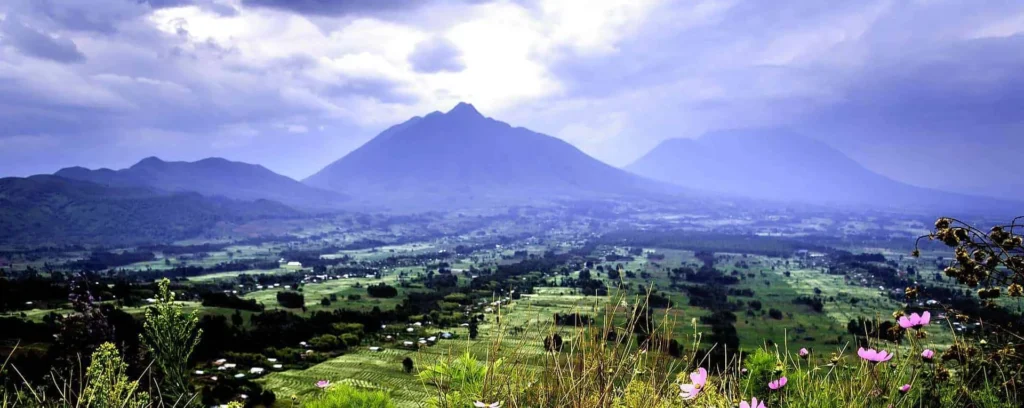
The park forms part of the wider Virunga conservation landscape and protects forests surrounding several volcanic peaks, including Mount Karisimbi, Mount Bisoke, Mount Sabyinyo, Mount Gahinga and Mount Muhabura.
These mountains create a dramatic environment of high-altitude grassland, bamboo stands, montane forest and other specialised habitats.
The park is accessible from Kigali, Rwanda's capital, with the journey to the Musanze region typically taking approximately two to three hours by road.
The nearby communities of Musanze and Kinigi serve as important gateways for visitors undertaking gorilla trekking tours.
The Virunga Mountains are one of the remaining strongholds of the mountain gorilla, a subspecies of eastern gorilla scientifically known as Gorilla beringei beringei.
Mountain gorillas are not found in ordinary savannah habitats or throughout the African continent. Their natural range is restricted to the Virunga Massif and Uganda's Bwindi Impenetrable National Park landscape.
This limited distribution makes the protection of suitable forest habitat essential to their survival.
The Virunga ecosystem also supports golden monkeys, forest birds, small mammals and numerous plant species adapted to mountain environments.
Showing 1–12 of 222 safaris
A one-day mountain gorilla trek in Bwindi for travellers who are already in southwestern Uganda.
View SafariA single day in Kampala for the kasubi and palace area, a cultural show, and a market or…
View SafariA full day in Kigali covering the Genocide Memorial, a neighborhood market, and one or two museums.
View SafariA single day on Mount Bisoke, with the crater lake as the turnaround point.
View SafariThe 1 Day Rwanda Family Safari offers an exciting and educational wildlife adventure for families visiting Rwanda.
View SafariThe 3 Day Rwanda Gorilla and Akagera Safari combines mountain gorilla trekking in Volcanoes National Park with wildlife…
View SafariThe 4 Day Rwanda Gorilla and Nyungwe Safari combines mountain gorilla trekking in Volcanoes National Park with chimpanzee…
View SafariThe 1 Day Rwanda Gorilla Trekking Safari offers an unforgettable opportunity to encounter endangered mountain gorillas in their…
View SafariThe 1 Day Rwanda Honeymoon Safari offers couples a romantic escape to the beautiful shores of Lake Kivu,…
View SafariThe 1 Day Rwanda Luxury Safari offers an exclusive wildlife experience in Akagera National Park, Rwanda's premier Big…
View SafariThe 1 Day Rwanda Primates Safari offers an exciting opportunity to encounter Rwanda's endangered golden monkeys in the…
View SafariThe 1 Day Rwanda Wildlife Safari offers an exciting opportunity to explore Akagera National Park, Rwanda's premier savannah…
View SafariA Rwanda gorilla trekking experience begins early in the morning with a briefing organised by park authorities.
Visitors assemble at the designated meeting point, where guides explain trekking procedures, conservation rules, health precautions and appropriate behaviour around gorillas.
Participants are assigned to trekking groups, after which they travel towards the appropriate starting points.
Professional trackers generally monitor the movements of habituated gorilla families and communicate relevant information to the trekking teams.
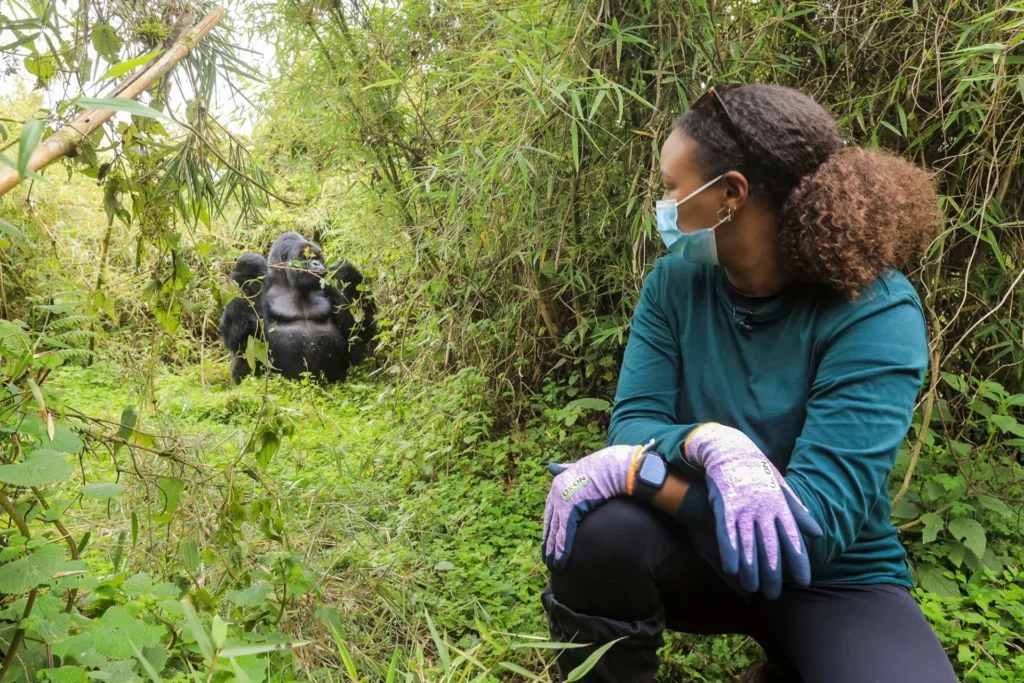
Once the walk begins, visitors follow ranger guides through the mountain forest in search of their assigned gorilla family.
The trek may involve bamboo vegetation, open mountain slopes, muddy trails, dense forest and uneven ground.
Some gorilla families may be located relatively close to accessible starting points, while others require considerably longer walks.
The location of the gorillas changes naturally as they move through their habitat to feed, rest and interact.
Consequently, the duration of gorilla trekking in Rwanda cannot be guaranteed in advance.
When the gorillas are located, visitors normally spend up to one hour observing them.
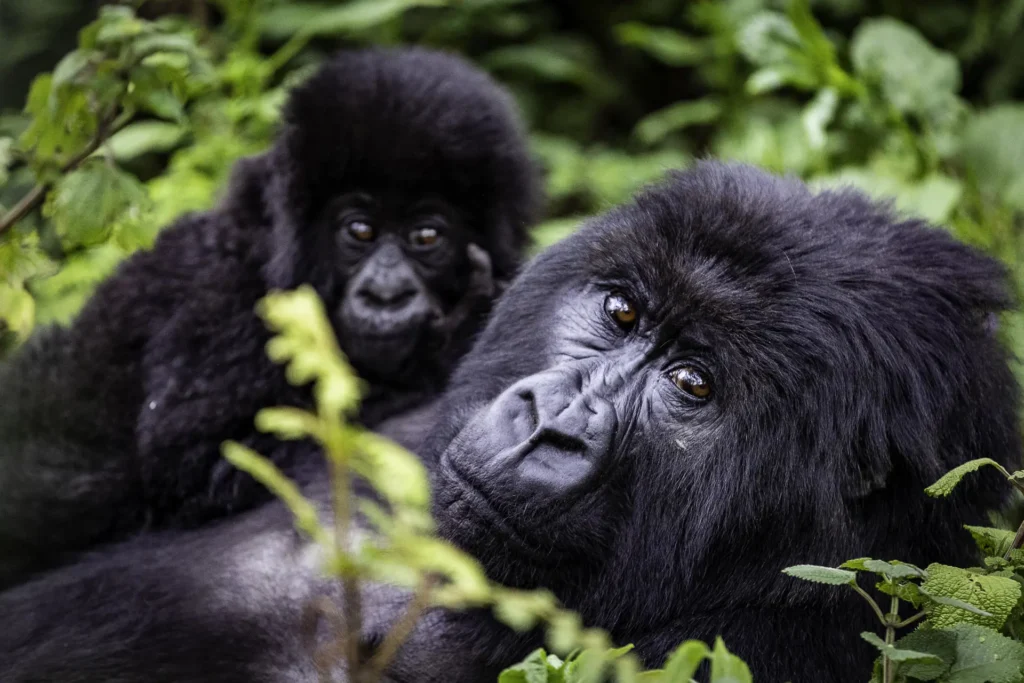
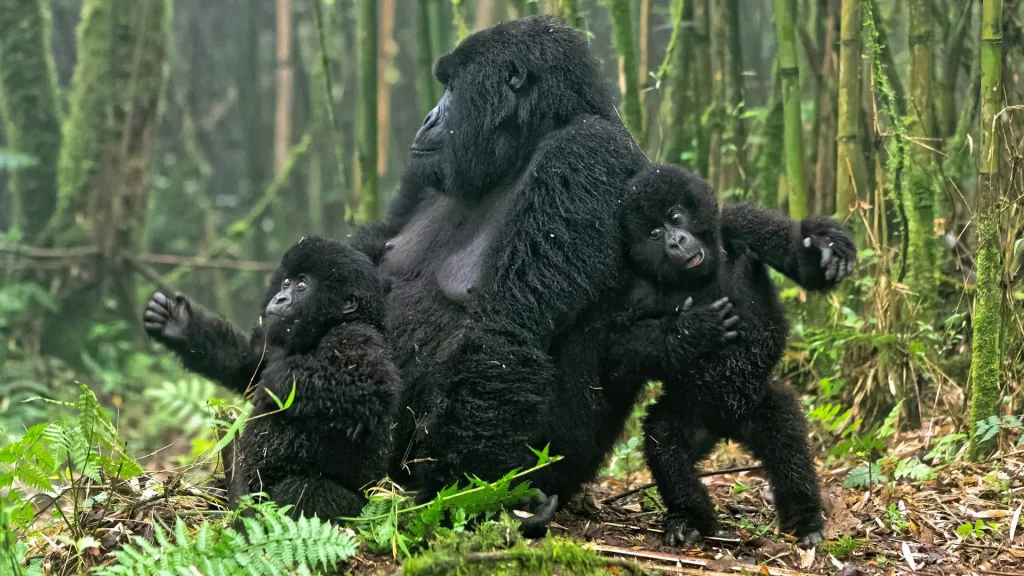
During this time, travellers may see a dominant silverback gorilla, adult females, juveniles and young gorillas interacting within the family group.
The animals may be feeding, resting, grooming, moving through vegetation or engaging in social behaviour.
The experience is particularly memorable because mountain gorillas share many behavioural characteristics with other great apes, including strong family bonds and complex social relationships.
However, visitors must respect the animals' space and follow every instruction given by the ranger guides.
Mountain gorillas live in social groups whose composition and size vary.
A group may include one or more mature males, adult females, juveniles and infants.
The dominant silverback generally plays an important role in group movement, protection and social stability.
A silverback gorilla is an adult male recognised by the silver-grey hair that develops across his back with maturity.
Silverbacks are powerful animals, but their behaviour is often calm when they are undisturbed.
They may intervene during conflicts, respond to potential threats or guide group movements.
Visitors should never interpret apparently relaxed behaviour as permission to approach closely.
Mountain gorillas are predominantly herbivorous, feeding on leaves, stems, shoots, roots and other available plant material.
Their feeding patterns influence how they move through the forest.
Seasonal vegetation and local habitat conditions can affect the location of gorilla families.
Young gorillas often display playful behaviour, while adult females provide extensive care for their infants.
Grooming, resting and close physical contact are important parts of group life.
Observing these behaviours gives travellers a deeper appreciation of gorilla conservation and the importance of protecting stable social groups.
The standard international Rwanda gorilla trekking permit costs USD 1,500 per person, subject to applicable official tariffs and eligibility rules.
The permit provides access to one regulated trekking experience on the confirmed date.
The minimum age for gorilla trekking in Rwanda is generally 15 years.
Permits are limited because the number of visitors allowed to approach each habituated gorilla family is controlled.
Rwanda gorilla permits are particularly important during popular travel periods.
Travellers with fixed international flights should check permit availability before making non-refundable arrangements.
The permit date determines the central activity around which accommodation and transportation should be organised.
A gorilla permit does not normally cover private road transfers, hotel accommodation, personal porter services or optional sightseeing activities.
Travellers should confirm these expenses when reviewing a safari quotation.
Special rates may apply to certain eligible visitor categories, but these should be verified through official channels.
The difficulty of Rwanda gorilla trekking depends on the gorilla family's location, altitude, trail conditions and the visitor's physical fitness.
Volcanoes National Park is a mountainous environment where walking may involve steep slopes and uneven surfaces.
Rain can make trails muddy and slippery, even during relatively dry periods.
Some treks are shorter and less physically demanding than others, but no specific walking distance can be promised.
Travellers do not necessarily need advanced mountaineering experience, but a reasonable level of fitness is helpful.
Regular walking, hill climbing and general cardiovascular preparation can improve comfort.
Visitors should discuss relevant mobility limitations with their safari operator before booking.
Local porters may be available to help carry bags and provide assistance on difficult sections.
Hiring a porter can make the experience more comfortable while supporting employment opportunities around the park.
Travellers with significant mobility challenges should enquire in advance about any specialised assistance arrangements and their suitability.
Rwanda gorilla trekking safety depends on responsible visitor behaviour and adherence to ranger instructions.
Gorillas are powerful wild animals, and encounters take place under controlled conditions.
Visitors should remain with their guides, avoid sudden movements and respect the minimum separation distance instructed by park authorities.
Flash photography is not permitted during gorilla encounters.
Eating, drinking and smoking near gorillas are prohibited.
Because gorillas are susceptible to certain human diseases, visitors who are ill should disclose symptoms before trekking.
The ranger team may apply additional health and safety requirements according to current conservation protocols.
Gorilla trekking in Rwanda is available throughout the year, subject to park operations and permit availability.
The relatively drier periods generally occur from June to September and December to February.
These months are popular because forest trails may be more manageable, although rainfall remains possible at any time.
The wetter periods commonly bring lush vegetation, misty scenery and more challenging walking conditions.
Mountain gorillas remain in their natural habitat throughout the year, so the experience is not dependent on a conventional wildlife migration season.
The best time for Rwanda gorilla trekking therefore depends on personal preferences, fitness, accommodation availability and travel schedules.
Appropriate clothing is important for comfort and protection in the mountain forest.
Recommended items include waterproof hiking boots, long trousers, long-sleeved shirts, a lightweight waterproof jacket and durable gloves.
Long clothing helps protect against vegetation, insects and minor scratches.
Gaiters may be useful when trails are muddy.
A small backpack can carry drinking water, snacks for use away from gorillas, personal medication and essential equipment.
Visitors should also prepare for cooler temperatures at higher elevations.
Rwanda gorilla photography offers exceptional opportunities to capture wildlife behaviour in a natural setting.
However, forest lighting can be difficult because vegetation creates deep shade and rapidly changing exposure conditions.
A camera capable of performing well in low light is useful.
Photographers should avoid relying on flash and should carry weather protection for their equipment.
The one-hour observation limit means that visitors benefit from preparing camera settings before reaching the gorilla family.
Respectful observation must always take priority over obtaining a photograph.
Rwanda's mountain gorilla conservation efforts form part of a wider regional initiative involving protected-area management, scientific research, veterinary care and community engagement.
Mountain gorillas have faced threats from habitat loss, disease, poaching-related hazards and human pressure around their remaining habitat.
Conservation organisations and park authorities work to monitor gorilla groups and protect the forests they depend upon.
Primatologist Dian Fossey played a major role in bringing international attention to mountain gorillas and their conservation challenges.
Her research in the Virunga Mountains contributed to a deeper scientific understanding of gorilla behaviour.
Visitors interested in this history can explore relevant conservation attractions around Musanze, including the Dian Fossey Gorilla Fund's Ellen DeGeneres Campus.
Responsible gorilla tourism in Rwanda creates opportunities for local employment through guiding, hospitality, transport and related services.
Tourism revenue-sharing initiatives also support community development around protected areas.
These benefits help connect conservation with the interests of people living near the park.
A Rwanda safari with gorilla trekking can include several additional experiences without turning the holiday into a repetitive primate-focused journey.
Golden monkey trekking in Volcanoes National Park offers an opportunity to observe a different primate species in bamboo-rich habitats.
Akagera National Park provides traditional game viewing, including opportunities to see elephants, giraffes, buffaloes, lions and rhinoceroses.
Nyungwe Forest National Park offers chimpanzee tracking, birdwatching and guided rainforest activities.
Lake Kivu provides scenic relaxation, boat excursions and cultural experiences after physically demanding mountain trekking.
These destinations complement gorilla trekking because they reveal different aspects of Rwanda's ecology and landscapes.
Both Rwanda and Uganda provide regulated opportunities to observe wild mountain gorillas.
Rwanda's trekking takes place in Volcanoes National Park, while Uganda offers experiences in Bwindi Impenetrable National Park and Mgahinga Gorilla National Park.
Rwanda is particularly convenient for visitors arriving through Kigali and seeking a relatively short transfer to the gorilla habitat.
Uganda offers a lower standard foreign non-resident permit price and opportunities to combine gorillas with other national parks.
Neither country can guarantee a particular gorilla family, trekking duration or photographic conditions.
The best choice depends on travel time, budget, accommodation preferences and wider safari interests.
No wildlife sighting should be guaranteed. Trackers and guides work to locate habituated gorilla families, and sightings are generally highly successful, but the animals remain wild.
Visitors must follow the separation distance and positioning instructions given by park authorities and ranger guides.
The standard minimum trekking age in Rwanda is 15 years.
Suitability depends on fitness, mobility and health rather than age alone. Travellers should discuss individual requirements before booking.
The standard observation period is up to one hour after the gorilla family has been located.
Separate trekking experiences require additional permits and are subject to official availability and allocation procedures.
Both offer outstanding wildlife experiences. Rwanda is often convenient for shorter visits, while Uganda may offer a lower permit cost and different forest environments.
The park supports golden monkeys, various birds and other forest wildlife, although sightings depend on the activity and habitat.
At Gorilla Rwanda Safaris, we specialise in arranging Rwanda gorilla trekking safaris, private wildlife experiences and combined Rwanda and Uganda gorilla holidays.
Our team can help coordinate permits, accommodation, professional guides and transport while explaining the practical requirements of trekking in Volcanoes National Park.
Contact us with your preferred travel dates and interests to begin planning a responsible and memorable Rwanda safari with gorilla trekking.