
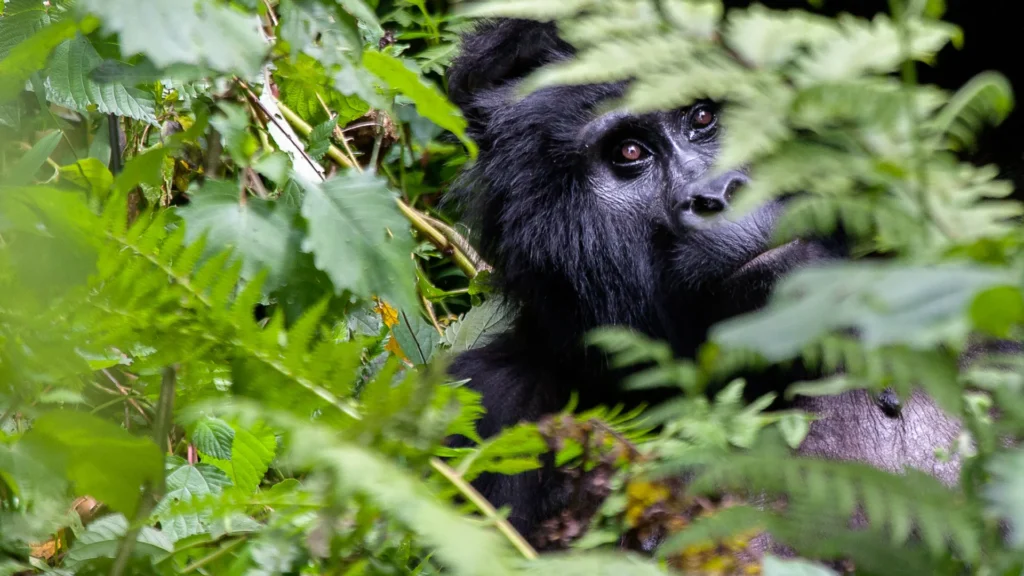
Visiting the mountain gorillas of Rwanda involves a distinctive combination of road travel, mountain access and guided walking through protected forest. Unlike many African wildlife safaris, where animals can be observed from a vehicle, Rwanda mountain gorilla trekking requires visitors to enter the gorillas’ natural habitat on foot under the supervision of authorised park personnel.
This makes transport planning particularly important for travellers with different physical abilities, older visitors, photographers carrying equipment and anyone concerned about the difficulty of walking through mountainous terrain.
The gorillas inhabit Volcanoes National Park, a protected area within the Virunga Mountains of northwestern Rwanda. Their habitat includes steep slopes, bamboo vegetation, dense forest and high-altitude environments where weather conditions can change rapidly.
Although vehicles can bring visitors to the official briefing location and designated trekking starting points, they cannot replace the forest walking experience under normal arrangements.
This Rwanda Mountain Gorillas Transport Guide examines the practical relationship between transport, physical accessibility, conservation rules and visitor preparation. It explains how travellers can assess their mobility needs, arrange appropriate support and understand the limitations of accessing a protected mountain ecosystem.
Why Mountain Gorilla Transport Is Different from a Conventional Safari
A traditional African wildlife safari often involves travelling through national parks in specially designed vehicles.
Visitors may observe elephants, giraffes, lions and other wildlife from established roads or designated viewing areas.
Mountain gorilla trekking is fundamentally different.
The gorillas live in forested mountain habitats where conventional vehicle access is not available.
Visitors must reach the forest through authorised trekking routes and continue on foot with professional guides.
The animals move naturally through their environment, so their location cannot be predicted with complete accuracy.
This means the physical demands of a gorilla encounter are more variable than those of a conventional vehicle-based safari.
Why Vehicles Cannot Drive to Gorilla Families
The mountain gorilla habitat is protected for conservation purposes.
Constructing extensive vehicle roads through the forest would create environmental disturbance and potentially fragment sensitive habitat.
The terrain itself is also unsuitable for conventional vehicle access.
Steep slopes, dense vegetation and high rainfall make the forest environment challenging.
Regulated walking access allows park authorities to manage visitor numbers and minimise unnecessary disturbance.
The absence of vehicle access is therefore part of the conservation model rather than simply a limitation of tourism infrastructure.
Where Rwanda’s Mountain Gorillas Live
Rwanda mountain gorillas inhabit the forested slopes of Volcanoes National Park.
The park forms part of the wider Virunga Massif, shared with Uganda and the Democratic Republic of the Congo.
The landscape contains bamboo forests, montane vegetation and other habitats associated with volcanic mountains.
Mountain gorillas move through these environments according to food availability, social behaviour and ecological conditions.
Their movements influence the distance and difficulty of tourist trekking routes.
Altitude and Its Effect on Visitors
Official Rwanda tourism information indicates that gorilla trekking can involve elevations of approximately 2,500 to 4,000 metres.
At these altitudes, some visitors may experience greater physical exertion than they would at sea level.
Walking uphill can feel more demanding, particularly for travellers who are not accustomed to mountain environments.
The combination of altitude, uneven terrain and variable weather makes preparation important.
Visitors should assess their physical capabilities realistically rather than assuming that every trek will be short.
Understanding Gorilla Trekking Difficulty
Rwanda gorilla trekking difficulty varies considerably between groups and dates.
Some visitors may reach their assigned gorilla family after a relatively manageable walk.
Others may spend several hours moving through steep or muddy terrain.
The actual route depends on the gorillas’ location and the operational arrangements established by park authorities.
Factors That Affect Trekking Difficulty
Several factors influence the physical demands of the experience:
- Distance to the assigned gorilla family.
- Steepness of the terrain.
- Altitude.
- Rainfall and trail conditions.
- Density of vegetation.
- Individual fitness and mobility.
- Duration of the return walk.
No safari operator can accurately guarantee the walking distance before the gorillas’ location is known.
Can Visitors Request an Easier Trek?
Visitors may communicate relevant mobility or fitness concerns during the official briefing.
Park personnel may consider these circumstances when organising groups.
However, gorilla movements and terrain conditions remain unpredictable.
A request for a less demanding route should therefore be treated as a preference rather than a guarantee.
Gorilla Trekking for Older Travellers
Gorilla trekking for seniors in Rwanda is possible for many older visitors, but suitability depends on individual health, mobility and fitness.
Age alone does not determine whether someone can participate.
Some older travellers are experienced hikers, while younger visitors may struggle with steep terrain.
The important considerations are walking ability, balance, endurance and comfort with uneven ground.
Preparing Before Travel
Older visitors should discuss relevant health concerns with a qualified medical professional before undertaking strenuous mountain activity.
Regular walking and appropriate physical preparation can be beneficial.
Travellers should also consider whether they can manage prolonged periods on their feet.
A realistic understanding of personal limitations helps avoid unnecessary difficulties.
Choosing Suitable Accommodation
Accommodation can influence comfort before and after trekking.
Visitors with mobility concerns may prefer properties with minimal stairs, accessible bathrooms and convenient vehicle access.
A shorter transfer to the park headquarters can also reduce fatigue.
However, accommodation convenience does not determine the difficulty of the forest trek.
Gorilla Trekking for Travellers with Limited Mobility
Accessible gorilla trekking in Rwanda requires individual assessment and advance planning.
The natural terrain presents substantial challenges for visitors who cannot walk independently over uneven ground.
However, local support arrangements may sometimes help travellers with particular mobility needs.
These arrangements must be discussed with the safari organiser and relevant local providers before permits and accommodation are confirmed.
Specialised Carrying Assistance
In some circumstances, specialised carrying arrangements may be available for visitors who cannot complete the trek on foot.
Such services may involve a team of local assistants and equipment designed to support the visitor.
However, availability, suitability, cost and operational approval must be confirmed individually.
Travellers should not assume that specialised assistance is automatically included in the gorilla permit.
Important Questions for Mobility Planning
Before booking, travellers should explain their mobility limitations and ask about the practical requirements of the experience.
Relevant considerations include body weight, ability to transfer into equipment, medical needs and the level of assistance required.
The suitability of a particular arrangement depends on both the visitor and the terrain.
No responsible operator should guarantee accessibility without assessing these details.
The Role of Gorilla Trekking Porters
Gorilla trekking porters in Rwanda provide valuable assistance during forest walks.
Porters can carry backpacks, camera equipment and other personal belongings.
They may also help visitors maintain balance on difficult sections of the trail.
This assistance can make the experience more comfortable for a wide range of travellers.
Who Should Hire a Porter?
Porter assistance can be useful for older visitors, photographers and anyone who prefers to conserve energy.
It may also benefit travellers who are unfamiliar with muddy or steep mountain terrain.
Hiring a porter does not mean that a visitor is physically incapable.
Many fit travellers choose porter support because it allows them to concentrate on walking safely and observing the environment.
Porter Services and Local Employment
Porter employment provides income opportunities for communities surrounding Volcanoes National Park.
This creates a direct connection between tourism and local livelihoods.
Visitors should treat porters respectfully and agree on the applicable service arrangements before the trek.
The current porter fee should be confirmed locally rather than assumed from outdated information.
Preparing Physically for Mountain Gorilla Trekking
Mountain gorilla trekking fitness is an important part of travel preparation.
Visitors do not need specialist mountaineering skills, but a reasonable level of walking endurance is beneficial.
Regular walking, especially on hills or uneven ground, can help prepare the body for the experience.
Walking Practice
Travellers can gradually increase walking distances before departure.
Where possible, include hills, stairs or natural trails.
The objective is to improve endurance and confidence rather than undertake extreme physical training.
Balance and Stability
Uneven terrain requires good balance.
Walking boots with reliable grip can reduce the risk of slipping.
Trekking poles may be useful in some circumstances, subject to local guidance.
Visitors should avoid carrying unnecessary heavy equipment.
Rest and Hydration
Adequate sleep before trekking is important.
Visitors should drink sufficient water and carry appropriate snacks.
The physical demands of the trek can increase in warm or humid conditions, even when mountain temperatures are relatively cool.
Transport for Visitors Carrying Photography Equipment
Mountain gorilla photography in Rwanda attracts wildlife photographers from around the world.
However, camera equipment can create additional transport and mobility challenges.
Large lenses, multiple camera bodies and protective accessories can be heavy.
The forest environment may also be wet and muddy.
Choosing Equipment
A camera capable of performing well in low light is useful.
A moderate zoom lens can provide flexibility without requiring the photographer to approach the animals.
Flash photography is prohibited.
Visitors should avoid carrying more equipment than they can manage comfortably.
Protecting Equipment During Road Travel
Camera bags should be secured inside the vehicle.
Protective padding is useful on uneven roads.
Waterproof covers or dry bags can help protect equipment from rain.
Travellers should also consider luggage restrictions on regional flights.
Carrying Equipment During the Trek
A porter may assist with carrying a photography backpack.
However, photographers should retain control of essential equipment and avoid excessive movement during the encounter.
The welfare of the gorillas takes priority over obtaining a particular photograph.
Conservation Rules That Influence Visitor Access
The rules governing Rwanda mountain gorilla trekking are designed to protect the animals and reduce human disturbance.
Mountain gorillas are susceptible to human-transmitted illnesses, particularly respiratory infections.
Visitors must therefore follow health-related regulations and maintain the required distance from the animals.
Minimum Distance
The Rwanda Development Board’s published guidance specifies a minimum distance of seven metres between visitors and gorillas.
Visitors should follow the current instructions provided by park personnel.
If a gorilla approaches unexpectedly, remain calm and follow the guide’s directions.
Do not attempt to touch the animal.
Health Restrictions
Visitors experiencing contagious illnesses may be denied access to the park.
This is particularly important because mountain gorillas share biological similarities with humans.
Travellers should disclose relevant symptoms honestly.
The conservation of the species must take priority over individual travel plans.
Viewing Time
The standard authorised gorilla encounter is limited to one hour.
This restriction helps manage the duration of human contact.
The limit applies regardless of accommodation category or the amount paid for private transport.
Why Gorilla Trekking Groups Are Small
Official Rwanda tourism information states that standard tourist trekking groups are limited to eight visitors per habituated gorilla family.
Small groups help reduce disturbance and make the experience more manageable.
They also allow guides to supervise visitor behaviour more effectively.
Group allocation is managed by park authorities.
Visitors should not assume that private road transport guarantees a private gorilla encounter.
The forest activity remains subject to official conservation procedures.
How Trackers Locate Mountain Gorillas
Professional trackers play an essential role in Rwanda gorilla trekking.
They monitor the movements and locations of habituated gorilla families.
This information helps guides plan the day’s approach.
However, gorillas are free-ranging animals, and their movements can change.
The tracking process therefore involves continuous observation and communication.
Why Trekking Routes Change
A gorilla family may move between feeding areas or resting locations.
Weather and vegetation conditions can also affect the approach.
As a result, the route used one day may differ from the route used the following day.
Visitors should remain flexible and avoid expecting a fixed trail.
Transport and Trekking During the Rainy Season
The Virunga Mountains experience substantial rainfall.
Wet conditions can make forest trails muddy and slippery.
This increases the importance of suitable footwear and careful walking.
Road Access
The main road network provides access to the Volcanoes region, but smaller roads may become more challenging during heavy rain.
Travellers should use suitable vehicles and allow realistic journey times.
Forest Conditions
Rain can affect visibility, footing and the pace of the trekking group.
Visitors should carry waterproof clothing and protect electronic equipment.
The presence of rain does not automatically prevent gorilla trekking, but it can increase physical demands.
How Accommodation Location Affects Accessibility
Visitors with mobility concerns should consider accommodation carefully.
Properties differ in layout, access roads, stairs and room facilities.
A lodge described as luxurious is not necessarily more accessible than a simpler hotel.
Likewise, a property close to the park may still have steep paths or uneven grounds.
Travellers should request specific information about accessibility rather than relying on general descriptions.
Questions to Ask Hotels
Useful questions include whether rooms are accessible without stairs, whether bathrooms have suitable facilities and whether vehicles can stop near the entrance.
Visitors should also confirm the distance to Kinigi and the availability of early breakfast.
These practical details can significantly influence comfort.
Can Children Participate in Rwanda Gorilla Trekking?
The standard minimum age for Rwanda mountain gorilla trekking is 15 years.
This restriction is part of the official visitor regulations.
Families travelling with younger children must arrange alternative activities or supervision during the gorilla trek.
Accommodation providers should not be assumed to offer childcare unless the service has been confirmed.
Older teenagers who meet the minimum age must still be prepared for the physical demands of the activity.
Comparing Rwanda and Uganda for Accessibility
Both Rwanda and Uganda offer regulated mountain gorilla trekking.
Rwanda’s Volcanoes National Park is relatively accessible from Kigali, making the road journey convenient for shorter visits.
Uganda offers trekking in Bwindi Impenetrable National Park and Mgahinga Gorilla National Park.
The difficulty of trekking varies in both countries.
Does Rwanda Offer Easier Gorilla Trekking?
Rwanda is often considered convenient because of the relatively short drive from Kigali.
However, this does not mean that every forest trek is easy.
The actual walking difficulty depends on gorilla location, terrain and weather.
Is Uganda Better for Travellers with Mobility Concerns?
There is no universal answer.
Both destinations require individual assessment.
Travellers should compare the specific trekking sector, accommodation, transport and available support arrangements.
The lower standard gorilla permit price in Uganda does not automatically determine accessibility.
Responsible Tourism and Local Communities
Mountain gorilla conservation tourism creates employment opportunities in communities surrounding protected areas.
Porters, guides, drivers, accommodation staff and other service providers contribute to the visitor experience.
Responsible tourism should support local livelihoods while minimising environmental disturbance.
Visitors can contribute by using reputable services, respecting community customs and following park regulations.
The conservation value of gorilla tourism depends on maintaining a balance between visitor access and wildlife protection.
Common Accessibility Planning Mistakes
One common mistake is assuming that the relatively short road journey from Kigali means the gorilla trek itself will be easy.
Another is failing to disclose mobility limitations before booking.
Travellers should also avoid carrying excessive equipment or wearing unsuitable footwear.
Booking accommodation without checking stairs and access arrangements can create unnecessary difficulties.
Finally, specialised carrying assistance should never be assumed to be available without advance confirmation.
Frequently Asked Questions About Rwanda Mountain Gorilla Transport and Accessibility
Can vehicles drive directly to mountain gorillas?
No. Standard gorilla encounters require guided walking through protected forest habitat.
Is Rwanda gorilla trekking suitable for older travellers?
Many older visitors participate successfully, but suitability depends on individual fitness, mobility and health.
Can someone with limited mobility see mountain gorillas?
Specialised assistance may sometimes be available, but arrangements require individual assessment and advance confirmation.
How difficult is the trek?
Difficulty varies according to gorilla location, altitude, terrain and weather.
How long does the walking take?
The walking duration can range from relatively short treks to several hours or more.
Can I request an easier gorilla family?
Visitors may communicate relevant physical concerns, but a specific allocation or trekking difficulty cannot be guaranteed.
Are porters available?
Yes. Porter services are available in the Volcanoes region, subject to local arrangements.
Is porter assistance included in the permit?
Porter services are generally arranged separately.
What is the minimum age?
The standard minimum age is 15 years.
Can photographers carry large equipment?
Equipment can be carried, but weight and terrain should be considered carefully. Porter assistance may be useful.
Is flash photography allowed?
No. Flash photography is prohibited during standard gorilla encounters.
How close can visitors get to the gorillas?
Visitors must follow the minimum-distance instructions provided by park authorities, with published guidance specifying seven metres.
Can I trek if I have a cold?
Visitors with contagious illnesses may be denied access because of the risk to gorilla health.
Is gorilla trekking possible during the rainy season?
Yes, under normal operating conditions, although wet trails can make the experience more demanding.
Does a luxury safari guarantee an easier trek?
No. Trekking arrangements are managed by park authorities and depend on natural conditions.
Is Rwanda more accessible than Uganda?
Rwanda offers convenient road access from Kigali, but the physical difficulty of gorilla trekking varies in both countries.
Plan a Responsible and Accessible Mountain Gorilla Encounter
Visiting Rwanda’s mountain gorillas requires an understanding of both the transport arrangements and the physical realities of entering their natural habitat.
At Gorilla Rwanda Safaris, we assist travellers with practical planning, suitable transport, accommodation selection and discussions about individual mobility requirements.
Visitors seeking additional support should communicate their needs before purchasing permits so that available arrangements can be assessed.
Dedicated Rwanda gorilla trekking tours and broader Uganda and Rwanda gorilla safaris can be explored separately.
Contact our team with your preferred dates, number of travellers and any specific accessibility requirements for assistance planning a responsible mountain gorilla experience.