
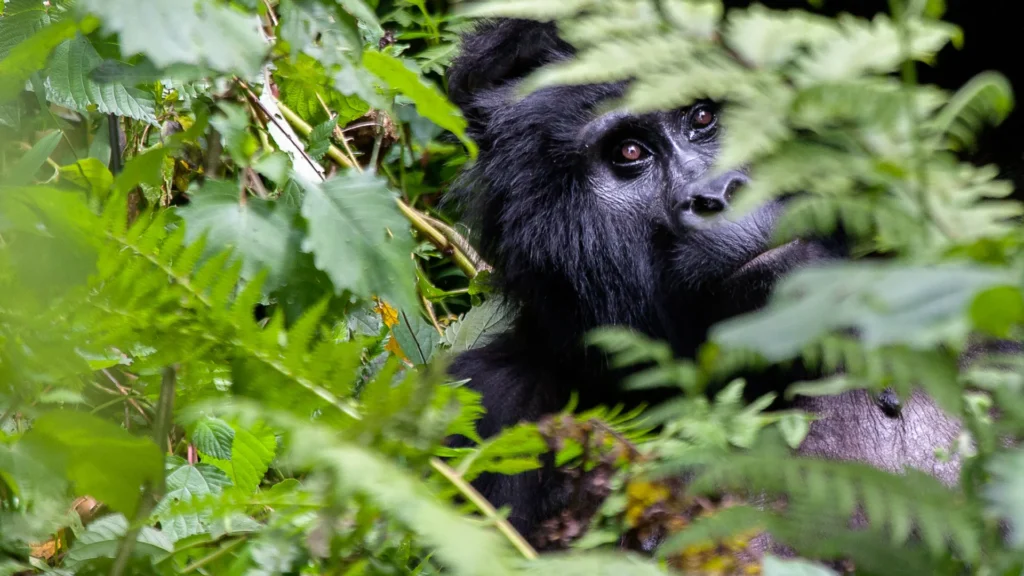
The weather surrounding Rwanda mountain gorillas is an essential part of the environment in which these remarkable primates live. The gorillas inhabit the forested slopes of the Virunga Mountains, where rainfall, cloud, temperature and vegetation influence the conditions experienced by both wildlife and visitors.
For travellers planning mountain gorilla trekking in Rwanda, weather is often discussed primarily in terms of comfort: whether the trails will be muddy, whether rain might interrupt photography and which months are easiest for hiking. These are important considerations, but they reveal only part of the story.
Mountain gorillas are adapted to a high-altitude forest ecosystem. They live outdoors throughout the year, feed on naturally available vegetation and move through their home ranges as environmental conditions change. Their behaviour cannot be reduced to a simple rule that they are active in sunshine and inactive during rain.
This Rwanda mountain gorillas weather guide examines the relationship between climate, habitat and gorilla behaviour while providing practical seasonal guidance for visitors. It explains what can reasonably be expected during different months, what remains unpredictable and why responsible tourism requires respecting the animals’ natural routines regardless of weather.
Where Rwanda’s Mountain Gorillas Live
Mountain gorillas, scientifically known as Gorilla beringei beringei, are a subspecies of eastern gorilla. They survive in two principal landscapes: the Virunga Massif, shared by Rwanda, Uganda and the Democratic Republic of the Congo, and the Bwindi-Sarambwe landscape across Uganda and the neighbouring Democratic Republic of the Congo.
In Rwanda, mountain gorillas inhabit Volcanoes National Park, which protects the country’s portion of the Virunga ecosystem. The park contains evergreen forest, bamboo vegetation, open grassland, heath and other mountain habitats.
These vegetation communities provide food, shelter and movement corridors. They also create different microclimates, meaning that conditions can vary within a relatively small geographical area.
Why Mountain Gorilla Habitat Is Cool and Moist
The Virunga Mountains rise well above Rwanda’s lower-elevation landscapes. The elevation influences air temperature, while forest vegetation and mountain topography help create a moisture-rich environment.
Cloud and mist may form as moist air moves across the slopes. Rainfall supports plant growth and contributes to the green landscapes associated with gorilla habitat. Visitors should therefore regard damp conditions as a normal characteristic of the ecosystem rather than an unusual inconvenience.
The Importance of Vegetation
Mountain gorillas are predominantly plant-eating animals. They consume a variety of leaves, stems, shoots and other available plant materials, with the exact composition of the diet depending on habitat and availability.
The forest’s vegetation provides both food and cover. Seasonal weather can influence plant growth, but it would be inaccurate to suggest that one rainy month automatically causes gorillas to move to a particular location. Their movements reflect a complex combination of feeding opportunities, social dynamics, habitat use and other natural factors.
Do Mountain Gorillas Behave Differently When It Rains?
Mountain gorilla behaviour in rain is a common subject of traveller curiosity. Visitors sometimes imagine that gorillas retreat into caves, seek permanent shelters or disappear from view during heavy rainfall.
Mountain gorillas do not rely on constructed shelters in the way humans do. They live within their forest habitat and may adjust their posture, activity or location in response to prevailing conditions.
Researchers have observed varied responses to environmental conditions, but no simple rule can predict exactly how a particular family will behave during a visitor encounter.
Feeding During Wet Conditions
Gorillas continue to require food regardless of weather. They may feed during damp conditions, move between vegetation patches or spend time resting. The presence of rain does not mean that feeding stops completely. However, the intensity and timing of activity can vary.
Resting and Social Interaction
Gorilla families spend substantial periods resting and interacting. Young animals may play, adults may groom one another and silverbacks may remain watchful over the group.
These behaviours can be observed in different weather conditions. A rainy encounter may still reveal rich social interaction, although visibility can be affected by vegetation and precipitation.
Movement Through the Forest
Gorillas move naturally through their home ranges. Their movements are not organised around tourism schedules, and weather is only one of many influences. Visitors should not expect trackers to predict a precise location based solely on the season.
Does Rain Reduce the Chance of Seeing Mountain Gorillas?
Rain does not automatically prevent a Rwanda mountain gorilla encounter. Habituated gorilla families are monitored by trackers and rangers, who use their knowledge of the animals’ movements to locate them.
However, gorilla trekking remains a wildlife activity, and sightings cannot be guaranteed. The gorillas may move, visibility may be limited and operational circumstances may affect the excursion.
The official Visit Rwanda guidance explains that visitors are allocated gorilla families at Kinigi and then travel towards their locations. Walking times vary considerably, reflecting the natural movements of the animals.
It is therefore misleading to advertise dry-season trekking as guaranteeing sightings or rainy-season trekking as substantially less successful without reliable supporting evidence.
Rwanda’s Seasonal Weather Patterns
Rwanda has a tropical highland climate. Official Visit Rwanda weather guidance identifies two principal rainy periods: mid-February to May and mid-September to mid-December. The main dry season extends from June to mid-September. A shorter relatively dry interval may occur around late December and January, although the pattern varies.
These broad seasons influence the environment around Volcanoes National Park, but rainfall remains possible throughout the year.
Main Dry Season
During June, July, August and early September, rainfall is generally lower. Trails may be less muddy, and visitors may experience clearer views of the volcanic landscape. The forest nevertheless remains a mountain environment where cloud and moisture can develop quickly.
Main Rainy Season
From approximately mid-February to May, rainfall commonly becomes more frequent. Vegetation may be particularly lush, while forest paths can become slippery. The animals continue living within their natural habitat, and authorised trekking remains available subject to park operations.
Second Rainy Season
From around mid-September to mid-December, rainfall generally increases again. Conditions can be wet and misty, especially within the forest. Visitors should prepare for variable visibility and the possibility of demanding walking conditions.
Mountain Gorilla Weather Month by Month
January: Relatively Drier Conditions
January often falls within a shorter comparatively dry period. Visitors may encounter a mixture of sunshine, cloud and occasional showers. The gorillas remain within their natural habitat, and there is no basis for promising particular behaviours because the month is relatively dry.
February: A Changing Season
February frequently marks a transition towards wetter conditions, particularly later in the month. Visitors may experience both dry mornings and substantial showers. Trekking equipment should be suitable for either situation.
March: Wetter Forest Habitat
March commonly brings more frequent rainfall. Vegetation may be heavily damp, and forest paths can become muddy. The gorillas continue their natural feeding and social activities, but visitors may need more time to reach them if the terrain is slippery.
April: Lush and Rainy Conditions
April is often one of the wetter periods. Mist, rain and dense green vegetation can create a distinctive forest atmosphere. Photography may be challenging because of low light and moisture, but overcast conditions can also produce soft illumination.
May: The Later Rainy Season
May often remains wet, particularly earlier in the month. Rainfall may gradually decrease, but saturated soil can persist. Visitors should not assume that the forest becomes dry immediately when the rainy period ends.
June: Beginning of the Main Dry Season
June usually marks a shift towards lower rainfall. Some paths may become easier to navigate. The mountain environment remains cool and moisture-rich, so waterproof clothing is still recommended.
July: Popular Gorilla Trekking Conditions
July is a popular travel month because rainfall is generally lower. Visitors may find walking more comfortable, although gorilla locations remain unpredictable. Advance permit arrangements are important during popular travel periods.
August: Relatively Dry Mountain Weather
August often continues the main dry-season pattern. Clearer intervals may provide attractive views of the volcanoes. However, forest mist and showers remain possible, and gorilla behaviour cannot be predicted from the weather alone.
September: Seasonal Transition
Early September may be relatively dry, while rainfall commonly increases later. Visitors should prepare for changing conditions and avoid assuming that the entire month has the same weather.
October: Rainier Habitat Conditions
October is generally associated with the second rainy period. The forest may be wet, with muddy paths and dense vegetation. Visitors should protect camera equipment and prepare for a potentially demanding walk.
November: Frequent Rainfall
November commonly brings substantial rainfall. Visibility can vary, and forest trails may be slippery. The gorillas continue their natural activities, while visitors must adapt to the conditions of the habitat.
December: Mixed Weather
Early December may retain rainy-season characteristics, while conditions can become relatively drier later in the month. Holiday visitors should prepare for both sunshine and rain.
How Climate Influences Mountain Gorilla Food Plants
Mountain gorillas rely heavily on vegetation. Rainfall supports plant growth, while differences in altitude and habitat influence which plants are available in particular areas.
However, the relationship between weather and feeding is complex. Plant growth responds to soil conditions, elevation, sunlight, rainfall history and other environmental factors. A rainy month does not necessarily mean that every food plant becomes more abundant, nor does a dry month imply that gorillas experience a shortage of food.
Bamboo and Forest Vegetation
Bamboo is an important feature of the Virunga ecosystem. Some gorilla families use areas containing bamboo, while others spend time in different vegetation zones. The distribution of food resources can influence habitat use, but family movements cannot be predicted reliably from the calendar alone.
Seasonal Plant Growth
Rainfall can influence new plant growth, but the timing varies by species and location. Visitors should avoid expecting a particular feeding behaviour simply because they travel during a rainy season.
Conservation Importance
Protecting a range of habitats helps support the gorillas’ natural ecological needs. Forest conservation is therefore more important than attempting to manage the landscape solely for visitor convenience.
Weather and Gorilla Family Movements
Gorilla families occupy home ranges and move within them. Trackers monitor habituated groups, but the animals are not confined to fixed viewing sites.
Their movements may reflect feeding opportunities, social interactions, resting preferences and other factors. Weather can contribute to environmental conditions without acting as a single determining cause.
For travellers, the practical implication is that trekking duration remains unpredictable throughout the year. A family may be relatively close to a starting point after rainfall or farther away during a dry month. Neither situation should be presented as unusual.
How Rain Affects the Visitor Experience
Weather influences the physical journey to the gorillas more directly than it predicts the animals’ behaviour.
Wet soil can make slopes slippery. Rainwater can collect on leaves and soak clothing. Mist may reduce visibility, while cool conditions can become uncomfortable if visitors are inadequately dressed. These challenges are manageable with suitable preparation, but they should not be underestimated.
- Walking difficulty: rain can increase the effort required to walk through mud and uneven ground. Visitors should move carefully and follow ranger instructions.
- Visibility: dense vegetation and mist can affect the view of the surrounding landscape. At the gorilla encounter itself, the viewing angle depends on the animals’ location and the position approved by guides.
- Comfort: waterproof jackets, quick-drying trousers and supportive boots improve comfort. A lightweight insulating layer can be useful when visitors stop moving.
- Group progress: wet conditions may slow walking, particularly when group members have different fitness levels. Patience and cooperation are important.
Mountain Gorilla Photography in Different Weather
Photographing gorillas presents challenges because the animals have dark fur and often occupy shaded vegetation.
- Cloudy weather: soft light can reduce harsh contrasts, making it easier to retain detail in both fur and surrounding foliage. However, lower light levels may require higher ISO settings.
- Bright sunlight: sunlight filtering through the canopy can create patches of intense brightness and deep shadow. Photographers should pay attention to exposure rather than relying entirely on automatic settings.
- Mist: mist creates atmospheric images but may reduce contrast and obscure backgrounds. It can also deposit moisture on equipment.
- Rain: rainfall can create memorable images, but cameras should be protected with appropriate covers. Flash photography is prohibited.
- Ethical photography: visitors must not move closer to gorillas to compensate for poor light. The permitted viewing distance and ranger instructions take priority over obtaining a photograph.
Why Gorilla Conservation Rules Apply in Every Season
Weather does not change the fundamental conservation requirements of Rwanda gorilla trekking.
Visitors must follow the instructions of authorised rangers, observe the applicable minimum distance and avoid touching the animals. The standard gorilla viewing period is limited to one hour, and the maximum number of visitors allocated to a habituated family is eight. These limits help manage human disturbance and potential disease transmission.
- Respiratory illness: mountain gorillas are vulnerable to infections transmitted by humans. Visitors experiencing potentially contagious symptoms should inform park authorities. Rainy weather does not itself justify ignoring health rules, and dry weather does not remove the need for precautions.
- Face masks: visitors should carry suitable masks and follow current park health requirements.
- Waste management: all food wrappers, tissues and other waste must be carried out of the forest.
- Respecting natural behaviour: gorillas should not be approached, fed or encouraged to interact with visitors. Their welfare remains the priority.
Choosing a Season Based on Personal Preferences
The best time to see Rwanda mountain gorillas depends partly on what visitors value most.
Travellers who prefer relatively dry walking conditions may choose June to mid-September. Photographers interested in misty landscapes may appreciate wetter periods, provided they are comfortable protecting equipment.
Visitors with limited hiking experience may benefit from relatively dry trails, although a particular trek difficulty cannot be guaranteed. Those travelling during fixed holiday periods can still enjoy the experience by preparing for the conditions likely at that time.
Mountain Gorilla Weather and Visitor Fitness
The physical demands of trekking are shaped by terrain, altitude, weather and gorilla location. Visitors should be comfortable walking on uneven ground and may benefit from practising hills before departure.
Wet conditions can increase the demands on balance and leg strength, especially during descents.
Older travellers and people with mobility concerns should communicate their requirements before trekking. Porter assistance may help, but no service can guarantee that all routes will be easy.
Rwanda Versus Uganda Mountain Gorilla Weather
Travellers sometimes compare Rwanda gorilla trekking with Uganda gorilla trekking in Bwindi Impenetrable National Park or Mgahinga Gorilla National Park. Both countries offer encounters with mountain gorillas in protected forest environments, but the geography differs.
Rwanda’s Volcanoes National Park occupies part of the Virunga volcanic landscape. Uganda’s Mgahinga also lies within the Virunga system, while Bwindi protects a separate forest landscape.
Rainfall patterns, elevation and terrain vary between these destinations. Visitors should compare the specific park and travel dates rather than assuming that all gorilla habitats experience identical weather.
Frequently Asked Questions About Rwanda Mountain Gorilla Weather
Do mountain gorillas come out in the rain?
Mountain gorillas live outdoors and continue natural activities in varying weather. Their exact behaviour cannot be predicted.
Are gorillas easier to see during the dry season?
Dry weather may improve walking comfort, but it does not guarantee easier sightings or shorter treks.
Does rain make gorillas hide?
Gorillas may adjust their activity and position, but it is inaccurate to assume that rainfall causes all gorillas to hide.
What is the best month to see mountain gorillas?
June to August often offers relatively dry conditions, but encounters are possible throughout the year.
Do gorillas move farther during certain seasons?
Movements vary according to multiple ecological and social factors. A fixed seasonal distance cannot be promised.
Can I photograph gorillas in the rain?
Yes, subject to park rules. Protect your camera and do not use flash.
Are mountain gorillas affected by cold weather?
They are adapted to their mountain habitat, although environmental conditions remain part of their ecology.
Does mist make sightings impossible?
No. Mist may affect visibility, but it does not automatically prevent an encounter.
Is rainy-season trekking safe?
Trekking operates under ranger supervision, but wet terrain carries additional risks. Visitors should follow safety instructions.
Can I visit gorillas in December?
Yes, subject to permit availability and park operations. Prepare for mixed weather.
Do gorillas live in the same habitat throughout the year?
They use natural home ranges, but their precise locations change as they move through the forest.
Are gorilla permits cheaper during rainy months?
Do not assume seasonal discounts. Confirm current official prices and any eligibility-based offers.
Does weather change the one-hour viewing limit?
The standard viewing limit remains one hour, subject to park instructions and operational circumstances.
Should I choose Rwanda or Uganda based only on weather?
No. Consider terrain, permits, travel logistics, budget and the specific experience as well as climate.
Final Advice: Understanding Weather in Mountain Gorilla Habitat
The most important lesson from this Rwanda mountain gorillas weather guide is that weather forms part of the gorillas’ natural environment rather than simply determining whether tourism is convenient.
Rainfall supports the forest ecosystem, while altitude and vegetation create the cool, moisture-rich conditions associated with the Virunga Mountains. Gorilla families continue their natural lives throughout the year, and their behaviour cannot be reduced to a simple seasonal formula.
Visitors should choose travel dates according to personal preferences, prepare for variable conditions and respect the conservation rules that protect these endangered primates.
For information about Rwanda gorilla trekking permits, seasonal planning and responsible mountain gorilla encounters, contact Gorilla Rwanda Safaris.