
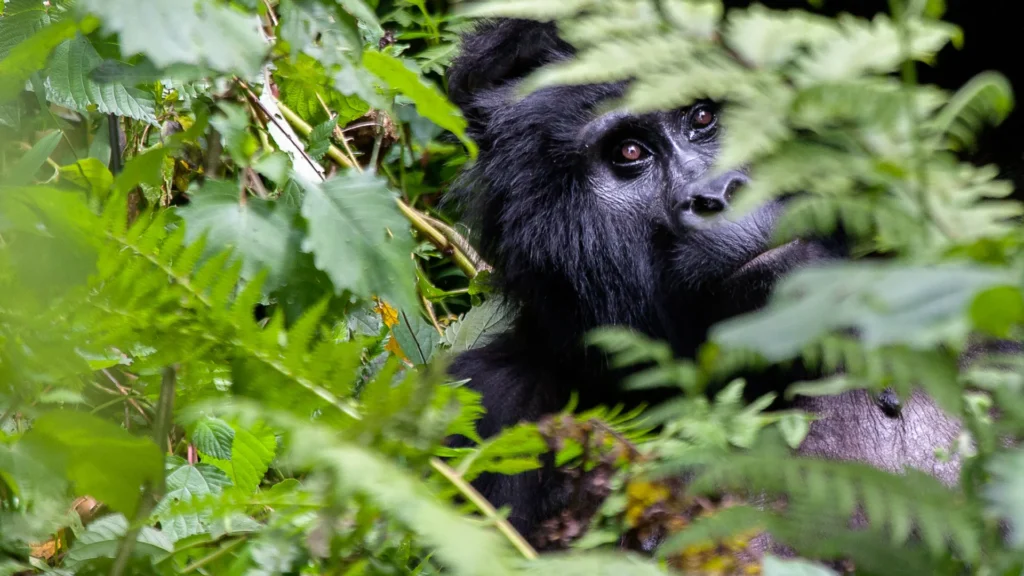
Volcanoes gorilla trekking for families is an extraordinary opportunity to introduce older children and teenagers to one of the world’s most remarkable wildlife conservation experiences. In the mist-covered mountains of northwestern Rwanda, Volcanoes National Park protects endangered mountain gorillas living in natural forest habitats that stretch across the Virunga volcanic landscape. Visiting these animals is not comparable to an ordinary zoo excursion or conventional African wildlife safari. It requires preparation, physical participation, an understanding of conservation rules and respect for animals whose survival depends on carefully managed human contact.
For families planning gorilla trekking in Rwanda, the most important consideration is eligibility. The official minimum age is 15 years, meaning families with younger children must arrange alternative activities while eligible relatives participate in the trek. Parents must also consider physical fitness, mountain weather, forest terrain, the cost of Rwanda gorilla trekking permits and the practical requirements of travelling with teenagers.
This comprehensive Volcanoes National Park families guide focuses on the actual trekking experience rather than selling a predetermined safari package. It explains what happens before and during the encounter, how families can prepare, why certain regulations exist, what the experience costs and how to make informed decisions about travelling with children of different ages.
Understanding Volcanoes National Park and Its Gorilla Habitat
Volcanoes National Park occupies a mountainous region in northwestern Rwanda along the country’s borders with Uganda and the Democratic Republic of the Congo. It forms part of the wider Virunga Massif, a volcanic ecosystem internationally recognised for its mountain gorillas, golden monkeys, distinctive vegetation and important conservation history.
The Rwandan section of the Virunga landscape includes the volcanoes Karisimbi, Bisoke, Sabyinyo, Gahinga and Muhabura. Their slopes support several vegetation zones, including bamboo forests, montane woodland, open clearings and high-altitude vegetation. The changing landscape means a gorilla trekking experience may involve walking through different habitats rather than following a single established tourist trail.
The park’s elevation is another important consideration. Visitors may experience cool temperatures, mist, rainfall and physically demanding conditions even when the weather in Kigali is warm and sunny. Families accustomed to low-altitude city environments should understand that walking uphill in mountain air can feel considerably more demanding than ordinary exercise.
Mountain gorillas in Volcanoes National Park move through their habitat in search of food, resting areas and suitable vegetation. Their movements determine the trekking routes followed by visitors. Consequently, there is no fixed walking distance or standard route that applies to every gorilla encounter.
The forest is also ecologically significant beyond its gorilla population. It supports numerous bird species, specialised mountain vegetation and other wildlife. Introducing teenagers to this wider ecosystem helps them understand why gorilla conservation in Rwanda involves protecting entire landscapes rather than simply safeguarding individual animals.
What Is the Minimum Age for Gorilla Trekking in Rwanda?
The official minimum age for gorilla trekking in Rwanda is 15 years. This rule applies to standard gorilla trekking activities in Volcanoes National Park, regardless of a child’s previous hiking experience, maturity or physical ability.
A teenager who has reached the required age can participate with an appropriate permit and must comply with the same park regulations as adult visitors. Younger children are not permitted to join the standard trek, even when accompanied by parents or guardians.
Families sometimes assume that an unusually fit or experienced child might qualify for an exception. Such assumptions should not form the basis of travel arrangements. The age restriction is an official visitor requirement, and parents should not book permits for children who do not meet it.
Why Does the Age Restriction Exist?
The gorilla trekking age limit reflects several considerations, including wildlife protection, visitor safety and the physical nature of the activity.
Mountain gorillas are susceptible to infectious diseases carried by humans. Restricting participation helps maintain a controlled visitor environment in which participants can understand and consistently follow hygiene and behavioural instructions.
The forest itself can also be challenging. Trekking routes may involve slippery slopes, thick vegetation, stinging plants and prolonged walking. Participants must remain calm and responsive to instructions when encountering large wild animals.
An older teenager is generally better positioned to understand these responsibilities, although reaching the minimum age does not automatically mean every individual will find the trek physically easy.
Gorilla Trekking With Teenagers Aged 15–17
Gorilla trekking with teenagers can be especially rewarding when young travellers have an interest in animals, nature photography, conservation or outdoor adventure.
Parents should explain the activity before departure. Teenagers need to understand that they may spend several hours walking to reach the gorillas, that the forest can be wet and muddy, and that the encounter is primarily about observing natural behaviour.
They should also know that gorillas may be resting or feeding quietly rather than displaying the dramatic behaviour sometimes seen in documentaries.
The most successful family gorilla trekking experiences often begin with realistic expectations. A teenager who understands the conservation purpose of the visit is more likely to appreciate subtle interactions, such as a mother grooming an infant or a silverback resting beside other members of the group.
What Can Families Do When Children Are Under 15?
Having younger children does not prevent a family from visiting the Volcanoes National Park region. It simply requires a different approach to organising the day of the gorilla trek.
One parent may participate while the other remains with the children. Alternatively, eligible family members can trek while younger children enjoy a separately arranged activity under responsible supervision.
Suitable possibilities may include a guided cultural experience, a scenic drive, an educational visit or relaxation at accommodation that accepts children.
However, families should not assume that every lodge provides professional childcare. Some luxury properties have minimum age policies, and even accommodation that welcomes children may not offer supervised activities.
Before confirming a Rwanda family safari, parents should establish who will supervise younger children, whether that person is appropriately qualified and how the children will spend the day.
Should Parents Trek on Different Days?
For families with young children, booking eligible parents on separate trekking dates can sometimes be a practical solution.
This allows one parent to remain with the children while the other participates in mountain gorilla trekking. The arrangement requires permits for different dates and may increase accommodation or transport costs.
Families should compare this approach with using a suitable childcare arrangement, considering the children’s ages, personal preferences and the reliability of available supervision.
Rwanda Gorilla Trekking Permits for Families
Every eligible visitor needs an individual Rwanda gorilla trekking permit.
The standard international visitor permit is USD 1,500 per person, subject to current official regulations and any applicable special visitor categories. This means permit costs can represent a substantial portion of a family’s travel budget.
For example, three eligible participants paying the standard international rate would require USD 4,500 in gorilla trekking permits. Four eligible participants would require USD 6,000.
These amounts cover the standard permits only, not accommodation, private transfers, international flights, porter services or other travel expenses.
Why Are Gorilla Permits Expensive?
The price of gorilla trekking permits in Rwanda reflects the country’s high-value, low-volume approach to managing gorilla tourism.
Visitor numbers are limited to reduce disturbance to the animals and their habitat. Tourism revenue contributes to the wider conservation and tourism system, including park management and community-related initiatives.
The price should therefore be understood as more than a conventional national park entrance charge. It provides access to a carefully regulated conservation experience involving protected wildlife, trained personnel and ongoing monitoring.
How Many People Can Visit a Gorilla Family?
Standard gorilla trekking is limited to a maximum of eight visitors per habituated gorilla group per day.
This restriction is important for families travelling together. A family requiring several permits should book early, especially when visiting during popular school holiday periods.
A private safari vehicle or exclusive lodge booking does not automatically provide an exclusive gorilla encounter. The official trekking groups are organised by the park authorities.
Can Families Request to Trek Together?
Families can communicate their preference to remain together during the trekking activity. However, actual allocations are controlled by the park authorities and depend on operational arrangements, visitor fitness and the available gorilla groups.
Large families should discuss their requirements before booking rather than assuming that all participants will necessarily be assigned to the same gorilla family.
When Should Permits Be Booked?
Rwanda gorilla trekking permits should ideally be arranged as soon as the travel dates and eligible participants are confirmed.
School holidays, Christmas and popular dry-season travel periods can create additional demand.
Families should also check the applicable cancellation and rescheduling conditions before making payment. Permit regulations are separate from accommodation cancellation policies and should not be assumed to offer the same flexibility.
What Happens on the Morning of Gorilla Trekking?
A typical Volcanoes National Park gorilla trekking day begins early.
Visitors normally gather at the park headquarters in Kinigi, where the official briefing arrangements begin around 7:00 am. The briefing introduces the conservation rules, explains visitor behaviour and provides information about the day’s trekking arrangements.
Park personnel organise visitors into groups and allocate habituated gorilla families according to operational considerations, including fitness levels where possible.
After the briefing, visitors travel towards their assigned starting points. The distance between the headquarters and the actual trekking trailhead can vary depending on the location of the gorillas.
Meeting the Rangers and Trackers
Rwanda gorilla trekking guides are responsible for leading visitors through the forest and managing the encounter.
Trackers monitor the movements of gorilla families and communicate information that helps guides locate them.
These professionals have specialised knowledge of the terrain, gorilla behaviour and conservation requirements.
Families should encourage teenagers to listen carefully during the briefing. The instructions are not merely formalities; they explain how to behave safely around wild primates and minimise unnecessary disturbance.
Entering the Forest
The trek may begin near agricultural land before entering protected forest vegetation.
Depending on the assigned route, visitors might walk through bamboo, dense undergrowth or more open mountain terrain.
The path may be muddy or uneven, and vegetation can make progress slower than expected.
Trekking groups normally move at a pace managed by their guides, but participants should still be prepared for sustained physical activity.
How Long Does Gorilla Trekking Take?
One of the most common family questions concerns gorilla trekking duration.
There is no universally reliable walking time because gorilla families move through the forest.
Some groups may be reached after a relatively short walk, while others require several hours of hiking. The return journey also needs to be considered.
Families should therefore keep the trekking day flexible and avoid scheduling time-sensitive activities immediately afterwards.
Once the gorillas are located, the standard encounter allows up to one hour of observation.
This one-hour period refers to the time spent with the gorillas, not the total duration of the forest excursion.
How Physically Difficult Is Gorilla Trekking?
Gorilla trekking difficulty in Rwanda varies significantly according to the assigned gorilla group, its location and the day’s weather.
The terrain may involve steep inclines, wet ground, thick vegetation and sections requiring careful footing.
Rain can make otherwise manageable trails slippery. Even during relatively dry periods, the forest may remain damp.
Fitness Preparation for Families
A reasonable level of cardiovascular fitness and walking endurance is helpful.
Families can prepare by taking regular walks, gradually introducing hills and practising on uneven surfaces.
Teenagers should become comfortable carrying a small daypack and walking in suitable footwear.
Fitness preparation does not need to resemble athletic training. The objective is to reduce fatigue and help participants feel confident when walking outdoors for an extended period.
Can Visitors Request a Less Demanding Trek?
Visitors can inform park personnel about relevant physical limitations or concerns.
Fitness may be considered during gorilla group allocation, but the actual walking distance and difficulty cannot be guaranteed.
Families should avoid relying on promises of an easy trek because gorilla movements remain unpredictable.
Are Porters Available?
Gorilla trekking porters in Rwanda can assist with carrying bags and provide practical support on difficult terrain.
Hiring a porter can be particularly helpful for visitors who want to conserve energy or reduce the physical burden of carrying equipment.
Porter services also provide income opportunities for people living near the park.
Families should confirm the applicable porter charges and assistance arrangements locally.
What Happens During the Gorilla Encounter?
The moment visitors reach their assigned mountain gorilla family is usually the highlight of the experience.
The guides explain how to approach the observation area and where to stand.
Gorillas may be feeding, resting, grooming, moving through vegetation or interacting with other group members.
A family may include a mature silverback, adult females, juveniles and infants.
The animals are habituated to carefully managed human observation, but they remain wild.
How Close Can Visitors Get?
Visitors must follow the current minimum-distance requirement communicated by the park authorities and guides.
Conservation guidance commonly emphasises keeping several metres away, with greater separation preferable where practical to reduce disease transmission.
If a gorilla approaches, visitors should follow their guide’s instructions rather than attempting to touch or interact with the animal.
What If a Gorilla Moves Towards a Visitor?
Gorillas may move unexpectedly through the vegetation.
Visitors should remain calm, avoid sudden movements and follow the instructions of the park guides.
A gorilla approaching a visitor is not an invitation for physical interaction.
Can Families Take Photographs?
Gorilla photography in Rwanda is permitted under park rules, but flash photography is prohibited.
Families should prepare their cameras for low-light forest conditions.
Teenagers interested in photography can learn about patience, natural light and wildlife observation.
However, photography should not interfere with the encounter or cause visitors to move closer than permitted.
Gorilla Trekking Health and Safety Regulations
Mountain gorillas are genetically close to humans and vulnerable to some human infectious diseases.
This makes visitor health precautions an essential part of responsible gorilla trekking.
Anyone experiencing symptoms of a potentially contagious illness should inform the safari operator or park authorities before the trek.
Visitors must follow the current rules concerning masks, hygiene, distancing and behaviour around gorillas.
The health risks are not theoretical. Gorilla Doctors has documented respiratory disease outbreaks among monitored gorilla groups, demonstrating why preventive measures remain important.
Families should explain these rules to teenagers before arriving at the park.
Best Time for Volcanoes Gorilla Trekking With Families
Rwanda gorilla trekking is available throughout the year, although weather conditions affect the experience.
June to September
These months are generally associated with relatively drier conditions and are popular for family gorilla trekking holidays.
Trails may be more manageable than during periods of heavy rainfall, although rain is still possible.
The popularity of these months makes advance permit and accommodation booking particularly important.
December to February
This period can also provide relatively favourable trekking conditions.
Families travelling during Christmas and New Year should plan early because holiday demand may be high.
March to May
These months are often wetter, with potentially muddy and slippery trails.
The forest remains beautiful and green, but participants should prepare for challenging conditions.
October to November
Rainfall may increase during this period, affecting walking comfort and visibility.
However, gorilla trekking continues subject to park operations and safety conditions.
The best month depends on the family’s travel dates, physical preparedness and tolerance for wet-weather hiking.
What Should Families Wear for Gorilla Trekking?
Appropriate clothing improves comfort and helps protect visitors from vegetation, insects and changing weather.
Waterproof hiking boots with reliable grip are among the most important items.
Long trousers and long-sleeved shirts help protect skin from vegetation and scratches.
A lightweight waterproof jacket is advisable even during relatively dry months.
Gardening-style gloves can help when gripping vegetation for balance.
Families should also carry drinking water, suitable snacks, essential medication and a small waterproof bag for valuables.
Bright or elaborate clothing is unnecessary. Practical outdoor clothing in comfortable colours is usually preferable.
Common Family Gorilla Trekking Mistakes
One frequent mistake is booking travel before checking the children’s eligibility.
Another is assuming that the trekking experience will involve only a short walk.
Families may also underestimate the importance of suitable footwear, warm clothing and realistic travel schedules.
Some travellers expect to choose a particular gorilla family or request a guaranteed easy route. These arrangements cannot be promised under standard trekking procedures.
Another avoidable mistake is planning a tight departure schedule on the same day as the trek.
A well-organised Volcanoes family gorilla safari allows enough flexibility for the experience to unfold naturally.
Frequently Asked Questions
Can a 14-year-old trek gorillas in Rwanda?
No. The official minimum age for standard Rwanda gorilla trekking is 15 years.
Can a 15-year-old join an adult trekking group?
Yes, provided the teenager meets the official age requirement and has a valid permit.
Is gorilla trekking suitable for first-time hikers?
It can be suitable for visitors with reasonable fitness, but trekking difficulty varies. Families should prepare for uneven terrain and potentially lengthy walks.
Can a family of six trek together?
A group of six eligible participants can request to remain together, but allocations depend on park authority arrangements and availability.
Can parents carry younger children during the trek?
No. Children below the minimum trekking age cannot participate in the standard gorilla trekking activity.
How much are permits for a family of four?
At the standard international rate of USD 1,500 per person, four permits cost USD 6,000, excluding other travel expenses.
Are gorillas dangerous?
Mountain gorillas are powerful wild animals. Guided visits are carefully managed, and visitors must follow park instructions to reduce risks.
Can teenagers take photographs?
Yes. Photography is permitted under park regulations, but flash photography is prohibited.
Are sightings guaranteed?
No wildlife encounter can be absolutely guaranteed. Trackers work to locate habituated gorilla families, but the animals remain free-ranging.
Is it better to stay near the park before trekking?
For most families, staying in the Musanze or Kinigi region the night before trekking is more comfortable than making a very early journey from Kigali.
Do families need travel insurance?
Comprehensive travel insurance is strongly recommended, including appropriate medical coverage and protection for planned outdoor activities.
Can gorilla trekking be combined with other Rwanda attractions?
Yes. Families may add suitable activities around Musanze, Kigali, Lake Kivu or other national parks.
Planning a Responsible Family Gorilla Trekking Experience
The best Volcanoes gorilla trekking family experience is not necessarily the most expensive or the most activity-packed. It is one that respects the official age requirements, prepares participants for mountain conditions and allows the family to appreciate the conservation importance of seeing gorillas in the wild.
Parents should confirm permit eligibility, discuss trekking expectations with teenagers, choose appropriate accommodation and make reliable arrangements for any younger children.
At Gorilla Rwanda Safaris, we assist families with Rwanda gorilla trekking permits, practical travel planning, private transfers and accommodation selection. Relevant Rwanda family gorilla safari packages can be explored separately through our safari listings or personalised enquiries.
Contact our team with your intended travel dates, the number of eligible participants and the ages of any children. We can help you plan a well-prepared and responsible Volcanoes National Park gorilla trekking experience.