
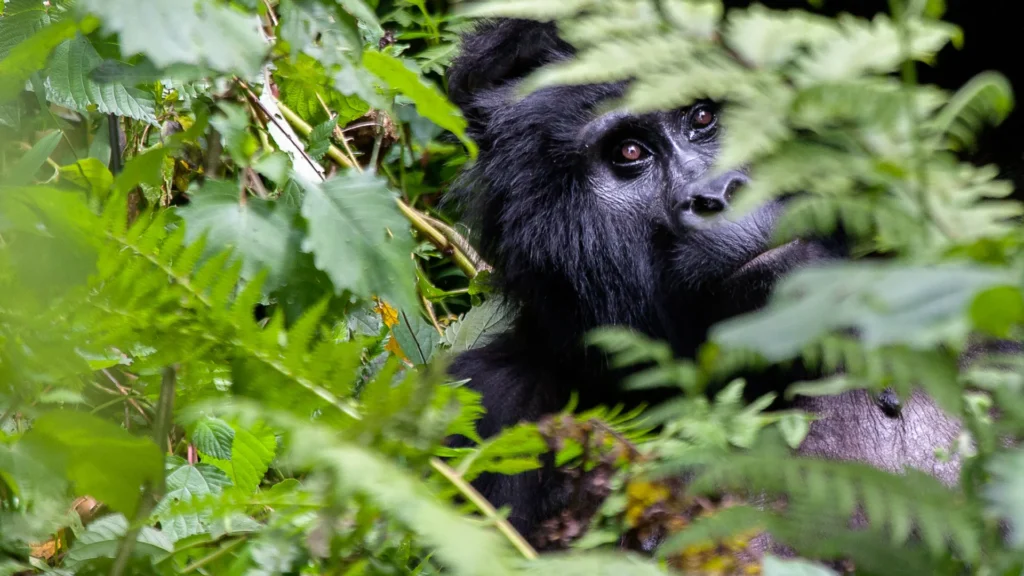
Volcanoes National Park gorilla trekking takes visitors into one of Africa’s most distinctive mountain environments. Situated in northwestern Rwanda, the park protects part of the Virunga Massif, where forested volcanic slopes provide habitat for endangered mountain gorillas and numerous other species.
Packing for this environment requires more than ordinary travel clothing. Visitors may walk through bamboo forest, cross damp vegetation, climb steep hillsides and descend slippery ground. The conditions can change during the excursion, making adaptable clothing and reliable hiking equipment particularly important.
This Volcanoes gorilla trekking packing guide concentrates on the specific environmental challenges of the national park. It explains how volcanic terrain affects footwear selection, why gaiters and gloves are useful, how to dress for cool and wet mountain conditions, and which equipment helps visitors move safely through natural forest.
Unlike a general Rwanda holiday packing list, this guide focuses specifically on the physical environment encountered during gorilla trekking in Volcanoes National Park.
Understanding the Environment Before Choosing Your Equipment
The official Visit Rwanda destination guide describes Volcanoes National Park as a landscape of steep volcanic slopes, bamboo forest, evergreen vegetation, grassland, swamp and heath.
The park is associated with five major volcanoes: Karisimbi, Bisoke, Sabyinyo, Gahinga and Muhabura.
Mount Karisimbi reaches approximately 4,507 metres above sea level, making it the highest peak in the Virunga range. Standard gorilla trekking does not require visitors to climb to this summit, but the surrounding mountain environment influences local terrain and weather.
Why Volcanic Terrain Requires Suitable Footwear
Mountain trails may contain loose soil, stones, exposed roots and steep gradients.
Rainfall can make these surfaces slippery.
Footwear must therefore provide traction, stability and comfort over irregular ground.
Why Vegetation Protection Matters
The park’s forests contain bamboo, shrubs, nettles and other plants that may brush against trekkers.
Long clothing and gloves protect exposed skin.
Why Weather Protection Is Essential
The mountain environment can experience cool temperatures, cloud and rainfall.
Visitors may begin walking in relatively mild conditions before encountering wetter or cooler weather at higher elevations.
Layered clothing provides flexibility.
Hiking Boots for Volcanoes National Park
Waterproof hiking boots for gorilla trekking are among the most valuable items to pack.
A good pair should fit comfortably, provide reliable grip and protect the feet against mud and uneven ground.
Choosing Boots for Volcanic Slopes
Look for soles designed for outdoor hiking rather than smooth urban surfaces.
Deep tread patterns can improve traction on soft ground, although no boot completely eliminates slipping.
The sole should be sufficiently flexible for comfortable walking while providing support on uneven terrain.
Ankle Support
Mid-cut or high-cut hiking boots can protect the ankles against vegetation and minor knocks.
They may also provide a sense of stability for visitors who are unfamiliar with mountain walking.
However, the quality of fit and traction remains more important than boot height alone.
Waterproof Membranes
Waterproof membranes can reduce moisture entering through the boot material.
They are particularly useful when walking through damp vegetation.
Nevertheless, water can still enter over the top of the boot during heavy rain or deep mud.
Boot Fit
Allow enough space for the toes during downhill walking.
Boots that are too tight may cause pressure and discomfort, while loose footwear can increase friction and instability.
Try boots with the socks you intend to wear during trekking.
Breaking In Footwear
Wear your boots during several outdoor walks before travelling.
Include hills and uneven surfaces where possible.
Do not rely on new footwear for the first time during a demanding gorilla trek.
Gaiters for Mud, Vegetation and Lower-Leg Protection
Gaiters for gorilla trekking cover the lower legs and the opening of hiking boots.
They help reduce the amount of mud, debris and vegetation entering footwear.
In Volcanoes National Park, gaiters can be particularly useful when walking through wet grass, muddy sections or dense undergrowth.
Short Versus Long Gaiters
Short gaiters provide basic coverage around the ankle and boot opening.
Long gaiters extend farther up the lower leg and offer additional protection against vegetation and mud.
For visitors expecting wet conditions, longer gaiters may be more practical.
Are Gaiters Essential?
They are useful but not universally compulsory.
Long socks and securely fitted trousers can provide some protection.
However, gaiters offer a more effective barrier against mud and debris.
Clothing for Bamboo Forest and Dense Vegetation
The bamboo forests of Volcanoes National Park are an important part of the gorilla habitat.
Although some bamboo areas are relatively open, others contain narrow passages, fallen stems and dense vegetation.
Clothing should protect the skin without restricting movement.
Long-Sleeved Shirts
Choose lightweight, breathable long-sleeved shirts.
These protect the arms from scratches and irritating plants.
Quick-drying fabrics are preferable because vegetation may be damp.
Durable Trekking Trousers
Long trousers should allow bending, stepping and climbing.
Avoid restrictive fabrics or clothing that becomes excessively heavy when wet.
Protective Gloves
Gardening or leather gloves are recommended by Visit Rwanda.
They are useful when visitors need to steady themselves against vegetation.
Choose gloves that provide protection without making it difficult to handle equipment.
Layering for Mountain Temperatures
The temperature experienced during trekking may change with elevation, weather and physical activity.
A visitor can feel cool while waiting at the briefing point but become warm during sustained uphill walking.
Layering allows clothing to be adjusted.
Base Layer
A breathable base layer helps manage perspiration.
Avoid heavy cotton garments that remain damp for long periods.
Insulating Layer
A lightweight fleece or similar garment provides warmth during cool conditions.
It should be easy to remove and pack away.
Waterproof Outer Layer
A waterproof jacket protects against rain and wind.
Choose one with a hood and adequate freedom of movement.
Avoiding Overheating
Wearing too many layers during uphill walking can cause excessive sweating.
Remove unnecessary layers before becoming uncomfortably hot.
Keep spare clothing dry inside the daypack.
Rain Protection in Volcanoes National Park
Volcanoes National Park weather is influenced by the mountainous environment.
Rain can occur throughout the year, even during relatively dry periods.
A good packing strategy assumes that wet conditions are possible.
Waterproof Jackets
Choose a lightweight waterproof jacket with sealed seams where possible.
The jacket should fit over your base and insulating layers.
Waterproof Trousers
Waterproof overtrousers can be useful during heavy rainfall.
They are especially valuable when walking through soaked vegetation.
Daypack Rain Covers
A rain cover protects the outside of the pack.
However, covers may shift or allow water to enter during heavy rain.
Use internal dry bags for sensitive equipment.
Dry Bags
Small waterproof bags are useful for cameras, spare clothing and documents.
They also help organise belongings.
Trekking Poles and Walking Sticks
Walking poles for gorilla trekking can improve balance on uneven ground.
They may be particularly useful when descending steep slopes.
However, their use should always follow ranger instructions.
One Pole or Two?
Some visitors prefer one walking stick because it leaves a hand free.
Others find two trekking poles useful during conventional hiking.
Dense vegetation and photography requirements may make two poles less convenient during gorilla trekking.
Choosing a Suitable Pole
A lightweight adjustable pole can be convenient.
Rubber tips may be appropriate for certain surfaces, while other tips perform differently on mud and soil.
Ask your guide about suitable equipment and local arrangements.
Equipment for Muddy Forest Trails
Mud is one of the most common practical challenges associated with gorilla trekking in Rwanda.
It can reduce traction, increase fatigue and make footwear difficult to clean.
Mud-Resistant Clothing
Choose clothing that can be washed easily and dries relatively quickly.
Dark or earth-toned trousers may show mud less prominently, although colour is not a substitute for suitable fabric.
Spare Socks
Keep a dry pair of socks at your accommodation.
Changing into dry socks after trekking improves comfort.
Boot Cleaning
A small brush or cloth can help remove mud after the excursion.
Allow boots to dry naturally and avoid exposing them to excessive heat.
Waterproof Storage
Use a separate bag for muddy clothing when returning to your accommodation.
This prevents dirty items from contaminating clean luggage.
Packing for the Kinigi Morning Briefing
Visitors normally assemble at Kinigi park headquarters at 7:00 a.m., according to official Visit Rwanda guidance.
The early start means clothing and equipment should be organised the previous evening.
What to Wear Before Leaving the Lodge
Wear your trekking clothes and hiking boots.
Carry your waterproof jacket and daypack.
Avoid arriving in casual shoes with the intention of changing later unless you have specifically planned for it.
Documents
Keep your passport and permit-related information accessible according to the instructions supplied by your operator.
Do not bury important documents beneath camera equipment or spare clothing.
Breakfast and Water
Eat an appropriate breakfast before departure.
Carry sufficient drinking water for the expected activity.
The precise quantity depends on individual needs and trekking conditions.
Choosing a Suitable Daypack
A compact Volcanoes National Park trekking backpack should carry essential items without restricting movement.
For many visitors, a 15–25-litre pack provides adequate capacity.
Look for comfortable shoulder straps and a secure fit.
Weight Distribution
Place heavier items close to the back.
Avoid attaching loose objects that may catch on vegetation.
Easy Access
Keep rainwear and water readily accessible.
Store electronics in protective compartments.
Porter Assistance
A local porter can carry your pack and provide assistance on difficult sections.
Porter services should be arranged according to local procedures.
Camera Equipment for Forest Conditions
Volcanoes National Park gorilla photography presents challenges because the forest can be dim and damp.
Visitors should prioritise manageable equipment.
Lens Selection
A versatile zoom lens is useful because the distance and viewing angle may change.
Avoid carrying an excessive number of lenses.
Low-Light Photography
Forest shade can reduce available light.
Cameras with good low-light performance can help produce sharper images without flash.
Protecting Equipment
Carry waterproof covers and a lens cloth.
Keep spare batteries dry.
Flash Restrictions
Flash photography is prohibited during gorilla encounters.
Disable automatic flash before approaching the gorillas.
Health and Safety Equipment
A small personal health kit should include prescribed medication, blister treatment and other individual essentials.
Visitors should also carry suitable face masks and follow current park health requirements.
Why Masks Matter
Mountain gorillas are vulnerable to human respiratory diseases.
Gorilla Doctors has documented the importance of disease prevention, including mask use and maintaining distance.
Visitors who are unwell should inform park authorities rather than attempting to conceal symptoms.
Insect Protection
Insect repellent may be useful during travel and outdoor activities.
Apply products according to their instructions.
Sun Protection
Although much of the trek takes place under vegetation, exposed sections may receive strong sunlight.
A hat and suitable sunscreen can be useful.
Packing for the Rainy Season
The wetter periods in Rwanda commonly include March to May and October to November.
During these months, prioritise waterproof boots, gaiters, rainwear and dry storage.
Extra Clothing
Carry additional dry socks in your main luggage.
A spare pair of trekking trousers may be useful if you plan multiple forest activities.
Protecting Electronics
Use waterproof bags rather than relying entirely on the daypack fabric.
Managing Wet Footwear
Allow enough time for boots to dry between activities.
Avoid packing wet footwear in sealed luggage for extended periods.
Packing for Relatively Dry Months
June to September and parts of December to February are commonly associated with relatively drier conditions.
However, the mountain forest can still be wet.
Do not remove rainwear, gaiters or protective clothing from your packing list simply because you are travelling during a drier period.
The main difference may be the amount of spare clothing you choose to bring.
What Equipment Is Unnecessary?
Standard gorilla trekking in Volcanoes National Park does not require technical mountaineering equipment.
Climbing ropes, harnesses, crampons and ice axes are not normally necessary.
Large camping equipment is also unnecessary for a standard guided gorilla encounter.
Avoid bringing bulky tripods, excessive camera accessories or large bags that restrict movement.
Pack for practical forest walking rather than a technical expedition.
Packing for Visitors With Knee or Mobility Concerns
Travellers with mobility limitations should prioritise supportive footwear and manageable equipment.
A walking pole may be helpful, subject to ranger guidance.
Porter assistance can reduce the burden of carrying belongings.
Visitors requiring specialised mobility support must discuss arrangements before travelling.
No equipment can guarantee that a naturally steep or muddy route will become easy.
Equipment Maintenance After Trekking
Cleaning and drying equipment properly is important, particularly for travellers undertaking additional activities.
Hiking Boots
Remove mud and allow boots to dry naturally.
Inspect soles for trapped debris.
Waterproof Clothing
Hang jackets and trousers to dry.
Follow manufacturer instructions when washing technical fabrics.
Gloves and Gaiters
Clean off mud and vegetation.
Dry thoroughly before packing.
Cameras
Wipe away moisture and store equipment in a dry environment.
Avoid exposing sensitive electronics to sudden temperature changes where condensation may develop.
Frequently Asked Questions About Volcanoes Gorilla Trekking Equipment
What footwear is best for Volcanoes National Park?
Supportive hiking boots with reliable grip and water resistance are recommended.
Do I need waterproof boots in the dry season?
Water-resistant or waterproof footwear remains useful because forest vegetation and soil may be damp.
Are gaiters necessary?
They are not universally compulsory, but they provide valuable protection against mud and vegetation.
Can I wear jeans?
Jeans are generally unsuitable because they become heavy when wet and dry slowly.
Are gardening gloves useful?
Yes. They help protect against nettles and other vegetation.
Should I bring a rain poncho?
A poncho can provide rain coverage, but a fitted waterproof jacket is often more practical in dense vegetation.
Do I need trekking poles?
They are optional and may improve balance. Follow ranger instructions regarding their use.
How cold is Volcanoes National Park?
Conditions vary with elevation, time of day and weather. Lightweight insulating layers are recommended.
Is technical climbing equipment required?
No. Standard gorilla trekking does not normally involve technical mountaineering.
Can I bring a large camera?
Yes, within practical and operational limits, but lightweight equipment is generally easier to manage.
Should I pack extra shoes?
A comfortable pair of shoes for use after trekking is useful.
Can I hire equipment locally?
Some items or assistance may be available locally, but visitors should not assume that specific sizes or equipment will be available without advance confirmation.
What is the most important item to pack?
Reliable hiking footwear is among the most important items because traction and comfort influence the entire walking experience.
What should I do with wet clothing after trekking?
Dry it thoroughly before packing and keep muddy items separate from clean luggage.
Final Advice for Packing for Volcanoes National Park
The most effective Volcanoes gorilla trekking packing guide is one that reflects the park’s real environmental conditions.
Volcanic slopes, bamboo vegetation, muddy trails and unpredictable mountain weather make supportive footwear, long protective clothing, gloves, gaiters and waterproof equipment particularly valuable.
Visitors should also keep their daypacks light, protect camera equipment and follow conservation-related health precautions.
Careful equipment selection allows travellers to concentrate on the exceptional experience of observing endangered mountain gorillas in their natural habitat.
For practical guidance on Volcanoes National Park gorilla trekking, permits, porter assistance or local arrangements, contact Gorilla Rwanda Safaris. Related trekking tours can be explored separately through the website.