
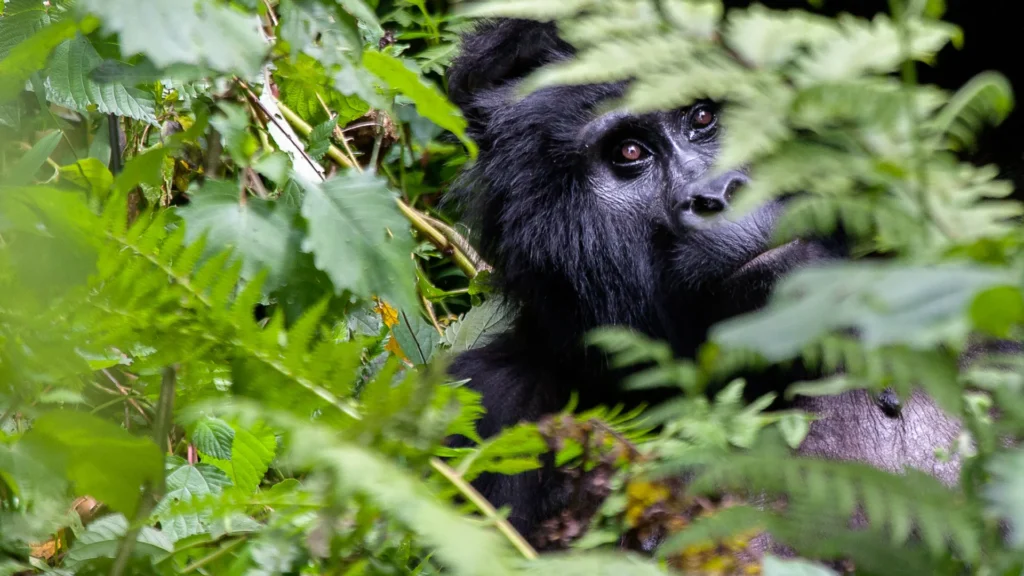
Volcanoes gorilla trekking for solo travellers provides a distinctive combination of independent travel and guided wildlife exploration. Although visitors may arrive in Rwanda alone, the actual trekking activity takes place within an organised conservation programme managed by the park authorities. Participants are assigned to small groups, accompanied by professional guides and supported by trackers who monitor the movements of habituated mountain gorilla families.
For a solo traveller, understanding what happens inside Volcanoes National Park is just as important as arranging accommodation and transport. The early morning briefing, group allocation, changing forest terrain, gorilla viewing regulations and return journey all influence the experience.
This detailed Volcanoes Gorilla Trekking Solo Travelers Guide focuses specifically on the trekking process, the national park environment and the practical realities of joining a gorilla encounter without a personal travelling companion. It explains how the activity operates, what visitors should expect and how to prepare for an experience that is both physically demanding and carefully regulated.
Introducing Volcanoes National Park
Volcanoes National Park lies in northwestern Rwanda and protects part of the Virunga Massif, a chain of volcanic mountains extending across Rwanda, Uganda and the Democratic Republic of the Congo.
The park is internationally recognised for its endangered mountain gorillas, but it also protects bamboo forest, montane vegetation, birdlife and other wildlife.
Its landscape is dominated by volcanic peaks, including Karisimbi, Bisoke, Sabyinyo, Gahinga and Muhabura.
These mountains create a distinctive environment where weather, altitude and vegetation influence trekking conditions.
Why the Park Is Different From a Conventional Safari Destination
Visitors do not normally observe mountain gorillas from a vehicle.
Instead, they enter the forest on foot with authorised guides.
The gorillas move freely through their habitat, and the walking route changes according to their location.
The experience is therefore closer to a guided wildlife expedition than a conventional game drive.
What Makes Solo Trekking Possible?
The park operates a structured group system.
A solo traveller can participate without arranging a private guide or finding companions beforehand.
The official trekking team manages navigation, gorilla location and visitor behaviour.
This structure allows independent travellers to enjoy the forest experience while benefiting from professional supervision.
Where Does Volcanoes Gorilla Trekking Begin?
The official gorilla trekking headquarters are located at Kinigi, near Musanze.
Visitors normally report at approximately 7:00 am for the briefing and allocation procedures.
Kinigi is approximately 13 kilometres from Musanze town, although the distance from individual accommodation properties varies.
Arriving at Headquarters
Visitors should arrive with the identification and booking information required by the park authorities.
The morning process includes registration, instructions and allocation to a habituated gorilla family.
A solo traveller should not assume that arriving without a companion changes the normal procedure.
Why Punctuality Matters
The trekking groups operate according to coordinated arrangements involving guides, trackers and transport.
Late arrival may result in missing the activity, and the official booking conditions should be reviewed before travelling.
Allow enough time for breakfast and the journey from accommodation.
What Happens During the Briefing?
Park personnel explain the conservation rules, expected behaviour and safety procedures.
Visitors learn how to respond if a gorilla moves towards them, why distance must be maintained and what activities are prohibited near the animals.
The briefing is an essential part of the experience rather than a formality.
How Gorilla Trekking Groups Are Organised
A standard Rwanda gorilla trekking group contains a maximum of eight visitors assigned to one habituated gorilla family.
The park authorities manage allocation according to operational considerations, including fitness levels where possible.
A solo traveller may join couples, families or other independent visitors.
Can Solo Travellers Choose Their Group?
Visitors can communicate relevant preferences and physical limitations.
However, group allocation remains under the authority of park personnel.
The composition of a group cannot be guaranteed in advance.
Can You Request a Particular Gorilla Family?
Travellers sometimes read about named gorilla groups and hope to visit one in particular.
Although preferences may be communicated, allocations depend on the gorillas’ location and park operations.
A particular group should never be promised as a guaranteed part of a standard booking.
Will Everyone Walk at the Same Pace?
The guide manages the group’s progress through the forest.
Participants should communicate if they are struggling.
The group must operate together, and visitors should not leave the designated route independently.
The Role of Trackers and Guides
Mountain gorilla trackers monitor habituated gorilla groups and help determine their location.
Guides lead visitors through the forest and manage the encounter.
Their knowledge of gorilla behaviour, terrain and conservation procedures is central to the activity.
Why Trackers Are Important
Mountain gorillas are free-ranging animals.
They may move considerable distances while feeding or interacting with other group members.
Trackers provide information that helps the trekking team locate the assigned family.
Why Visitors Must Follow the Guide
The forest environment can be difficult to navigate.
Guides also understand how to interpret gorilla behaviour and respond to unexpected movements.
A solo traveller should not attempt to separate from the group for photography or exploration.
What Is the Trekking Terrain Like?
Volcanoes National Park trekking terrain varies considerably.
Some routes pass through bamboo forest, while others involve thick undergrowth, open vegetation or steep mountain slopes.
Rain can make the ground slippery.
Natural obstacles may include roots, rocks and dense plants.
Bamboo Forest
Bamboo vegetation is characteristic of parts of the Virunga ecosystem.
Some sections may be relatively open, but walking conditions still depend on slope and weather.
Montane Vegetation
Higher or more densely vegetated areas can require careful movement.
Visibility may be limited, and guides may need to help visitors negotiate difficult sections.
Mud and Slippery Ground
Wet conditions are common in mountain forests.
Waterproof boots with reliable grip are important.
Visitors should move carefully rather than trying to maintain a fast pace.
How Long Does the Trek Take?
There is no fixed duration for Volcanoes gorilla trekking.
Official tourism guidance explains that reaching different gorilla groups may take from approximately 30 minutes to four hours or longer, depending on their location.
The return journey must also be considered.
Why Walking Times Vary
Gorilla families move through the forest.
Their location changes according to feeding and social behaviour.
Weather and terrain also influence walking speed.
Can a Solo Traveller Request a Short Trek?
Visitors may communicate fitness concerns, but no particular route length can be guaranteed.
The park authorities make allocations according to operational requirements.
Why You Should Keep the Day Flexible
The total activity may occupy much of the morning or longer.
Avoid scheduling inflexible onward travel immediately after the trek.
A solo traveller has the advantage of being able to arrange the rest of the day around personal energy levels.
Preparing Physically for the Trek
Gorilla trekking fitness is relevant regardless of whether someone travels alone or with companions.
Regular walking, hill climbing and practice on uneven ground can improve endurance.
The goal is not necessarily athletic performance but confidence and stability.
Building Walking Endurance
Begin with manageable walks and gradually increase distance or elevation.
Practise carrying a light daypack.
Improving Balance
Uneven forest terrain requires careful footing.
Visitors who are concerned about balance should consider suitable preparation and discuss significant limitations with a healthcare professional.
Understanding Altitude
Gorilla trekking takes place in a mountainous environment.
Walking uphill at elevation can feel more demanding than equivalent exercise at sea level.
Visitors should pace themselves and communicate unusual symptoms to the guide.
What to Wear for Volcanoes Gorilla Trekking
Suitable clothing is essential for comfort.
Waterproof hiking boots, long trousers, long sleeves and a rain jacket are commonly recommended.
Gloves can protect hands when gripping vegetation.
Choosing Footwear
Boots should provide traction and support.
Avoid using unfamiliar footwear on trekking day.
Waterproof Clothing
Rain may occur even during relatively dry months.
A lightweight waterproof outer layer helps protect against changing conditions.
Daypack Essentials
Carry drinking water, suitable snacks, essential medication and protection for electronic equipment.
A small, manageable bag is preferable to unnecessary luggage.
Porter Services for Solo Travellers
Gorilla trekking porters are available to help carry bags and provide practical assistance.
Solo visitors carrying cameras or other equipment may find this especially useful.
Porters can also help on difficult terrain, although the precise level of assistance should be discussed locally.
Why Hiring a Porter Can Be Worthwhile
Reducing the weight carried during a long trek can improve comfort.
It also allows visitors to concentrate on walking safely.
Supporting Local Communities
Porter employment contributes to livelihoods around the park.
Responsible tourism can create economic opportunities connected to conservation.
What Happens When the Gorillas Are Located?
Once trackers locate the assigned gorilla family, the guide prepares visitors for the encounter.
Participants receive instructions about approaching the observation area.
Personal belongings and walking equipment may need to be managed according to the guide’s directions.
The gorillas remain wild and may be feeding, resting or moving through vegetation.
The One-Hour Viewing Limit
The standard encounter allows up to one hour with the gorillas.
This limit applies whether someone is travelling alone or with a larger group.
Maintaining the Required Distance
Visitors must follow the current distance requirement communicated by the park authorities.
The official booking guidance specifies a minimum separation of seven metres, while additional precautions or greater distances may be advised during the briefing.
What If a Gorilla Approaches?
Remain calm and follow the guide’s instructions.
Do not attempt to touch the animal.
Avoid sudden movements or attempts to attract its attention.
What Might You See During the Encounter?
Mountain gorilla behaviour varies from group to group and day to day.
Visitors may observe a mature silverback, adult females, juveniles and infants.
The gorillas may be feeding, grooming, resting or interacting.
Silverback Gorillas
A silverback is a mature male distinguished by silver-grey hair across his back.
He may play an important role in group leadership and protection.
Mothers and Infants
Female gorillas care for their young and maintain close physical contact with infants.
These interactions can be especially rewarding to observe.
Juvenile Play
Young gorillas may climb, chase or wrestle.
However, no particular behaviour is guaranteed.
A quiet encounter can be just as meaningful as an active one.
Photography for Solo Travellers
Gorilla photography in Volcanoes National Park requires patience and respect for wildlife regulations.
Flash photography is prohibited.
Forest lighting can be challenging, and vegetation may obscure parts of the animals.
Choosing Equipment
A camera that performs well in low light can be useful.
However, heavy equipment can become inconvenient during a demanding walk.
Photography Etiquette
Do not block other visitors unnecessarily.
Avoid moving independently to obtain a better viewpoint.
Follow the guide’s instructions at all times.
Enjoying the Moment
Solo travellers sometimes feel pressure to document every part of the encounter.
Consider taking a few photographs and spending the remaining time observing.
The experience can be more memorable when attention is not constantly directed towards a screen.
Health Regulations and Gorilla Conservation
Mountain gorillas are vulnerable to certain human infectious diseases.
Visitors must follow current park health requirements.
Anyone experiencing a potentially contagious illness should notify the operator or park authorities before trekking.
Why Health Precautions Matter
Gorillas are genetically close to humans and susceptible to some respiratory infections.
Conservation organisations monitor gorilla health because disease outbreaks can threaten vulnerable populations.
Masks and Hygiene
Follow the current instructions regarding masks, hygiene and visitor behaviour.
Do not rely on outdated travel articles for health requirements.
Prohibited Activities Near Gorillas
Eating, drinking and smoking near gorillas are prohibited.
Visitors should avoid loud noises, sudden movements and unnecessary disturbance.
Is Volcanoes Gorilla Trekking Safe for Solo Travellers?
The official trekking activity is organised and guided.
Solo visitors do not need to navigate the forest independently.
However, the experience still involves natural terrain and wild animals.
Personal Responsibility
Follow instructions, stay with the group and communicate concerns promptly.
Do not leave the designated area.
Medical Preparation
Travellers with significant medical conditions should seek professional advice before undertaking strenuous activity.
Carry essential medication and appropriate travel insurance.
Emergency Communication
Keep important contact information available and inform accommodation providers of your planned activity.
A solo traveller should ensure that someone reliable knows their general travel arrangements.
Best Time to Trek in Volcanoes National Park
Gorilla trekking operates throughout the year.
The relatively drier months of June to September are popular.
December to February can also offer favourable conditions.
March to May and October to November are generally wetter.
Dry-Season Advantages
Trails may be less muddy, although rain remains possible.
Popular periods can have higher demand for permits and accommodation.
Wet-Season Considerations
Rain can make slopes slippery and photography more challenging.
The forest remains green and atmospheric.
Travellers should choose dates according to their preferences and tolerance for wet conditions.
Other Experiences Near Volcanoes National Park
Visitors interested in additional wildlife experiences can consider golden monkey trekking, subject to separate permits and requirements.
The Musanze region also offers Musanze Caves, Buhanga Eco-Park, the Twin Lakes and cultural attractions.
More demanding activities include selected volcano hikes.
These experiences should be evaluated individually rather than automatically added to a fixed package.
Golden Monkey Trekking
Golden monkeys are distinctive primates found in the Virunga region.
Their activity differs from that of mountain gorillas.
The experience requires separate arrangements.
Musanze Cultural Attractions
Cultural visits can provide insight into local traditions and community life.
Choose reputable providers and approach cultural interactions respectfully.
Scenic Excursions
The surrounding volcanic landscape offers opportunities for photography and nature appreciation without undertaking another demanding forest trek.
Conservation and Responsible Tourism
Volcanoes National Park conservation depends on protected habitat, scientific monitoring and cooperation with surrounding communities.
Regulated tourism provides financial and employment benefits connected to wildlife protection.
The park’s visitor limits help reduce disturbance to habituated gorilla groups.
Why Gorilla Groups Are Monitored
Trackers and conservation personnel monitor the gorillas’ movements and welfare.
Long-term research helps identify threats and understand population changes.
Why Tourism Rules Matter
The one-hour encounter limit, visitor group size and health precautions are conservation measures.
Following them is part of the responsibility of every visitor.
The Role of Local Communities
Employment opportunities associated with guiding, tracking, portering and hospitality can help connect tourism with local livelihoods.
Responsible visitors should recognise the importance of these relationships.
Common Mistakes Made by Solo Trekkers
One mistake is assuming that solo travel means a private gorilla encounter.
Another is underestimating the forest terrain or arriving without suitable footwear.
Some visitors focus heavily on camera equipment while neglecting physical preparation.
Others schedule tight onward connections without allowing for an unpredictable return time.
A further mistake is relying on old information about permits or health regulations.
Official rules should always be checked before departure.
Frequently Asked Questions
Can I trek gorillas alone in Volcanoes National Park?
You can book as a solo traveller, but the official activity takes place in a guided group.
How many people are in a gorilla trekking group?
The standard maximum is eight visitors per habituated gorilla family.
Where does the trek begin?
Visitors normally report to Kinigi headquarters for the morning briefing before travelling to the assigned starting point.
What time should I arrive?
Official arrangements generally begin at approximately 7:00 am.
Can I choose my gorilla family?
Preferences may be communicated, but allocations are controlled by the park authorities.
How long is the forest walk?
Walking time varies and may range from a relatively short trek to several hours or longer.
How long can I stay with the gorillas?
The standard encounter allows up to one hour.
Are sightings guaranteed?
No wild animal encounter can be absolutely guaranteed.
Can I hire a porter?
Yes. Porter assistance is available subject to local arrangements and charges.
Is flash photography allowed?
No. Flash photography is prohibited.
Can I bring food into the forest?
Suitable snacks may be carried for the walk, but eating near the gorillas is prohibited.
Is gorilla trekking safe for first-time solo travellers?
The activity is professionally guided, but participants must prepare for natural terrain and follow safety instructions.
Can I request an easier trek?
You may communicate fitness concerns, but a particular route or distance cannot be guaranteed.
What happens if it rains?
Trekking generally operates in varying weather conditions, subject to park safety decisions.
Is Volcanoes National Park suitable for solo photographers?
Yes. However, photography is subject to group rules, distance requirements and the one-hour encounter limit.
Preparing for a Meaningful Solo Gorilla Encounter
Volcanoes gorilla trekking for solo travellers combines the freedom of independent travel with the reassurance of an organised, professionally guided wildlife activity.
Understanding the morning briefing, trekking allocation, forest terrain and conservation rules helps visitors arrive prepared and confident.
The most rewarding experience is not necessarily the shortest trek or the photograph with the clearest view. It is the opportunity to observe endangered mountain gorillas behaving naturally in a protected ecosystem.
At Gorilla Rwanda Safaris, we assist solo visitors with Volcanoes National Park gorilla permits, transport, accommodation and practical trekking preparation. Related tour options are available separately. See also our guides to gorilla permits and porter services.