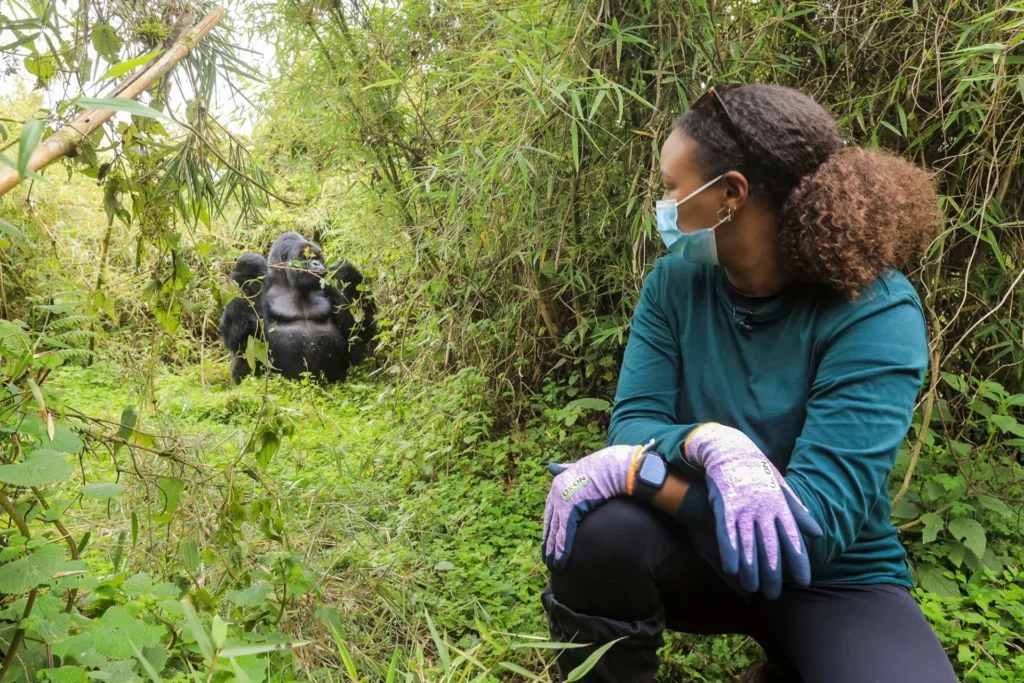
1 Day Bwindi Gorilla Trek
A one-day mountain gorilla trek in Bwindi for travellers who are already in southwestern Uganda.
View SafariHandpicked Kenya Safari Tours for Every Traveler
Primates and wildlife in Rwanda represent one of the most remarkable combinations of biodiversity found within a relatively small African country.
Rwanda lies within the Albertine Rift region, an area of exceptional biodiversity associated with the western branch of the East African Rift system.
Its mountains and forests provide habitat for numerous primate species, including some with restricted geographic distributions.
The country's protected areas contain different forest types, elevations and ecological conditions.
These variations support distinct primate communities.
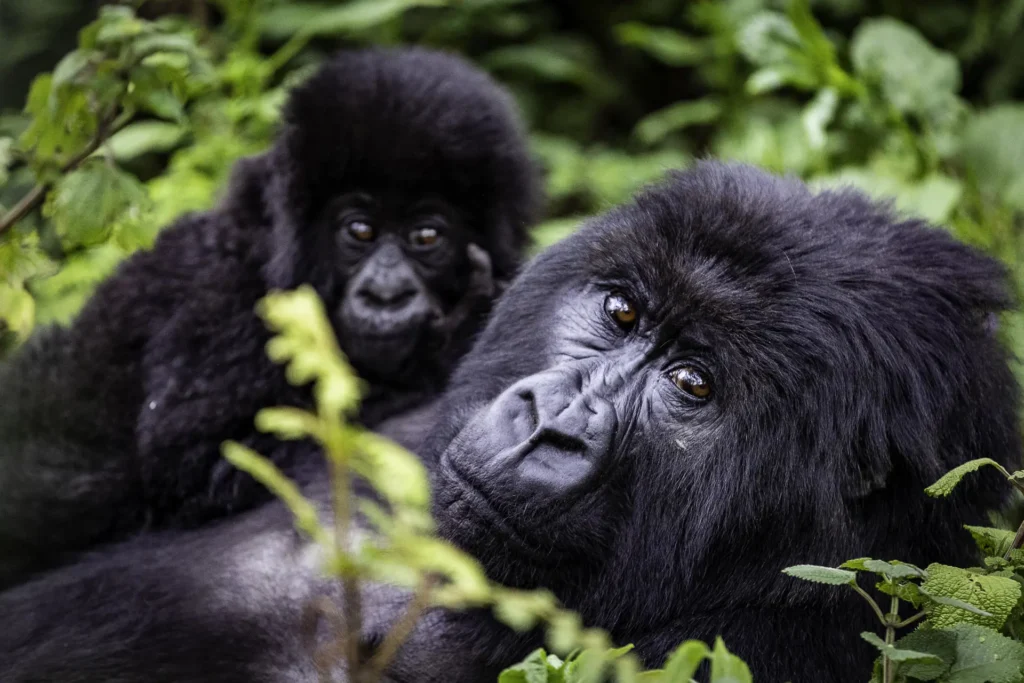
Mountain gorillas in Rwanda are found in Volcanoes National Park, which forms part of the wider Virunga ecosystem.
They are among the world's most recognised endangered primates.
Chimpanzees in Rwanda are primarily associated with Nyungwe Forest, with smaller populations in Gishwati Forest.
Their social behaviour, intelligence and complex communication make them especially interesting to wildlife enthusiasts.
Golden monkeys are distinctive primates associated with the Virunga highlands.
They are known for their striking colouring and active behaviour.
Rwanda also supports black-and-white colobus monkeys, L'Hoest's monkeys, blue monkeys, owl-faced monkeys and other species.
These animals provide opportunities for visitors interested in primate diversity beyond the famous great apes.
Showing 1–12 of 216 safaris
A one-day mountain gorilla trek in Bwindi for travellers who are already in southwestern Uganda.
View SafariA single day in Kampala for the kasubi and palace area, a cultural show, and a market or…
View SafariA full day in Kigali covering the Genocide Memorial, a neighborhood market, and one or two museums.
View SafariA single day on Mount Bisoke, with the crater lake as the turnaround point.
View SafariThe 1 Day Rwanda Family Safari offers an exciting and educational wildlife adventure for families visiting Rwanda.
View SafariThe 3 Day Rwanda Gorilla and Akagera Safari combines mountain gorilla trekking in Volcanoes National Park with wildlife…
View SafariThe 4 Day Rwanda Gorilla and Nyungwe Safari combines mountain gorilla trekking in Volcanoes National Park with chimpanzee…
View SafariThe 1 Day Rwanda Gorilla Trekking Safari offers an unforgettable opportunity to encounter endangered mountain gorillas in their…
View SafariThe 1 Day Rwanda Honeymoon Safari offers couples a romantic escape to the beautiful shores of Lake Kivu,…
View SafariThe 1 Day Rwanda Luxury Safari offers an exclusive wildlife experience in Akagera National Park, Rwanda's premier Big…
View SafariThe 1 Day Rwanda Primates Safari offers an exciting opportunity to encounter Rwanda's endangered golden monkeys in the…
View SafariThe 1 Day Rwanda Wildlife Safari offers an exciting opportunity to explore Akagera National Park, Rwanda's premier savannah…
View SafariVolcanoes National Park is Rwanda's most internationally recognised wildlife destination.
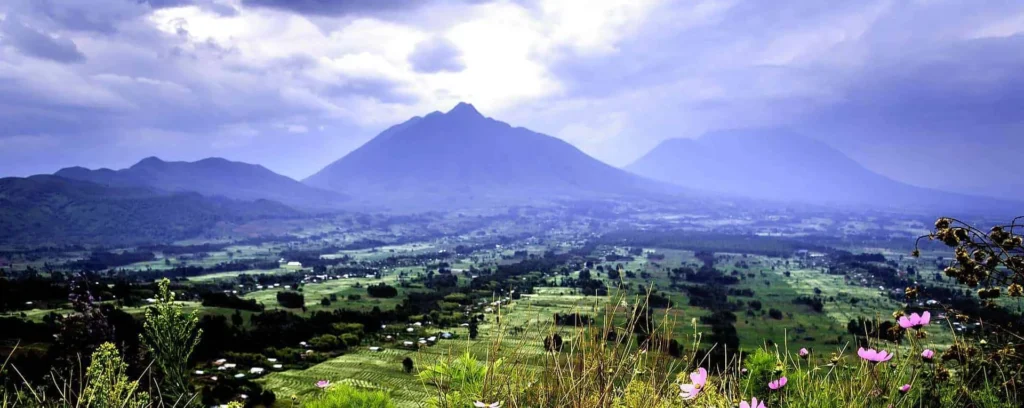
Located in the northwestern highlands, the park protects forested volcanic slopes within the Virunga Massif.
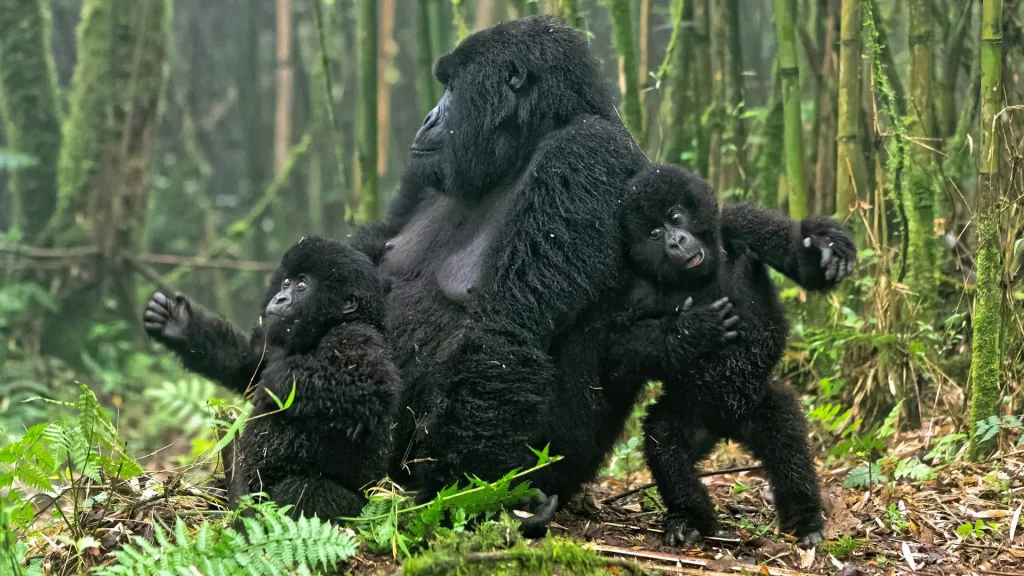
Its mountain gorillas live in social groups led by dominant adult males commonly known as silverbacks.
A gorilla family may include adult females, juveniles and infants.
Observing these relationships provides insight into the behaviour of one of humanity's closest living relatives.
Mountain gorillas are highly social animals.
Group members spend much of their time feeding, resting, travelling and interacting.
Young gorillas may play together, while adults maintain social relationships through grooming, proximity and other behaviours.
Silverbacks play an important role in group cohesion and protection.
Mountain gorillas feed primarily on vegetation, including leaves, stems, shoots and other plant material.
Their feeding habits influence where groups move within the forest.
The availability of suitable vegetation is therefore important to their ecology.
Mountain gorilla conservation involves habitat protection, veterinary monitoring, ranger patrols, scientific research and cooperation with surrounding communities.
Tourism contributes to conservation funding, but visitor activities must be carefully regulated.
The protection of mountain gorillas also depends on broader efforts to safeguard their forest habitat.
Gorilla trekking in Rwanda is a guided activity in which visitors search for habituated mountain gorilla groups.
The experience begins with an early morning briefing.
Visitors are assigned to trekking groups and accompanied by trained guides and trackers.
The duration of the walk varies according to gorilla movements, weather and terrain.
Some treks are relatively short, while others require several hours of walking through steep forest.
Once the gorillas are located, visitors normally spend up to one hour observing them.
The standard international Rwanda gorilla trekking permit is USD 1,500 per person, subject to current official regulations.
The minimum trekking age is generally 15 years.
Permits are limited, and advance booking is recommended.
The activity may involve muddy paths, dense vegetation and steep slopes.
Visitors should wear suitable walking boots, long trousers and rain protection.
Porters may be available to assist with bags and difficult sections.
Visitors must follow ranger instructions and official viewing rules.
Flash photography is prohibited.
People experiencing symptoms of potentially transmissible illness should not participate because gorillas are vulnerable to human diseases.
No. Mountain gorillas are wild animals moving freely through their habitat.
Experienced trackers work to locate habituated groups, but sightings cannot be guaranteed.
Golden monkey trekking in Rwanda offers an opportunity to observe a different primate species in the Virunga highlands.
Golden monkeys are recognised by their distinctive golden-orange colouring and energetic movements.
They inhabit forest and bamboo environments.
Golden monkeys are social animals that may be observed feeding, travelling and interacting within groups.
Their quick movements can make photography challenging.
The best-established visitor experience is in Volcanoes National Park.
Rwanda's official tourism information also identifies golden monkeys in Gishwati Forest.
However, the availability of organised tracking experiences differs between destinations.
Both activities involve guided forest visits, but the animals behave differently.
Golden monkeys often move quickly and may be observed in vegetation above ground level.
Gorillas are larger, generally more deliberate in their movements and observed under different trekking arrangements.
Some golden monkey excursions may involve less demanding walking than certain gorilla treks.
However, terrain and animal movements vary.
Visitors should not assume that the activity is always easy.
Chimpanzee trekking in Rwanda is primarily associated with Nyungwe Forest National Park.
Nyungwe protects extensive montane rainforest in southwestern Rwanda.
Chimpanzees live in complex social communities and are known for their intelligence, vocal communication and varied behaviour.
Chimpanzees form communities with changing smaller associations.
Individuals may travel, forage and interact in different combinations.
Their vocalisations can carry through the forest and help group members maintain contact.
Chimpanzees eat a varied diet that includes fruit, leaves and other plant material.
They may also consume insects and occasionally hunt smaller animals.
Their feeding behaviour changes according to food availability.
Chimpanzees commonly build nests in trees for sleeping.
These structures can provide researchers and trackers with information about chimpanzee activity and habitat use.
Tracking often begins early in the morning.
The forest can be steep, muddy and densely vegetated.
Chimpanzees move quickly, and visitors may need to follow guides through demanding terrain.
The viewing experience differs from gorilla trekking because chimpanzees may remain high in the canopy.
Once chimpanzees are located, viewing time is regulated according to park rules.
Visitors should follow official guidance and avoid disturbing the animals.
Nyungwe is notable for its diversity of primates.
Black-and-white colobus monkeys are among the most visually distinctive forest primates.
Their contrasting colouring and long hair make them attractive subjects for wildlife photography.
Nyungwe is particularly known for its colobus monkey groups.
L'Hoest's monkeys are associated with the Albertine Rift region.
They have dark coats and distinctive pale facial markings.
They generally occupy forest habitats and may be encountered during suitable nature activities.
Blue monkeys inhabit forest environments and may be observed moving through vegetation.
Despite their name, their colouring is not a bright blue.
Owl-faced monkeys are another distinctive species associated with the region's forests.
Their facial appearance makes them recognisable to experienced guides.
Rwanda also supports nocturnal primates such as bushbabies and pottos.
These animals are difficult to observe during ordinary daytime activities.
Sightings depend on appropriate habitats, permitted activities and chance.
Gishwati-Mukura National Park protects forest habitats in western Rwanda.
The area is important for forest restoration, biodiversity and conservation.
Gishwati Forest supports chimpanzees and other primates.
However, visitor facilities and organised activities should be confirmed before travel.
The park should not automatically be treated as having the same trekking infrastructure as Volcanoes or Nyungwe.
Forest fragmentation and land-use pressures have affected the region.
Restoration efforts seek to improve habitat quality and ecological connectivity.
The park offers a valuable context for understanding forest conservation and the relationship between biodiversity and surrounding communities.
Visitors should not assume that every primate species can be reliably observed.
Wildlife encounters depend on habitat, access arrangements and animal behaviour.
Akagera National Park provides a completely different wildlife experience from Rwanda's forest destinations.
Located in eastern Rwanda, the park contains savannah, woodland, wetlands and lakes.
It is Rwanda's principal destination for observing large African mammals in open landscapes.
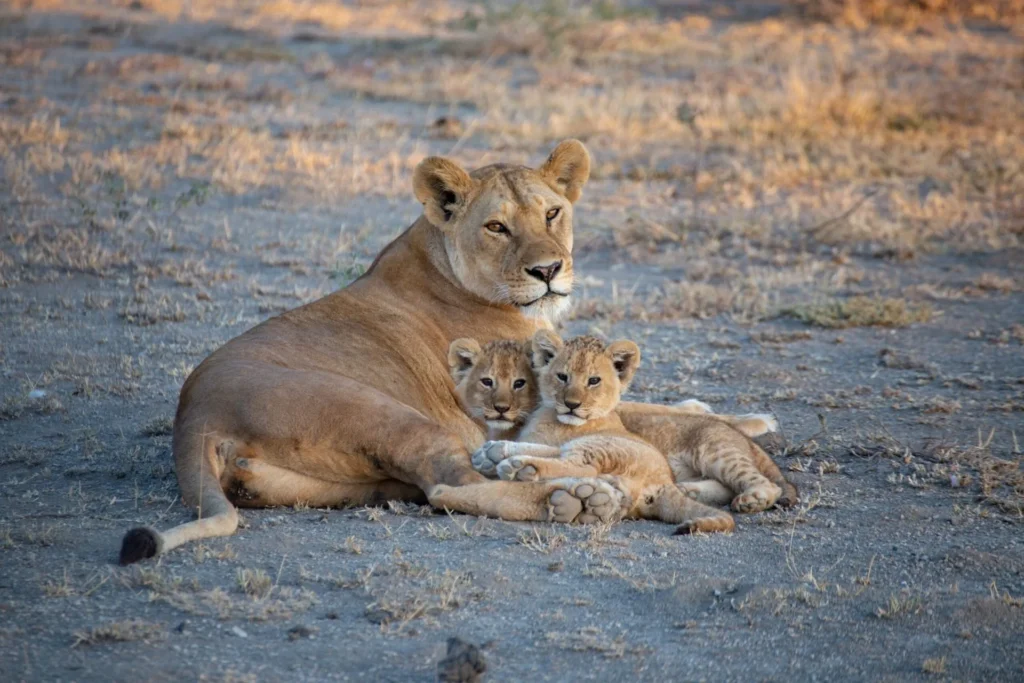
Akagera supports lions, leopards, elephants, buffaloes and rhinoceroses.
The return of lions and rhinoceroses has been an important part of the park's conservation recovery.
Giraffes and zebras are among Akagera's most recognisable herbivores.
They may be observed in suitable grassland and woodland habitats.
Akagera supports several antelope species adapted to different habitats.
Observing them provides insight into the diversity of savannah herbivores.
The park's lakes and wetlands support aquatic wildlife, including hippos and crocodiles.
These animals are particularly associated with wetland environments.
Akagera is an important birdwatching destination.
Its varied habitats support waterbirds, raptors, grassland birds and woodland species.
Akagera's recent conservation history is one of Rwanda's most important wildlife stories.
Following severe wildlife declines, conservation partnerships helped strengthen management, restore habitats and reintroduce species.
Lions returned in 2015.
Eastern black rhinoceroses were reintroduced beginning in 2017, followed by further introductions.
Southern white rhinoceroses were introduced in 2021, with additional animals translocated in 2025.
These efforts demonstrate the importance of long-term conservation planning.
However, reintroducing animals is only one part of wildlife restoration.
Successful conservation also requires habitat protection, monitoring, veterinary support, law enforcement and community cooperation.
Akagera game drives allow visitors to explore different habitats with a guide.
The experience usually takes place from a safari vehicle.
Morning drives may offer comfortable temperatures and opportunities to observe active animals.
Afternoon excursions provide different lighting and wildlife conditions.
Photographers should allow sufficient time and avoid rushing between sightings.
Wildlife moves freely, and no operator can guarantee that every desired species will be seen.
Lake Ihema is an important feature of Akagera's wetland system.
Boat excursions offer opportunities to observe hippos, crocodiles and birds.
Wetlands also support fish, aquatic plants and other organisms that contribute to ecosystem functioning.
For travellers interested in ecology, a boat excursion provides a different perspective from savannah game drives.
Rwanda birdwatching safaris can be rewarding because the country contains several contrasting habitats.
Nyungwe supports forest species, including birds associated with the Albertine Rift.
Akagera offers opportunities to observe savannah, wetland and woodland species.
The highland forests support birds adapted to montane habitats.
The lake and surrounding landscapes provide additional birdwatching opportunities.
Travellers with particular birding interests should consider experienced bird guides.
Species identification and habitat knowledge can greatly improve the experience.
Primate trekking and savannah wildlife safaris involve different physical demands.
Gorilla and chimpanzee trekking generally require walking through forest.
Akagera game drives allow visitors to observe wildlife from a vehicle.
Travellers with limited mobility may find vehicle-based wildlife viewing more practical.
Active travellers may enjoy the physical challenge of forest trekking.
A combined holiday offers opportunities to experience both.
Rwanda is a year-round wildlife destination.
The relatively drier periods of June to September and December to February are popular for trekking.
Forest conditions may be muddier during wetter months.
Akagera wildlife viewing is possible throughout the year, although vegetation and animal movements influence sightings.
Birdwatching conditions also vary seasonally.
Travellers should select travel dates according to their principal interests rather than assuming that one month is best for every species.
Rwanda offers excellent opportunities for wildlife photography.
Forest light can be challenging.
Photographers should use suitable camera settings and avoid flash.
Chimpanzees may move quickly or remain in the canopy.
Patience and appropriate equipment are important.
Golden monkeys are active and may move rapidly through vegetation.
Savannah landscapes provide opportunities for photographing larger mammals and birds.
Wildlife welfare must always take priority over obtaining a particular photograph.
Visitors should follow ranger instructions and avoid disturbing animals.
The standard international Rwanda gorilla permit costs USD 1,500 per person.
Other primate activities require separate permits or fees.
Akagera expenses may include park entry, vehicle transport, guiding and boat activities.
Accommodation and transport costs vary according to travel style.
Travellers should request a clear quotation identifying included and excluded services.
A Rwanda Uganda primate safari can broaden the range of wildlife experiences.
Uganda's Bwindi Impenetrable National Park offers mountain gorilla trekking.
Kibale National Park is known for chimpanzee tracking.
Queen Elizabeth National Park provides savannah wildlife and boat excursions.
However, cross-border journeys require additional planning.
Travellers should consider road distances, permit availability and immigration requirements.
Wildlife tourism should contribute to conservation without harming animals or habitats.
Visitors must follow official park regulations.
Wild animals should never be fed or approached outside permitted viewing arrangements.
Responsible operators should avoid guaranteeing sightings or encouraging unsafe behaviour.
Travellers can also support conservation through appropriate local employment and community tourism initiatives.
Rwanda supports mountain gorillas, chimpanzees, golden monkeys, colobus monkeys, L'Hoest's monkeys and several other primates.
Mountain gorillas are tracked in Volcanoes National Park.
Nyungwe Forest is Rwanda's principal established chimpanzee trekking destination.
Volcanoes National Park offers an established golden monkey tracking experience.
Yes. Akagera National Park supports lions, leopards, elephants, buffaloes and rhinoceroses.
Yes. Volcanoes National Park and Akagera offer complementary experiences.
It can be physically demanding because chimpanzees move through steep forest terrain.
No. Mountain gorillas are wild animals, and sightings cannot be guaranteed.
The standard international Rwanda gorilla permit costs USD 1,500 per person, subject to current regulations.
Yes. Nyungwe and Akagera are particularly important birdwatching destinations.
Age restrictions vary by activity. Gorilla trekking generally requires participants to be at least 15 years old.
The answer depends on the species. Volcanoes is best known for gorillas, Nyungwe for forest primates and Akagera for savannah wildlife.
Yes. Combined journeys can provide additional gorilla, chimpanzee and savannah wildlife experiences.
Sturdy boots, long trousers, rain protection, suitable gloves and drinking water are recommended.
Primates and wildlife in Rwanda offer opportunities to discover endangered mountain gorillas, intelligent chimpanzees, distinctive forest monkeys and classic African savannah animals.
The country's national parks protect contrasting ecosystems, making Rwanda a rewarding destination for wildlife enthusiasts, photographers, conservation-minded travellers and first-time safari visitors.
At Gorilla Rwanda Safaris, we help coordinate permits, accommodation, private transport and guided wildlife activities according to individual interests.
Contact our team to discuss your preferred species, travel dates, fitness level and budget.