
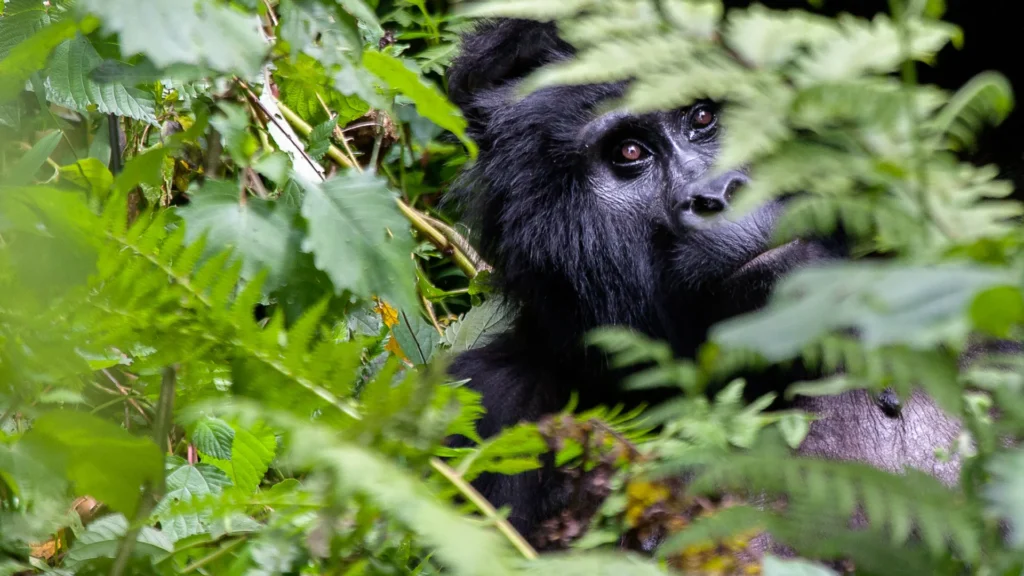
Volcanoes gorilla trekking takes place in one of Africa’s most remarkable mountain environments. Located in northwestern Rwanda, Volcanoes National Park protects the forested slopes of the Virunga Mountains, where endangered mountain gorillas live among bamboo stands, montane vegetation and dramatic volcanic landscapes.
The park is internationally recognised for its mountain gorilla conservation programme, but its importance extends far beyond tourism. Volcanoes National Park forms part of a transboundary ecosystem shared with Uganda and the Democratic Republic of Congo. Its forests support specialised plants, rare primates, birds and other wildlife adapted to the conditions of the Albertine Rift region.
For visitors, gorilla trekking in Volcanoes National Park combines physical exploration with carefully regulated wildlife observation. The experience begins at the park headquarters in Kinigi before continuing into natural forest habitat under the supervision of authorised guides and trackers.
Understanding the park’s geography, ecology and conservation history makes the encounter more meaningful. A gorilla family is not simply an attraction waiting beside a trail. Its members are wild animals whose movements, feeding patterns and social relationships determine the character of each day’s trek.
This guide explores the distinctive features of Volcanoes Gorilla Trekking, including the Virunga landscape, gorilla behaviour, forest conditions, trekking procedures, visitor requirements and the wider conservation significance of the park.
Where Is Volcanoes National Park?
Volcanoes National Park is situated in northwestern Rwanda, close to Musanze and the country’s borders with Uganda and the Democratic Republic of Congo.
The park protects Rwanda’s portion of the Virunga volcanic massif.
The surrounding landscape contains cultivated hills, rural communities and high volcanic peaks.
The Virunga Mountains
The Virunga range includes several prominent volcanoes.
Within Rwanda’s protected landscape, important peaks include Mount Karisimbi, Mount Bisoke, Mount Sabyinyo, Mount Gahinga and Mount Muhabura.
These mountains contribute to the park’s dramatic scenery and ecological diversity.
Mount Karisimbi
Mount Karisimbi is the highest peak in Rwanda, reaching approximately 4,507 metres.
Its elevation creates cooler conditions and high-altitude vegetation.
Mount Bisoke
Mount Bisoke is recognised for its volcanic crater lake.
Its slopes contain forest habitats and challenging hiking terrain.
Mount Sabyinyo
Mount Sabyinyo forms part of the wider Virunga landscape and is associated with the meeting area of Rwanda, Uganda and the Democratic Republic of Congo.
The Importance of Altitude
Elevation influences temperature, rainfall and vegetation.
Different altitudinal zones provide different habitats for wildlife.
The Ecology of Mountain Gorilla Habitat
Mountain gorilla habitat in Rwanda includes several vegetation types.
Volcanoes National Park protects bamboo forest, montane forest, grassland, swamp and high-altitude heath vegetation.
These habitats are influenced by volcanic soils, rainfall and elevation.
Bamboo Forest
Bamboo stands are important components of the Virunga ecosystem.
They provide food and shelter for wildlife, including gorillas and golden monkeys.
Montane Forest
Montane vegetation includes trees, shrubs and dense undergrowth.
The forest provides feeding opportunities and cover for gorilla families.
Open Vegetation
Some parts of the mountain landscape contain more open vegetation.
These areas contribute to the park’s ecological diversity.
Seasonal Changes
Rainfall influences plant growth and trail conditions.
Gorilla feeding patterns may change according to the availability of vegetation.
Understanding Mountain Gorilla Families
Mountain gorillas are social primates that live in family groups.
A typical group contains a dominant silverback, adult females, juveniles and infants.
However, group composition varies and changes over time.
Silverback Gorillas
A silverback is a mature male gorilla recognised by the silver-grey colouring that develops across his back.
Dominant males often play an important role in group protection and movement.
Adult Females
Adult females care for infants and participate in the group’s social relationships.
Juveniles
Young gorillas frequently engage in play and exploration.
Their behaviour can be particularly interesting to observe.
Family Dynamics
Gorilla groups may change through births, deaths, transfers and social interactions.
This means that published descriptions of specific families can become outdated.
Gorilla Habituation and Tourism
Gorilla trekking takes place with families habituated to carefully controlled human presence.
Habituation is a gradual process that allows animals to become accustomed to observers without being domesticated.
Habituation Does Not Mean Tameness
Mountain gorillas remain wild animals.
They can react to unexpected behaviour, sudden movements or perceived threats.
The Role of Researchers and Trackers
Conservation personnel monitor gorilla families and their movements.
This information supports wildlife protection and the organisation of trekking activities.
Why Visitor Numbers Are Limited
The standard visitor limit is eight people per habituated family per day.
This helps reduce disturbance and manage human contact.
The Kinigi Gorilla Trekking Briefing
Kinigi is the official gathering point for standard gorilla trekking.
Rwanda’s tourism authority identifies 7:00 a.m. as the normal reporting time.
Visitor Registration
Participants report according to their booking instructions.
Relevant documents may be checked.
Conservation Rules
Rangers explain the behaviour expected around gorillas.
Group Allocation
Visitors are assigned to habituated gorilla families.
Fitness may be considered, but specific family assignments are not guaranteed.
Preparing for the Trail
Guides explain practical details before visitors proceed towards the relevant trailhead.
Trekking Through the Virunga Forest
The Volcanoes National Park gorilla trek is an active outdoor experience.
The forest terrain varies according to the assigned family and its location.
Volcanic Slopes
Some routes involve steep climbs and descents.
Muddy Ground
Rainfall can make trails slippery.
Bamboo Vegetation
Bamboo stands may form part of the walking route.
Dense Understory
Some sections contain thick vegetation and uneven footing.
Altitude
The park’s elevation can increase physical exertion.
Unpredictable Distance
Because gorillas move freely, the walking distance cannot be guaranteed in advance.
Tracking Mountain Gorillas
Trackers use their knowledge of gorilla movements and habitat to help locate the assigned family.
Feeding Signs
Gorilla feeding activity can provide information about recent movements.
Nesting Areas
Gorillas construct nests for resting, and evidence of nesting can help trackers understand group movements.
Communication Between Teams
Tracking teams communicate information to the guides accompanying visitors.
The Final Approach
When the gorillas are located, guides provide instructions before the encounter begins.
Visitors should remain quiet and follow directions carefully.
The One-Hour Gorilla Encounter
The standard viewing period is limited to a maximum of one hour.
This restriction helps reduce human disturbance.
Observing Feeding Behaviour
Gorillas may consume leaves, stems and other plant material.
Resting and Grooming
Family members may rest or interact socially.
Juvenile Play
Young gorillas sometimes engage in energetic play.
Silverback Behaviour
A silverback may remain alert while other members of the family feed or rest.
Unpredictable Encounters
Every gorilla visit is different.
Visitors should not expect a particular photograph, position or behaviour.
Gorilla Trekking Permit Requirements
The standard international Rwanda gorilla trekking permit costs US$1,500 per person.
The minimum trekking age is 15 years.
Permits should be reserved in advance because daily availability is limited.
Permit Validity
A permit applies to the relevant authorised trekking date.
Family Allocation
The permit does not automatically guarantee a specific gorilla family.
Separate Expenses
Accommodation, transport, meals and porter services are generally separate.
Official Booking
Permits can be arranged through official Rwanda tourism channels or reputable operators.
Fitness Requirements for Volcanoes Gorilla Trekking
The physical difficulty of trekking varies.
Walking Ability
Visitors should be comfortable walking on uneven terrain.
Hill Climbing
Some routes involve sustained uphill walking.
Rain and Mud
Wet conditions can make movement more demanding.
Porter Assistance
Porters can help with belongings and difficult sections.
Older Travellers
Many older visitors participate successfully, depending on their individual fitness and mobility.
Health Considerations
Travellers with relevant medical concerns should obtain professional advice before undertaking demanding physical activity.
Clothing for Volcanoes National Park
Suitable clothing improves comfort and protection.
Hiking Boots
Sturdy boots with reliable grip are strongly recommended.
Long Trousers
Long trousers protect against vegetation.
Long Sleeves
Long-sleeved shirts provide additional protection.
Waterproof Jacket
Rain protection is essential throughout the year.
Gloves
Gardening-style or leather gloves may be useful.
Warm Layer
The mountain environment can be cool, particularly in the morning.
Gorilla Photography in Volcanoes National Park
The forest provides rewarding but technically challenging photographic conditions.
Low Light
Dense vegetation can reduce available light.
Moving Subjects
Young gorillas may move quickly.
Vegetation
Branches and leaves may partially obstruct the view.
No Flash Photography
Flash photography is prohibited.
Respecting Wildlife
Photographers must not move closer to gorillas against ranger instructions.
The welfare of the animals takes priority over photography.
Best Time for Volcanoes Gorilla Trekking
Gorilla trekking is possible throughout the year.
Relatively Dry Periods
June to September and parts of December to February are commonly favoured.
Trails may be less muddy, although rain remains possible.
Wetter Periods
March to May and October to November often experience increased rainfall.
The forest becomes lush, but walking may be more challenging.
Wildlife Movements
Gorillas remain in their habitat throughout the year.
Seasonal weather does not guarantee easier sightings.
Gorilla Conservation in Volcanoes National Park
Volcanoes National Park conservation is internationally important because mountain gorillas occupy a restricted geographical range.
Historical Threats
Gorillas have faced habitat pressure, poaching-related threats and disease risks.
Monitoring
Conservation personnel regularly monitor gorilla families.
Veterinary Support
Specialist teams may provide veterinary interventions when appropriate.
Habitat Protection
Protecting forest habitat is essential for long-term survival.
Community Participation
Communities surrounding the park play an important role in conservation.
Tourism Revenue
Rwanda’s official tourism authority states that a portion of permit revenue supports community projects.
Dian Fossey and Gorilla Research
Dian Fossey is closely associated with the history of mountain gorilla research in the Virunga Mountains.
Her work helped increase international awareness of gorilla behaviour and conservation challenges.
Karisoke Research
The Karisoke Research Centre was established in 1967.
Its name combines references to Mount Karisimbi and Mount Bisoke.
Conservation Legacy
Research and monitoring have continued to play important roles in mountain gorilla protection.
Visitor Interest
Authorised conservation-related visits can provide historical context beyond the standard trekking encounter.
Other Wildlife in Volcanoes National Park
Although gorillas are the principal attraction, the park supports other wildlife.
Golden Monkeys
Golden monkey trekking provides an opportunity to observe distinctive forest primates.
Birds
Official tourism information identifies approximately 200 bird species associated with the park.
Smaller Mammals
The forest also supports other mammals, although many are difficult to observe.
Plant Diversity
Vegetation changes with elevation and contributes to the park’s ecological richness.
Additional Nature Activities
Visitors interested in the wider Virunga landscape may consider authorised activities beyond gorilla trekking.
Mount Bisoke Hiking
The climb offers volcanic scenery and a crater lake.
Mount Karisimbi Trekking
This is a demanding high-altitude hiking experience.
Dian Fossey Hike
The route introduces visitors to gorilla conservation history.
Golden Monkey Tracking
The activity explores another important primate habitat.
Scenic Viewpoints
The surrounding Musanze region offers views of volcanic peaks and cultivated hills.
Accommodation Near Volcanoes National Park
Accommodation is available in Musanze, Kinigi and surrounding areas.
Budget Properties
Guesthouses offer practical options for cost-conscious visitors.
Mid-Range Lodges
Comfortable lodges may provide a balance of location and facilities.
Luxury Lodges
Premium properties may offer spacious accommodation and volcanic views.
Choosing by Location
The distance to Kinigi headquarters matters because trekking begins early.
Responsible Gorilla Trekking Rules
Visitors must follow official conservation instructions.
Do not touch gorillas or offer them food.
Do not use flash photography.
Maintain the distance instructed by rangers.
Avoid loud noises and sudden movements.
Notify park authorities of potentially infectious symptoms.
Do not leave litter in the forest.
Respect the one-hour encounter limit.
Frequently Asked Questions About Volcanoes Gorilla Trekking
Where does Volcanoes gorilla trekking take place?
In Volcanoes National Park in northwestern Rwanda.
What is the nearest major town?
Musanze is the main gateway town.
Where is the briefing held?
At the park headquarters in Kinigi.
What time is the briefing?
Visitors normally gather at 7:00 a.m.
How much is a permit?
The standard international permit costs US$1,500 per person.
What is the minimum age?
Fifteen years.
How many visitors join one gorilla group?
The standard limit is eight visitors per habituated family.
How long can visitors stay with the gorillas?
Up to one hour.
Is trekking difficult?
Difficulty varies according to terrain, weather and the gorillas’ location.
Can I choose a gorilla family?
Allocation is managed by park authorities.
Are gorillas guaranteed to be seen?
No. They are wild animals that move freely.
Is the park open throughout the year?
Gorilla trekking generally operates year-round, subject to official conditions.
Can I photograph gorillas?
Yes, without flash and under ranger instructions.
Are there other primates in the park?
Yes. Golden monkeys are another important attraction.
Can older travellers participate?
Many can, depending on health, mobility and fitness.
Discover Volcanoes Gorilla Trekking with Gorilla Rwanda Safaris
Volcanoes Gorilla Trekking provides an exceptional opportunity to understand mountain gorillas within the forests and volcanic landscapes of northwestern Rwanda.
The experience combines wildlife observation, conservation education and physical exploration of a remarkable protected ecosystem.
Gorilla Rwanda Safaris assists travellers with permits, accommodation, transport and practical trekking preparation.
Contact our team to discuss your preferred dates and learn more about visiting Volcanoes National Park responsibly.