
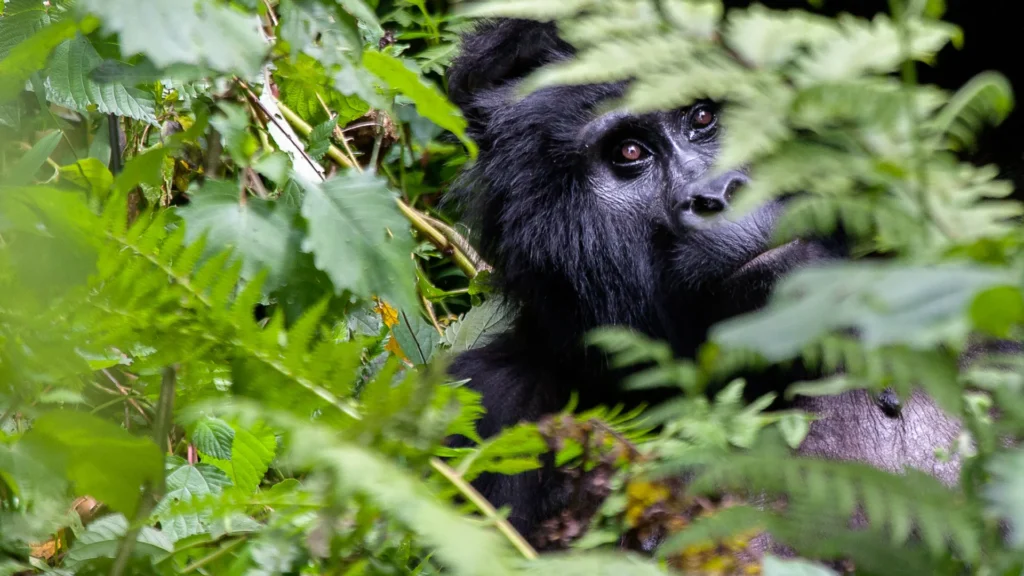
Seeing Rwanda mountain gorillas in their natural habitat is an extraordinary wildlife experience, but it is also a physically active encounter with one of Africa’s most remarkable forest ecosystems. Visitors must travel on foot through the mountain vegetation of Volcanoes National Park, where endangered mountain gorillas live in family groups that move freely across forested volcanic slopes.
Unlike wildlife viewing from a safari vehicle, mountain gorilla trekking in Rwanda involves entering the animals’ habitat under the supervision of trained rangers and trackers. The route depends on where a habituated gorilla family is located, and the walking conditions may include steep slopes, damp vegetation, uneven ground and sections of dense forest.
A central question for prospective visitors is how fit do you need to be to see mountain gorillas in Rwanda? The answer is not determined by age or athletic ability alone. Walking endurance, balance, joint mobility, altitude tolerance and general health all influence how comfortably someone can participate.
This detailed Rwanda mountain gorillas fitness guide examines the relationship between gorilla ecology and trekking difficulty. It explains why the animals’ natural behaviour affects walking distance, how visitors can prepare for the mountain environment, what health precautions are necessary and how to assess physical readiness without unrealistic expectations.
Understanding Rwanda’s Mountain Gorillas and Their Habitat
Mountain gorillas, scientifically classified as Gorilla beringei beringei, are a subspecies of eastern gorilla. They inhabit two principal geographical regions: the Virunga Massif, extending across Rwanda, Uganda and the Democratic Republic of the Congo, and the Bwindi-Sarambwe landscape of Uganda and the neighbouring Democratic Republic of the Congo.
In Rwanda, these primates are protected within Volcanoes National Park, part of the Virunga mountain ecosystem. The park contains bamboo forests, montane vegetation, forest clearings and steep volcanic landscapes that provide the gorillas with food, shelter and opportunities for movement.
Mountain gorillas are predominantly terrestrial, although they can climb trees. They spend substantial periods feeding, resting, grooming and interacting with other members of their groups. Their diet is mainly plant-based, including leaves, stems, shoots and other available vegetation.
These natural behaviours have direct consequences for gorilla trekking fitness requirements. The animals are not kept in enclosures or directed towards visitors. Instead, authorised trackers locate habituated families within their natural home ranges, and trekking groups travel towards them on foot.
Why Mountain Gorilla Habitat Makes Trekking Unpredictable
A mountain gorilla family may feed in one part of its range before moving towards another area. Changes in food availability, social interactions and resting behaviour can influence these movements.
Some families spend time in relatively accessible vegetation, while others may be located on steeper or more densely forested slopes. Even when trackers know a family’s approximate position, the route required to reach it can change.
This is why Rwanda gorilla trekking walking distance cannot be reliably predicted for every visitor. A trek that was relatively manageable yesterday may be more demanding today if the animals have moved.
The unpredictability is an essential part of observing wild gorillas. Visitors are entering the animals’ environment rather than expecting the animals to remain in a convenient tourist viewing location.
How Gorilla Family Behaviour Affects Trekking Difficulty
Mountain gorilla behaviour influences not only where trekking groups travel but also how the final approach and observation period are managed.
Gorillas live in social groups that generally include a dominant silverback, adult females, younger males and juveniles. Group composition varies, and some families contain more than one mature male.
A silverback plays an important role in group protection, movement and social stability. Other members feed, rest, groom and interact according to their individual needs.
Feeding Movements
Gorillas spend considerable time consuming vegetation. Their feeding areas may shift as they move through available plant resources.
For trekkers, this means the animals’ location is related to the natural distribution of food rather than the convenience of established walking routes.
Resting and Social Behaviour
Gorillas frequently rest between feeding periods. Young gorillas may play, while adults groom or remain close to one another.
During a visitor encounter, the group may be resting in a relatively open location or positioned among dense vegetation.
Visitors must follow ranger instructions regarding where to stand, how to move and when to remain still.
Group Movement
A gorilla family may change position while visitors are approaching. Rangers coordinate with trackers to respond to these movements.
Visitors should not assume that reaching a previously reported location means the walking is complete.
The ability to remain flexible and conserve energy is therefore valuable during African mountain gorilla trekking.
What Level of Fitness Is Needed to See Rwanda Mountain Gorillas?
Most visitors should aim for a reasonable level of walking endurance, stability and lower-body strength.
You do not need to be a professional athlete or experienced mountaineer. However, mountain gorilla trekking is more demanding than a short walk through a maintained botanical garden.
A visitor may need to walk uphill, step over roots, negotiate wet vegetation and descend uneven slopes. These movements require different physical abilities from walking on a flat pavement.
Cardiovascular Endurance
Cardiovascular endurance determines how comfortably you can sustain physical activity.
Walking uphill at altitude increases the demand on the heart and lungs. Travellers who regularly walk, cycle or undertake other aerobic exercise may find sustained effort more manageable.
A practical training goal is to become comfortable walking for two or three hours over varied terrain. This is preparation guidance rather than an official requirement or prediction of actual trekking duration.
Leg Strength
The thighs, calves, hips and gluteal muscles help propel the body uphill and control movement downhill.
Weakness in these muscles may increase fatigue and make steep sections more difficult.
Regular hill walking, stair climbing and appropriate strengthening exercises can improve readiness.
Balance and Coordination
Forest terrain requires careful foot placement.
Roots, stones, mud and vegetation can create surfaces that are less predictable than ordinary paths.
Good balance is particularly important when descending, stepping across obstacles or changing direction.
Joint Mobility
Comfortable movement through the hips, knees and ankles helps visitors negotiate uneven terrain.
People with restricted mobility should assess their capabilities before booking and discuss any concerns with a healthcare professional.
How Difficult Is Mountain Gorilla Trekking Compared With Ordinary Hiking?
Rwanda gorilla trekking difficulty is influenced by terrain rather than distance alone.
A relatively short route through steep, muddy vegetation may be more demanding than a longer walk on a well-maintained path.
Ordinary hiking trails often have visible routes, predictable distances and designated stopping points. Gorilla trekking routes are determined by the location of wildlife, and conditions may change as the group progresses.
The walking pace is normally managed by authorised guides, but visitors must still be capable of negotiating the environment safely.
Uphill Walking
Uphill sections increase breathing effort and place greater demands on the legs.
Visitors should adopt a sustainable pace rather than attempting to climb quickly.
Short, controlled steps can help conserve energy.
Downhill Walking
Descending is frequently underestimated.
Downhill movement requires the leg muscles to control body weight while the knees absorb repeated loading.
Slippery surfaces can increase the challenge, especially for travellers with previous knee injuries.
Dense Vegetation
Forest undergrowth may require stepping around obstacles or moving through narrow passages.
Long clothing and gloves help protect against scratches and irritating plants.
Wet Ground
Rainfall can make soil slippery and increase the effort required to maintain balance.
Supportive boots with reliable grip are essential.
Understanding Altitude in Mountain Gorilla Habitat
The Virunga Mountains create an elevated environment in which physical exertion may feel more demanding than at sea level.
Altitude affects the amount of oxygen available with each breath. Visitors arriving from lower elevations may notice heavier breathing or greater fatigue during uphill walking.
However, the effects vary between individuals.
Does Being Physically Fit Prevent Altitude Illness?
No. General fitness does not prevent altitude illness.
The CDC Yellow Book explains that altitude illness susceptibility is influenced by factors including individual physiology, elevation and rate of ascent.
An experienced runner may still experience altitude-related symptoms, while a less athletic visitor may adjust without significant difficulty.
Fitness preparation improves physical endurance but should not be confused with acclimatisation.
Recognising Possible Altitude Symptoms
Symptoms may include headache, nausea, dizziness, unusual fatigue or reduced appetite after ascending to higher elevations.
Severe breathlessness at rest, confusion or loss of coordination requires urgent medical attention.
Visitors should inform their guide immediately if concerning symptoms develop.
Sensible Altitude Preparation
Allowing time to rest before trekking can improve comfort.
Avoid unusually demanding exercise immediately after arriving at elevation.
Stay appropriately hydrated and follow medical advice if you have previously experienced altitude illness or have significant heart or lung conditions.
Why Gorilla Trekking Fitness Is Different From Mountain Climbing Fitness
Mountain gorilla trekking is not technical mountaineering.
Visitors do not normally need ropes, climbing harnesses or specialist rock-climbing skills for a standard gorilla encounter.
However, the absence of technical climbing does not mean the activity is physically effortless.
The relevant skills are sustained walking, controlled movement, balance and the ability to adapt to changing ground conditions.
A traveller who regularly enjoys countryside walking may be well prepared even without experience climbing major mountains.
Conversely, someone who exercises only on indoor machines may benefit from practising on natural terrain before travelling.
Preparing for Mountain Gorilla Trekking Through Regular Exercise
The most useful training combines walking endurance, lower-body strength and balance.
Walking on Varied Terrain
Walking is the foundation of gorilla trekking physical preparation.
Begin with distances appropriate to your current fitness and gradually increase duration.
Where possible, include grass, woodland paths, gentle slopes and uneven countryside surfaces.
Hill Training
Hill walking helps prepare for the volcanic slopes of Volcanoes National Park.
It develops cardiovascular endurance and strengthens muscles used during climbing.
Practise descending as well as ascending.
Lower-Body Strengthening
Step-ups, supported squats and calf raises can help strengthen the legs.
Exercise should be controlled and appropriate to individual ability.
Anyone with joint problems should seek guidance before undertaking demanding strengthening exercises.
Balance Exercises
Simple balance activities can improve stability.
Examples include controlled single-leg standing while holding a stable support or walking carefully over mildly uneven ground.
Avoid unsafe exercises that create an unnecessary risk of falling.
Flexibility and Mobility
Gentle mobility exercises can help maintain comfortable movement through the hips, knees and ankles.
Flexibility alone does not replace endurance or strength, but it contributes to overall movement confidence.
Gorilla Trekking Fitness for Different Age Groups
Young Adults
Younger visitors may have good general stamina but should not underestimate the terrain.
A lack of hiking experience can make slippery descents and uneven ground challenging.
Middle-Aged Travellers
Visitors who spend much of their working day sitting may benefit from several weeks of progressive walking.
Even people who consider themselves generally healthy may find sustained uphill exercise unfamiliar.
Senior Travellers
Gorilla trekking for seniors is possible for many older visitors.
There is no general maximum age limit, although suitability depends on mobility, health and physical ability.
Older travellers may benefit from porter support and a more relaxed travel schedule.
Visitors With Limited Mobility
Specialised assistance may be available in certain circumstances.
However, such arrangements require advance coordination and cannot be assumed to be included in a standard permit.
Health Requirements and Protecting Mountain Gorillas
Rwanda mountain gorilla conservation is closely connected with visitor health.
Gorillas are biologically related to humans and can be vulnerable to infections transmitted by people.
Respiratory illnesses are particularly concerning because they can affect gorilla health.
Visitors who are unwell should inform park authorities and follow the applicable procedures.
Why Disease Prevention Matters
The mountain gorilla population is limited and receives intensive conservation protection.
An infection introduced into a habituated family could have serious consequences.
Responsible tourism therefore requires visitors to prioritise gorilla welfare over personal expectations.
Maintaining Separation
Visitors must observe the minimum distance required by park authorities and follow ranger instructions if a gorilla approaches.
The commonly stated separation requirement is at least seven metres, subject to current official protocols.
Visitors must never attempt to touch gorillas.
One-Hour Viewing Limit
The standard gorilla encounter is limited to one hour.
This restriction helps manage human disturbance and exposure.
It is separate from the time spent walking to and from the gorilla family.
Why Gorilla Trekking Groups Are Small
Rwanda gorilla trekking groups are limited to a maximum of eight visitors per habituated gorilla family per day.
Small groups help reduce disturbance and make it easier for rangers to supervise visitor behaviour.
Group size also influences how the trek progresses.
Visitors should cooperate with the guide, maintain appropriate spacing and avoid moving independently.
Gorilla Trekking Porters and Physical Assistance
A gorilla trekking porter can help carry personal belongings and provide support on difficult terrain.
Porters are particularly useful when walking on muddy slopes or negotiating uneven ground.
Hiring a porter also supports local employment around the protected area.
However, ordinary porter assistance should not be confused with specialised mobility support.
Visitors with significant physical limitations should discuss their requirements before booking.
What to Wear When Visiting Rwanda Mountain Gorillas
Suitable clothing contributes to both comfort and safety.
Hiking boots should provide ankle support where appropriate and reliable grip on wet ground.
Long trousers help protect against vegetation and insects.
Long-sleeved shirts provide additional protection from scratches and irritating plants.
Waterproof jackets are recommended because mountain weather can change quickly.
Gardening gloves can protect the hands when negotiating vegetation.
A small daypack should contain drinking water, snacks, personal medication and other essentials.
Avoid carrying unnecessary weight.
Seasonal Conditions and Trekking Fitness
Rwanda mountain gorilla trekking takes place throughout the year, subject to park operations.
Relatively drier periods commonly occur from June to September and during parts of December to February.
Wetter periods are often associated with March to May and October to November.
However, rainfall can occur in the Virunga Mountains during any month.
Wet conditions may increase physical effort, especially on steep descents.
Travellers should therefore prepare for muddy terrain regardless of their travel dates.
Understanding the Mountain Gorilla Encounter
Once the trekking group reaches the gorillas, visitors are guided into a suitable observation position.
The encounter may include watching adults feed, juveniles play or family members rest together.
A dominant silverback may be present, although the composition and behaviour of each family differ.
Visitors should remain calm, avoid sudden movements and follow ranger instructions.
Photography is permitted under applicable rules, but flash photography is prohibited.
The encounter is not a performance. The animals remain wild and behave naturally.
Responsible Gorilla Trekking and Conservation
Mountain gorilla conservation in Rwanda depends on habitat protection, ranger monitoring, veterinary support, scientific research and cooperation with surrounding communities.
Regulated tourism contributes to the wider conservation system.
Visitors support these efforts by respecting group limits, following health requirements and avoiding behaviour that could disturb gorillas.
The experience is most meaningful when visitors recognise that conservation takes priority over photographs, convenience or proximity.
Frequently Asked Questions About Rwanda Mountain Gorilla Fitness
How fit must I be to see Rwanda mountain gorillas?
Reasonable walking endurance, leg strength and balance are recommended. The exact physical effort varies with terrain and gorilla location.
Is mountain gorilla trekking suitable for beginners?
Yes. Many first-time hikers participate successfully after appropriate preparation.
Can overweight visitors trek mountain gorillas?
Body weight alone does not determine suitability. Mobility, endurance, balance and overall health are more relevant.
Can older travellers see mountain gorillas?
Yes. Many older visitors participate, provided their health and physical ability are appropriate.
Is gorilla trekking dangerous?
The activity is conducted under authorised ranger supervision, but natural terrain and wildlife environments carry inherent risks.
How long do visitors walk?
Walking duration varies considerably. The gorilla encounter itself is generally limited to one hour.
Are mountain gorillas aggressive?
Gorillas are powerful wild animals, but habituated groups are accustomed to carefully managed human observation. Visitors must follow ranger instructions at all times.
Does fitness affect gorilla group allocation?
Park staff consider visitor fitness when allocating groups, but a particular difficulty level cannot be guaranteed.
Can I use a walking stick?
Walking support may be useful, subject to ranger instructions.
Is altitude a problem?
Altitude can increase physical effort and may affect some visitors. Fitness does not eliminate altitude illness risk.
Can visitors with knee problems participate?
It depends on individual mobility, the severity of the condition and medical guidance.
What happens if I become ill before trekking?
Inform the relevant park authorities and your safari operator. Health rules exist to protect both visitors and gorillas.
Can I photograph the gorillas?
Yes, subject to park rules. Flash photography is not permitted.
Is gorilla trekking possible during rainy months?
Yes, subject to park operations, although wet trails can be more physically demanding.
Final Advice for Seeing Rwanda Mountain Gorillas
The most important lesson from this Rwanda mountain gorillas fitness guide is that trekking difficulty is shaped by the animals’ natural habitat and movements.
Visitors should prepare for variable walking conditions rather than expecting a fixed route or predictable duration.
Regular walking, hill training, suitable footwear and honest communication about physical limitations can improve comfort and confidence.
Above all, mountain gorilla trekking in Rwanda should be approached as a conservation-focused wildlife encounter in which the welfare of the animals comes first.
For assistance with Rwanda gorilla trekking permits, visitor requirements or planning a responsible mountain gorilla safari, contact Gorilla Rwanda Safaris.