
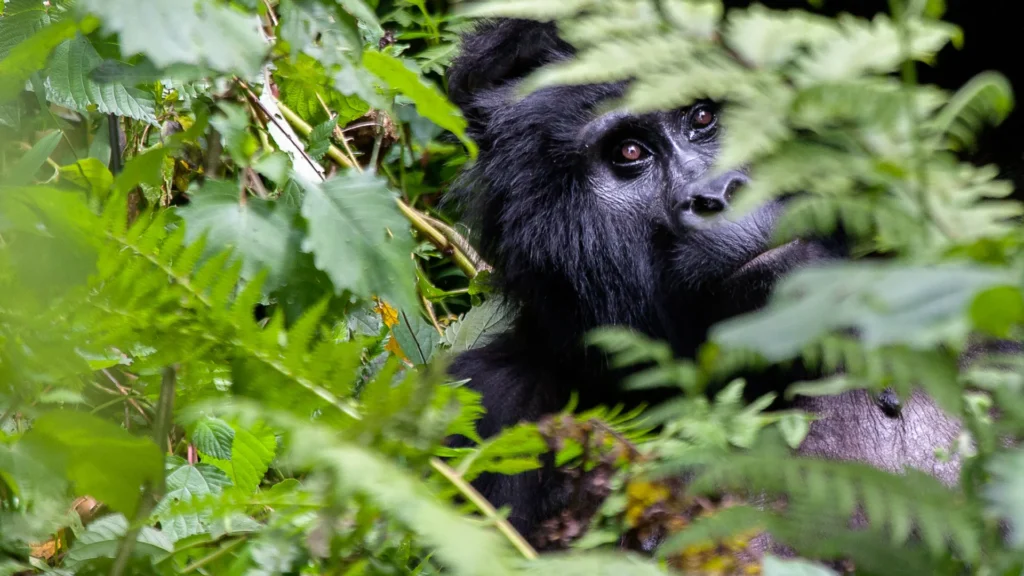
Volcanoes gorilla trekking for seniors requires an understanding of the actual mountain environment in which the activity takes place. Although Rwanda’s gorilla tourism infrastructure is well established, Volcanoes National Park remains a natural forest landscape rather than a landscaped wildlife attraction. Walking conditions vary, the gorillas move freely and the physical demands of a trek cannot be determined with certainty in advance.
For older visitors, the most useful preparation involves understanding the forest terrain, morning briefing procedures, porter services, accommodation locations and practical equipment requirements. These details can make a significant difference to comfort and confidence during the experience.
This Volcanoes Gorilla Trekking Seniors Guide concentrates on the physical and operational aspects of trekking inside the park. It complements broader information about senior eligibility and health by examining what visitors should expect from the moment they arrive in the Musanze region until they return from the forest.
Understanding the Terrain in Volcanoes National Park
Volcanoes National Park lies within the Virunga volcanic mountain system of northwestern Rwanda.
The landscape is characterised by volcanic slopes, bamboo forests, montane vegetation and high-altitude ecosystems.
Gorilla trekking takes place in natural terrain that has not been designed to provide uniform walking conditions.
Visitors may encounter muddy paths, uneven ground, exposed roots, thick vegetation and steep sections.
Why Trekking Difficulty Changes
Mountain gorillas move according to food availability, social behaviour and other environmental conditions.
Their location on a particular day determines the route taken by trackers and visitors.
A gorilla family encountered relatively close to a starting point one day may move farther into the forest before the next visit.
Consequently, descriptions of a particular gorilla group as permanently easy to reach can be misleading.
Bamboo Forest Terrain
Parts of the park contain bamboo-dominated vegetation.
Bamboo forest can provide relatively open walking conditions in some areas, but this does not guarantee flat or dry ground.
The terrain may still include slopes, mud and natural obstacles.
Dense Mountain Vegetation
Other routes pass through thick undergrowth and montane forest.
Vegetation may limit visibility and require careful movement.
For older travellers with balance concerns, this can be more demanding than walking on an established hiking path.
Altitude and Physical Exertion
Volcanoes National Park is a high-altitude destination.
The surrounding volcanic landscape rises well above the elevation of Kigali, and trekking may take place at elevations where sustained uphill walking feels demanding.
Visitors accustomed to sea-level exercise should not assume that their normal walking pace will be comfortable in the mountains.
How Altitude Can Affect Visitors
At higher elevations, physical activity may produce greater breathlessness and fatigue.
The effect varies according to individual health, acclimatisation and exertion.
Older travellers with respiratory or cardiovascular conditions should seek appropriate medical advice before undertaking strenuous mountain activity.
Allowing Time to Adjust
Staying in the Musanze or Kinigi region before trekking provides an opportunity to rest after travelling.
Although a single overnight stay does not guarantee full acclimatisation, it can reduce fatigue associated with a long road journey immediately before the trek.
Visitors should avoid unnecessary exertion on the evening before their scheduled activity.
What Happens at Kinigi Headquarters?
The standard Volcanoes National Park gorilla trekking briefing takes place at the park headquarters in Kinigi.
Visitors generally arrive early in the morning, with briefing arrangements beginning around 7:00 am.
Park personnel explain the rules, organise trekking groups and provide information about the day’s procedures.
Why Early Arrival Matters
Late arrival can interfere with group allocation and transport arrangements.
Senior travellers should plan enough time for breakfast, personal preparation and the transfer from their accommodation.
A rushed morning can create unnecessary stress before a physically demanding activity.
How Trekking Groups Are Assigned
Park personnel allocate visitors to habituated gorilla groups according to operational requirements.
Fitness considerations may be taken into account where possible.
However, a request for a shorter trek does not guarantee a particular allocation.
The location of the gorillas remains the determining factor in the actual walking distance.
Travelling to the Trailhead
After the briefing, visitors may travel by vehicle towards the designated starting point.
The onward journey depends on the gorilla group’s location.
Some access roads may be rougher than the main roads between Kigali and Musanze.
Visitors should confirm their transport arrangements in advance.
Gorilla Trekking Porters in Volcanoes National Park
Porter support for gorilla trekking can be particularly valuable for older travellers.
Porters assist with carrying personal belongings and may provide practical help on difficult sections of the route.
Their assistance can reduce fatigue and allow visitors to concentrate on walking safely.
What Does a Porter Carry?
A porter may carry a daypack containing drinking water, snacks, waterproof clothing and personal equipment.
Visitors should avoid carrying unnecessary items into the forest.
A lighter personal load can improve balance and reduce strain.
Can Porters Help on Steep Ground?
Porters may provide a supporting hand or assistance when negotiating difficult sections.
However, ordinary porter services should not be confused with a specialised carrying arrangement.
The level of support should be discussed with the relevant provider.
Supporting Local Employment
Hiring a porter also contributes to local livelihoods.
Tourism employment around Volcanoes National Park is one way nearby communities can benefit economically from conservation-related activities.
Sedan Chair and Carrying Assistance
Some visitors may be unable to complete the forest walk independently.
In certain circumstances, sedan chair gorilla trekking arrangements may be available through specialised local providers.
These arrangements generally require multiple porters and careful coordination.
Who Might Consider Carrying Assistance?
Travellers with significant mobility limitations may enquire about this option.
However, suitability depends on individual health, the type of support available and the operational conditions.
A carrying service should not be assumed to eliminate all physical or medical risks.
Why Advance Confirmation Is Essential
Specialised support is not included automatically with a standard gorilla permit.
Availability, cost, equipment and the number of porters required must be confirmed separately.
Visitors should also establish how transfers between the vehicle, trailhead and observation area will be managed.
Choosing Accommodation Near Volcanoes National Park
For senior visitors, accommodation location and accessibility can be more important than luxury classification.
The Musanze and Kinigi areas provide different lodging options.
Properties closer to Kinigi may reduce the morning transfer, while accommodation in Musanze town can offer easier access to everyday services.
Room Accessibility
Older travellers should ask about stairs, slopes, walking distances and the location of guest rooms.
Some lodges occupy large landscaped properties where rooms are separated by outdoor paths.
A property may be luxurious without being suitable for someone who has difficulty walking long distances.
Bathroom Facilities
Walk-in showers, non-slip surfaces and accessible bathroom layouts may be important.
Visitors should request specific information rather than relying on general descriptions such as comfortable or senior-friendly.
Heating and Warm Bedding
The Virunga region can be cool in the mornings and evenings.
Warm bedding, suitable room heating and reliable hot water contribute to comfort.
Facilities vary between properties and should be checked before booking.
Meal Arrangements
Gorilla trekking begins early, so breakfast arrangements matter.
Visitors should confirm whether an early meal or packed breakfast is available.
Dietary requirements should be communicated in advance.
Weather Conditions and Trail Safety
Volcanoes National Park weather can change quickly.
Rain, mist and cool temperatures are common features of the mountain environment.
The relatively drier periods of June to September and parts of December to February may offer more comfortable walking conditions, but rainfall remains possible throughout the year.
Walking After Rain
Wet soil can become slippery.
Visitors should take shorter steps on difficult ground and follow the instructions of their guides.
Rushing increases the risk of losing balance.
Mist and Visibility
Mountain mist can reduce visibility and contribute to damp conditions.
Although mist creates atmospheric scenery, it can also affect photography and the comfort of visitors who are sensitive to cold.
Cold Mornings
Senior travellers should prepare for cool temperatures before the trek begins.
Layered clothing is useful because body temperature may increase during uphill walking.
Selecting Suitable Hiking Boots
Footwear for gorilla trekking deserves careful attention.
Boots should provide reliable grip, comfortable support and protection against wet conditions.
A boot that feels comfortable on flat pavement may perform poorly on muddy slopes.
Why New Boots Can Be a Problem
New footwear may cause blisters or discomfort during extended walking.
Visitors should wear their boots on several practice walks before travelling.
This also provides an opportunity to test socks and identify pressure points.
Waterproofing and Grip
Waterproof footwear helps keep feet comfortable in wet vegetation.
However, waterproofing alone is insufficient.
The sole should provide appropriate traction on uneven and slippery ground.
Walking Poles and Additional Equipment
Walking poles may help some visitors maintain balance, particularly on descents.
However, they should be used according to park guidance and individual physical needs.
Visitors should also carry a waterproof jacket, long trousers, gloves, drinking water and essential medication.
A lightweight daypack is preferable to a large bag.
Protecting Cameras
Forest conditions may be wet and humid.
Camera equipment should be protected from moisture.
A porter can help carry equipment, but visitors should avoid bringing unnecessarily heavy photographic gear.
Managing Energy During the Trek
Older visitors can improve comfort by pacing themselves carefully.
Walking too quickly at the beginning may lead to unnecessary fatigue.
Visitors should communicate with guides if they need a short pause or assistance.
Hydration
Adequate hydration is important during physical activity.
Visitors should carry enough drinking water for the expected excursion while following any personal medical advice about fluid intake.
Snacks
Suitable snacks may help maintain energy during a long walk.
Food must be handled according to park rules and should never be offered to wildlife.
Recognising Fatigue
Unusual breathlessness, dizziness, chest discomfort or significant weakness should be reported immediately.
Visitors should not feel pressured to continue beyond safe personal limits.
The Final Approach to the Gorillas
Once trackers locate the assigned gorilla family, guides prepare visitors for the encounter.
Walking sticks and personal belongings may need to be managed according to the guide’s instructions.
Visitors then approach the observation area while maintaining the required distance.
The terrain around the gorillas may still be uneven.
There is no guarantee of a flat viewing platform or a place to sit.
Standing and Balance During Observation
Visitors may need to remain standing or adjust their position carefully.
Anyone with difficulty standing for extended periods should communicate this concern before the trek.
The guide can explain what is feasible under the actual conditions.
Moving Around the Observation Area
Visitors must not move independently to obtain a better photograph.
All movement should be directed by the park guides.
The gorillas’ welfare and the safety of the group take priority over individual viewing preferences.
Returning From the Forest
The walk back can be physically demanding, particularly after several hours of activity.
Downhill sections may place additional strain on knees and ankles.
Visitors should continue using appropriate support and avoid rushing.
The experience is not complete until participants have safely returned to the designated finishing area.
Planning the Rest of the Day
Senior travellers should avoid tightly scheduled onward transfers immediately after trekking.
The return time is unpredictable.
Allowing time for rest, a meal and recovery can make the overall experience more comfortable.
Frequently Asked Questions
Is Volcanoes National Park suitable for older travellers?
Yes, many older travellers visit successfully. Suitability depends on fitness, health and the support arrangements required.
Is the trekking terrain steep?
Some routes involve steep slopes, while others are less demanding. Conditions vary according to the gorillas’ location.
Can visitors choose the shortest route?
Visitors can communicate fitness concerns, but the authorities cannot guarantee a particular walking distance.
Are porters available at Kinigi?
Porter services can be arranged locally, subject to current operating arrangements and charges.
Can someone be carried through the forest?
Specialised carrying services may be available, but they require advance confirmation.
Is the park wheelchair accessible?
Standard trekking routes are not conventional wheelchair-accessible paths. Individual assistance arrangements must be assessed separately.
What time does the gorilla briefing begin?
Standard arrangements generally begin around 7:00 am at Kinigi, subject to current park instructions.
Should seniors stay in Musanze or Kinigi?
Both can be suitable. The best choice depends on accommodation accessibility, transfer distances and personal preferences.
Are hiking poles useful?
They may help some visitors, but suitability depends on the terrain and individual needs.
Can visitors rest during the trek?
Guides manage the group’s movement, and visitors should communicate when assistance or a pause is needed.
Is the return walk easier?
Not necessarily. Downhill sections can be demanding, especially for visitors with knee or balance problems.
What is the best season for older trekkers?
Relatively drier months may offer more manageable conditions, but no season guarantees dry or easy trails.
Preparing for a Comfortable Volcanoes Gorilla Trek
Volcanoes gorilla trekking for seniors is best approached through careful preparation rather than assumptions about age or trekking difficulty.
Understanding the forest terrain, arranging appropriate support, selecting accessible accommodation and allowing enough time for the experience can substantially improve comfort.
At Gorilla Rwanda Safaris, we help visitors organise Volcanoes National Park gorilla trekking, accommodation near Kinigi, private transfers and enquiries about porter or specialised assistance.