
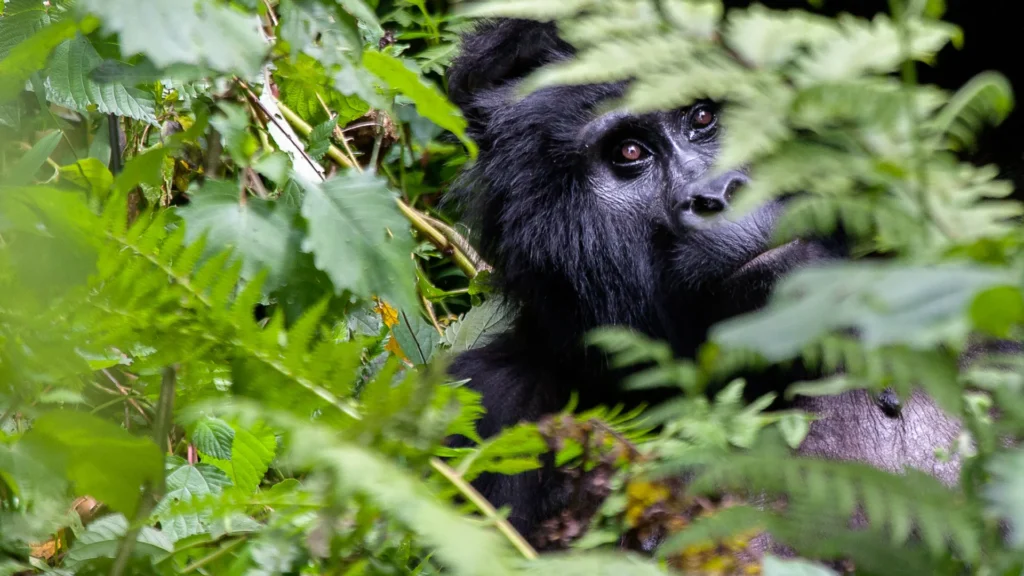
Volcanoes gorilla trekking offers one of Africa’s most extraordinary opportunities to observe endangered mountain gorillas in their natural habitat. Situated in northwestern Rwanda, Volcanoes National Park protects forested volcanic slopes where habituated gorilla families can be visited under carefully controlled conservation regulations. The experience attracts wildlife enthusiasts, photographers, conservation-minded travellers and visitors seeking an exceptional encounter with one of humanity’s closest living relatives.
Although Rwanda gorilla trekking is frequently marketed through expensive luxury lodges and exclusive safari experiences, visiting the gorillas does not require luxury accommodation. The official trekking permit represents the largest unavoidable expense for most international visitors, while accommodation, transport, meals and additional activities can be adjusted to suit different budgets. Understanding this distinction is essential when planning affordable gorilla trekking in Rwanda.
This comprehensive Volcanoes Gorilla Trekking Budget Guide examines the actual costs of trekking, the geography of the park, official visitor requirements, seasonal conditions, trekking difficulty, conservation principles and practical ways to avoid unnecessary expenditure. Rather than concentrating on prearranged safari packages, it provides the information needed to make informed decisions about visiting Rwanda’s most famous wildlife destination.
Where Is Volcanoes National Park?
Volcanoes National Park, known locally as Parc National des Volcans, lies in the northwestern corner of Rwanda, close to the borders with Uganda and the Democratic Republic of the Congo. It forms part of the larger Virunga Massif, a volcanic mountain ecosystem shared by three countries and recognised internationally for its importance to mountain gorilla conservation.
The park’s landscapes include bamboo forests, montane rainforest, open grassland, swamps, heathland and high-altitude vegetation. Its varied ecosystems support mountain gorillas, golden monkeys, numerous bird species and other wildlife adapted to the cool and frequently wet mountain environment.
Five major volcanoes are associated with Rwanda’s section of the Virunga Mountains: Mount Karisimbi, Mount Bisoke, Mount Sabyinyo, Mount Gahinga and Mount Muhabura. Karisimbi, at approximately 4,507 metres above sea level, is the highest of these peaks. The mountains create dramatic scenery while influencing rainfall, vegetation and the physical conditions encountered during gorilla trekking.
The principal gateway is Musanze, a northern Rwandan city with accommodation, restaurants, shops and transport services. The park headquarters at Kinigi are approximately 13 kilometres from Musanze, making the city a practical base for visitors who prefer economical accommodation rather than exclusive lodges near the forest boundary.
Why Volcanoes National Park Is Important for Gorilla Conservation
Mountain gorillas are a subspecies of eastern gorilla, scientifically classified as Gorilla beringei beringei. Their natural distribution is restricted to a small number of protected mountain forest habitats in Central and East Africa. This limited range makes habitat protection, disease prevention and continuous monitoring particularly important.
Volcanoes National Park has played a central role in the history of mountain gorilla research and conservation. The work of primatologist Dian Fossey, who established the Karisoke Research Center in 1967, helped draw international attention to the gorillas and the threats they faced. Subsequent conservation programmes have expanded monitoring, veterinary support, anti-poaching activities and community involvement.
Mountain gorillas remain classified as Endangered despite population improvements achieved through sustained conservation efforts. Their survival depends on continued habitat protection, cooperation between neighbouring countries and careful management of human contact.
For visitors, this conservation history explains why gorilla trekking permits in Rwanda are expensive and why tourist encounters are strictly regulated. The objective is not simply to provide wildlife entertainment but to create a controlled form of tourism that can contribute to protecting the species and supporting surrounding communities.
How Much Does Volcanoes Gorilla Trekking Cost?
The largest fixed expense associated with Volcanoes National Park gorilla trekking is the official permit. Rwanda’s published standard rate for international visitors is USD 1,500 per person, although the applicable tariff and any concessions should always be reconfirmed through the Rwanda Development Board before payment.
The permit covers participation in the authorised trekking activity, including the park-managed guiding and tracking arrangements. It does not ordinarily include accommodation, private road transfers, meals, porter assistance, international flights or personal expenses.
A realistic Rwanda gorilla trekking budget should therefore separate the official conservation permit from the surrounding travel costs. This makes it easier to identify where savings are possible without compromising the actual wildlife experience.
Gorilla Permit Categories and Possible Concessions
Rwanda has published different permit categories for international visitors, Rwandan nationals, East African citizens, African visitors and eligible foreign residents. Published special-offer information has included lower rates for qualifying categories, but promotional conditions and validity periods may change.
Travellers should never assume that nationality, residence or a previous promotional announcement automatically qualifies them for a discount. Supporting documents, booking conditions and the current official tariff must be checked before purchasing a permit.
The most reliable source is the Rwanda Development Board’s official tourism booking system. Where a safari operator handles the booking, visitors should request confirmation of the permit date, applicable category and payment arrangements.
Other Expenses to Include in Your Budget
Beyond the permit, visitors should consider:
- Accommodation: Guesthouses, budget hotels, mid-range lodges or luxury properties around Musanze and Kinigi.
- Transport: Travel between Kigali and the Volcanoes region, plus transfers to the trekking briefing and starting point.
- Meals: Breakfast, lunch, dinner and drinking water according to the accommodation arrangement.
- Porter assistance: Optional local support for carrying bags and negotiating difficult terrain.
- Personal equipment: Walking boots, waterproof clothing, gloves and suitable daypacks.
- Additional activities: Golden monkey trekking, guided hiking, cultural experiences or local sightseeing.
- Travel insurance: Appropriate medical and emergency cover for the intended activities.
The total cost depends heavily on how these expenses are combined. Two visitors sharing transport and accommodation may have a lower per-person cost than a solo traveller using a private vehicle.
Can You Really Do Gorilla Trekking in Rwanda on a Budget?
Yes, although budget gorilla trekking in Rwanda must be understood in relative terms. The standard international permit remains a substantial expense, but visitors can reduce the cost of accommodation, transfers and non-essential activities.
Importantly, the official gorilla trekking programme does not operate separate wildlife encounters according to hotel category. A traveller staying in a modest guesthouse and another staying at a premium lodge participate under the same conservation regulations.
Luxury accommodation does not guarantee a particular gorilla family, shorter walking distance or better wildlife behaviour. These elements depend on park management decisions and the movements of wild animals.
For travellers whose main objective is seeing mountain gorillas in Rwanda, spending less on accommodation can be a sensible choice. The priority should be reliable transport, adequate rest, appropriate equipment and sufficient flexibility around the trekking day.
Choosing Affordable Accommodation Near Volcanoes National Park
The Volcanoes National Park accommodation market includes a wide range of properties, from simple guesthouses to internationally recognised luxury lodges. Budget-conscious visitors should focus on location, cleanliness, comfort, breakfast arrangements and transport reliability rather than amenities they are unlikely to use.
Musanze budget hotels can be particularly practical because the town provides restaurants, shops and other services. Accommodation closer to Kinigi may reduce the morning transfer, although room rates and facilities vary considerably.
Before booking, ask whether the hotel provides an early breakfast or packed meal, whether hot water is available and whether the property can coordinate an early departure. Also confirm the actual travel time to the park headquarters rather than relying on broad descriptions such as “near the gorillas”.
A slightly more expensive property with convenient access and dependable service may offer better overall value than a cheaper room requiring costly additional transport.
Getting to Volcanoes National Park from Kigali
Most international visitors enter Rwanda through Kigali International Airport before travelling northwest towards the Virunga Mountains. The road journey from Kigali to the Volcanoes region generally takes around two and a half to three hours under favourable conditions, depending on the departure point and final destination.
The route passes through cultivated hills, towns and rural landscapes before approaching the volcanic highlands. It is an opportunity to appreciate Rwanda’s scenery, although travellers should allow additional time for traffic, weather and other delays.
Private Transfers
A private Kigali to Volcanoes National Park transfer offers the most direct and flexible option. Travellers can depart from their hotel or airport and continue to their accommodation without changing vehicles.
Private transfers are particularly practical for couples, families and small groups who can divide the transport cost. When comparing quotations, confirm whether fuel, driver expenses, parking and the following morning’s park transfers are included.
Public Transport
Public buses can provide a more economical journey from Kigali to Musanze. However, the journey does not end at the town because gorilla trekking requires an early arrival at the park headquarters and subsequent travel arrangements.
Visitors relying on public transport should arrange the final transfer in advance. Missing the morning briefing can have serious financial consequences when an expensive permit has already been purchased.
Self-Drive Travel
Self-drive visitors can reach the Volcanoes region by road, subject to vehicle hire conditions and local driving requirements. However, they should account for fuel, insurance, navigation, road conditions and the need to reach the correct briefing location.
The cheapest transport option is not necessarily the most economical once reliability and the value of the gorilla permit are considered.
What Happens During Gorilla Trekking in Volcanoes National Park?
The Volcanoes National Park gorilla trekking experience begins with an early-morning briefing at Kinigi. The official tourism authority states that visitors gather at approximately 7:00 a.m. for instructions and allocation to trekking groups.
Park personnel explain visitor behaviour, conservation rules and the practical arrangements for entering the forest. Group allocation considers operational factors and may take visitor fitness into account, although a specific trekking difficulty cannot be guaranteed.
Visitors then proceed towards the appropriate starting location. Depending on the assigned gorilla family, the trek may involve cultivated land near the park boundary, bamboo forest, dense vegetation or steep mountain slopes.
Professional trackers monitor gorilla movements and communicate with the guiding teams. Once the group is located, visitors are normally permitted to observe the animals for up to one hour.
During this period, gorillas may feed, rest, groom one another, care for infants or move through the vegetation. Every encounter is different because the animals are wild and their behaviour is not controlled for visitors.
After the encounter, the group returns from the forest. The total duration varies considerably according to terrain, weather and the gorillas’ location.
How Difficult Is Volcanoes Gorilla Trekking?
Gorilla trekking difficulty in Rwanda is one of the most important considerations for prospective visitors. Some trekking groups may encounter gorillas after a relatively manageable walk, while others require several hours of hiking through steep or muddy terrain.
The altitude of the Virunga Mountains can make physical activity more demanding, especially for visitors arriving from low-altitude regions. Rainfall can also make trails slippery, while thick vegetation and uneven ground require concentration.
A reasonable level of walking fitness is advisable, but visitors do not need specialist mountaineering skills for standard gorilla trekking. Regular walking, hill climbing and general physical preparation before travelling can make the experience more comfortable.
Older travellers and visitors with mobility limitations should discuss their circumstances before booking. Park personnel may consider physical capabilities during group allocation, and porter assistance can provide valuable support. However, the natural terrain means that no operator should promise an effortless trek.
Gorilla Trekking Rules and Visitor Responsibilities
The rules governing Rwanda mountain gorilla trekking protect both the animals and visitors. Mountain gorillas are susceptible to diseases transmitted by humans, making health precautions particularly important.
The standard minimum trekking age is 15 years. Visitors must follow ranger instructions, maintain the required separation from gorillas and avoid behaviours that could disturb the animals.
Flash photography is prohibited, and eating, drinking or smoking near the gorillas is not permitted. Visitors should also avoid sudden movements, loud behaviour and attempts to touch the animals.
Anyone experiencing symptoms of an infectious illness should disclose this before trekking. Park authorities determine the appropriate action according to the current health regulations.
The authorised viewing period is normally limited to one hour. These restrictions apply to every visitor regardless of the price paid for accommodation or transport.
Best Time for Volcanoes Gorilla Trekking
Gorilla trekking in Volcanoes National Park takes place throughout the year under normal operating conditions. However, rainfall and seasonal demand can affect the overall experience.
June to September
This period is generally associated with comparatively drier weather and is popular for Rwanda gorilla trekking holidays. Trails may be less muddy, although rainfall remains possible in the mountains.
Accommodation and permits can be in high demand, making advance planning important.
December to February
These months can also offer relatively favourable trekking conditions. They are attractive to visitors combining Rwanda with other East African safari destinations.
Weather remains variable, and visitors should carry waterproof clothing even during the comparatively drier periods.
March to May
This is generally a wetter period, with the possibility of heavy rainfall and slippery trails. Travellers should prepare for demanding walking conditions and protect their belongings from moisture.
Accommodation availability may be more flexible at some properties, but permit discounts should never be assumed.
October to November
Rainfall commonly increases during this period, producing lush vegetation and potentially muddy forest conditions.
For budget-conscious travellers, comparing accommodation rates across seasons may reveal savings. However, the most suitable time depends on personal comfort, travel dates and physical preparedness.
What to Wear for Gorilla Trekking in Rwanda
Suitable clothing is more important than expensive safari fashion. Volcanoes National Park trekking equipment should provide protection from moisture, vegetation, insects and uneven ground.
Sturdy walking boots with good grip are particularly valuable. Long trousers and long sleeves help protect the skin from vegetation, while a lightweight waterproof jacket provides protection from rain.
Gloves can be useful when holding vegetation for balance. A small daypack should contain drinking water, snacks, personal medication and essential camera equipment.
Visitors should avoid carrying unnecessary weight. Heavy equipment can make steep sections more tiring, particularly when trails are wet.
For photography, a camera capable of performing well in low light is useful because gorillas may be encountered beneath dense forest vegetation. Flash must not be used.
The Value of Hiring a Gorilla Trekking Porter
A gorilla trekking porter in Rwanda can carry a visitor’s backpack and assist with difficult sections of the trail. This service is normally separate from the official permit and should be arranged according to current local procedures.
Porter assistance can be especially useful for older travellers, photographers carrying equipment and visitors who are unfamiliar with steep forest terrain.
Hiring a porter also contributes directly to employment in communities surrounding the national park. For many visitors, this makes porter assistance a worthwhile expense even when trying to minimise their overall safari budget.
The decision should be based on personal needs rather than the assumption that porter services are only for travellers with limited fitness.
Conservation, Tourism Revenue and Local Communities
Volcanoes National Park conservation depends on cooperation between park authorities, scientific organisations, local communities and international partners.
Gorilla tourism generates revenue that contributes to conservation management and creates employment in the surrounding region. Local residents may work as guides, trackers, porters, drivers, hospitality employees and suppliers.
Rwanda also operates tourism-related community benefit initiatives, reflecting the importance of connecting wildlife conservation with local livelihoods.
However, tourism does not eliminate all threats. Habitat pressure, disease risks and the need for long-term ecological monitoring remain significant concerns.
Responsible visitors can contribute by respecting park regulations, avoiding wildlife disturbance and choosing tourism services that demonstrate appropriate environmental and community practices.
Volcanoes National Park Beyond Gorilla Trekking
Although mountain gorillas are the park’s most famous attraction, the wider Virunga environment offers additional natural and cultural experiences.
Golden monkey trekking introduces visitors to another distinctive primate associated with the bamboo forests of the Virunga Mountains. These monkeys are known for their striking colouring and active behaviour.
Mount Bisoke hiking attracts visitors interested in volcanic scenery and its crater lake, while Mount Karisimbi offers a more demanding high-altitude hiking experience.
The surrounding region also includes Buhanga Eco-Park, local cultural experiences and opportunities to explore the scenery around Lake Burera and Lake Ruhondo.
These activities are optional and should be considered according to interests, fitness and available time. A visitor whose primary objective is seeing mountain gorillas does not need to purchase every additional excursion.
Rwanda Versus Uganda for Affordable Gorilla Trekking
Travellers comparing Rwanda versus Uganda gorilla trekking should examine both permit prices and the complete cost of reaching the gorillas.
Rwanda’s standard international permit is USD 1,500, while Uganda’s published standard foreign non-resident permit has been USD 800. These figures should be reconfirmed against the latest official tariffs.
Uganda offers gorilla trekking in Bwindi Impenetrable National Park and Mgahinga Gorilla National Park, while Rwanda’s trekking takes place in Volcanoes National Park.
Rwanda is particularly convenient for short visits from Kigali. Uganda may offer permit savings and opportunities to combine gorilla trekking with chimpanzee trekking, savannah wildlife viewing and other attractions.
The better-value destination depends on accommodation, transport distances, border arrangements, available time and the traveller’s wider interests.
Common Mistakes When Planning Budget Gorilla Trekking
One common mistake is comparing safari quotations without checking whether the gorilla permit is included. Since the permit is the largest expense, excluding it can make an otherwise expensive arrangement appear unusually cheap.
Another mistake is choosing accommodation without confirming its distance from Kinigi. An inexpensive hotel may create additional transfer costs or unnecessary morning travel.
Travellers should also avoid arranging tight international flight connections immediately after trekking. Gorilla movements and trail conditions make the finishing time unpredictable.
Waiting until the last moment to book permits can limit options, particularly during popular travel periods. Finally, visitors should not assume that a more expensive safari guarantees easier trekking or closer encounters with gorillas.
Frequently Asked Questions About Volcanoes Gorilla Trekking
How much does gorilla trekking cost in Volcanoes National Park?
The published standard international permit price is USD 1,500 per person. Accommodation, transport and other personal expenses are additional unless specifically included in an arrangement.
Can I trek gorillas in Rwanda without booking a safari package?
Yes. Visitors can arrange accommodation and transport separately while obtaining an authorised gorilla permit. However, all trekking must take place through the official park programme.
Where does gorilla trekking start?
The standard morning briefing takes place at the Volcanoes National Park headquarters in Kinigi. Visitors are then directed towards their assigned trekking locations.
How many people are allowed in a gorilla trekking group?
The standard visitor limit is eight people per habituated gorilla family per day, subject to the current regulations and operational arrangements.
How long does gorilla trekking take?
The overall activity may last several hours. The actual walking duration depends on terrain and the gorillas’ location, while the authorised viewing period is normally limited to one hour.
Is gorilla trekking safe?
Trekking is conducted under regulated park arrangements with professional personnel. Visitors must follow ranger instructions and should consider their own fitness and health requirements.
Are gorilla sightings guaranteed?
No. Mountain gorillas are wild animals, and sightings cannot be guaranteed, although organised tracking and monitoring contribute to a high likelihood of successful encounters.
What is the minimum age for gorilla trekking?
The standard minimum age in Rwanda is 15 years.
Is it cheaper to stay in Musanze or Kinigi?
Musanze often offers a wider range of economical accommodation and dining options. The final cost depends on room rates and the additional transport required.
Can I visit Volcanoes National Park during the rainy season?
Yes. Gorilla trekking normally operates throughout the year, although heavy rain can make trails more challenging.
Do I need a porter?
Porter assistance is optional for many visitors but can be useful on steep terrain or when carrying equipment.
Is Rwanda better than Uganda for gorilla trekking?
Both countries offer exceptional mountain gorilla encounters. Rwanda is particularly convenient for shorter journeys from Kigali, while Uganda generally offers a lower standard international permit price.
Plan Your Volcanoes Gorilla Trekking Experience
Gorilla Rwanda Safaris provides guidance on Volcanoes National Park gorilla trekking, official permit arrangements, accommodation choices and practical travel logistics. Visitors can explore suitable Rwanda gorilla safari packages separately or request assistance with individual elements of their journey.
Whether your priority is an affordable gorilla encounter, comfortable accommodation near Kinigi or a broader Rwanda and Uganda gorilla trekking holiday, careful planning will help you make informed decisions.
Contact our team with your preferred trekking dates, number of travellers and accommodation expectations to receive guidance suited to your budget.
Experience the mountain gorillas of Volcanoes National Park with responsible planning, reliable information and a clear understanding of the costs involved.