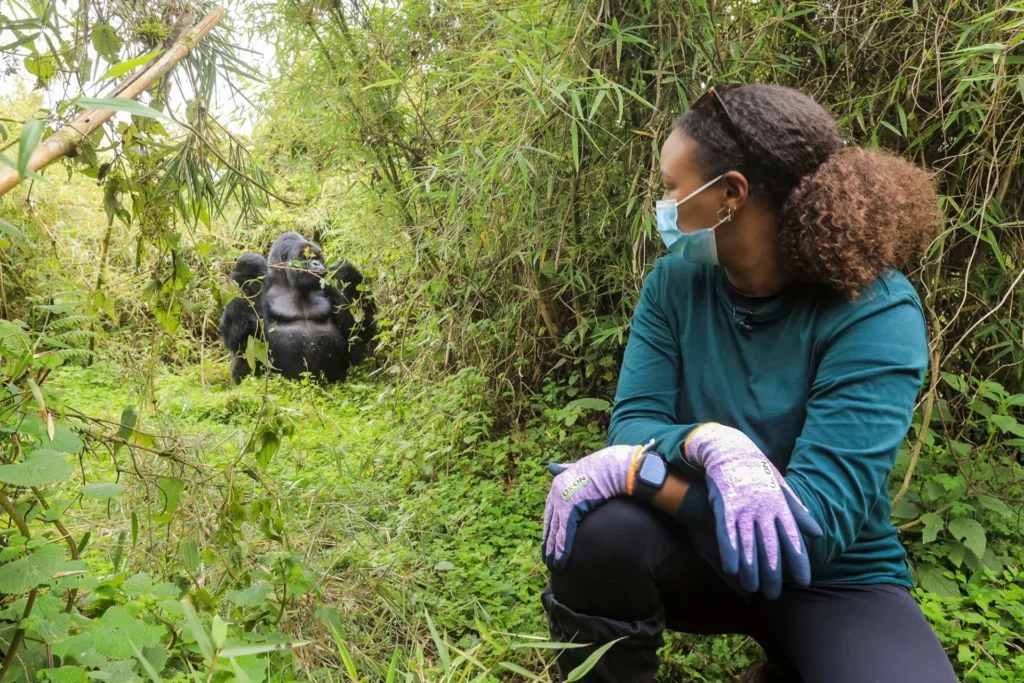
1 Day Bwindi Gorilla Trek
A one-day mountain gorilla trek in Bwindi for travellers who are already in southwestern Uganda.
View SafariHandpicked Kenya Safari Tours for Every Traveler
Rwanda is one of Africa's most fascinating destinations for travellers seeking close encounters with wildlife, spectacular landscapes, cultural discovery and meaningful conservation experiences.
Rwanda is a landlocked country bordered by Uganda to the north, Tanzania to the east, Burundi to the south and the Democratic Republic of Congo to the west. Its location makes it an important gateway for East African safari tours, particularly journeys combining Rwanda gorilla trekking with Uganda gorilla safaris, chimpanzee tracking and classic savannah wildlife viewing.
The country covers approximately 26,000 square kilometres, but its relatively small size should not be mistaken for limited ecological diversity. Rwanda sits within a region influenced by the Albertine Rift, one of Africa's most important centres of biological diversity. Altitude, rainfall and geological history have created habitats that differ considerably between national parks.
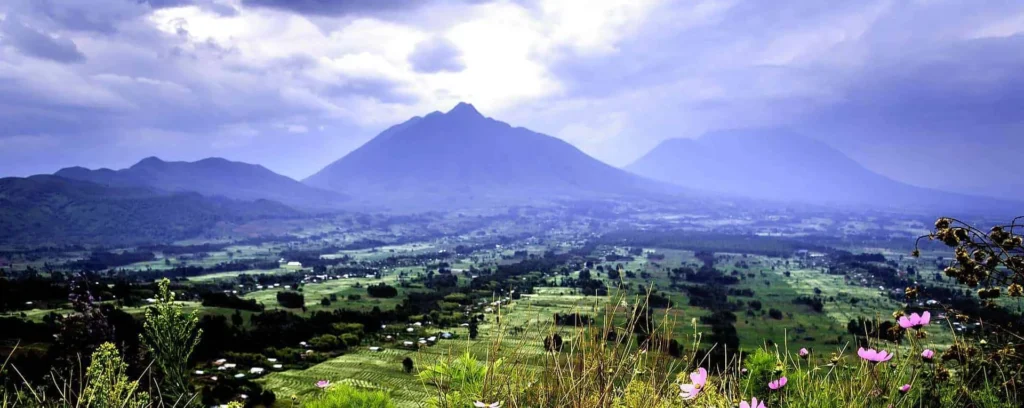
In the northwest, the Virunga Mountains rise above surrounding agricultural landscapes, forming an impressive volcanic chain shared by Rwanda, Uganda and the Democratic Republic of Congo. The slopes support bamboo forests, montane vegetation and high-altitude habitats used by mountain gorillas and other specialised wildlife.
Southwestern Rwanda contains extensive montane rainforest, including Nyungwe National Park, which supports chimpanzees, numerous monkey species and forest birds. Eastern Rwanda is lower and generally warmer, with the grasslands, lakes and wetlands of Akagera National Park providing habitat for traditional safari animals.
This environmental variety is one of the principal reasons to consider Rwanda safari tours beyond gorilla trekking alone.
Showing 1–12 of 222 safaris
A one-day mountain gorilla trek in Bwindi for travellers who are already in southwestern Uganda.
View SafariA single day in Kampala for the kasubi and palace area, a cultural show, and a market or…
View SafariA full day in Kigali covering the Genocide Memorial, a neighborhood market, and one or two museums.
View SafariA single day on Mount Bisoke, with the crater lake as the turnaround point.
View SafariThe 1 Day Rwanda Family Safari offers an exciting and educational wildlife adventure for families visiting Rwanda.
View SafariThe 3 Day Rwanda Gorilla and Akagera Safari combines mountain gorilla trekking in Volcanoes National Park with wildlife…
View SafariThe 4 Day Rwanda Gorilla and Nyungwe Safari combines mountain gorilla trekking in Volcanoes National Park with chimpanzee…
View SafariThe 1 Day Rwanda Gorilla Trekking Safari offers an unforgettable opportunity to encounter endangered mountain gorillas in their…
View SafariThe 1 Day Rwanda Honeymoon Safari offers couples a romantic escape to the beautiful shores of Lake Kivu,…
View SafariThe 1 Day Rwanda Luxury Safari offers an exclusive wildlife experience in Akagera National Park, Rwanda's premier Big…
View SafariThe 1 Day Rwanda Primates Safari offers an exciting opportunity to encounter Rwanda's endangered golden monkeys in the…
View SafariThe 1 Day Rwanda Wildlife Safari offers an exciting opportunity to explore Akagera National Park, Rwanda's premier savannah…
View SafariRwanda has four national parks, each protecting a different ecological environment and offering distinctive visitor experiences.
Volcanoes National Park is Rwanda's most internationally recognised protected area and the centre of the country's mountain gorilla trekking tourism. Located in the northwest near Musanze, the park protects Rwanda's portion of the Virunga volcanic ecosystem.
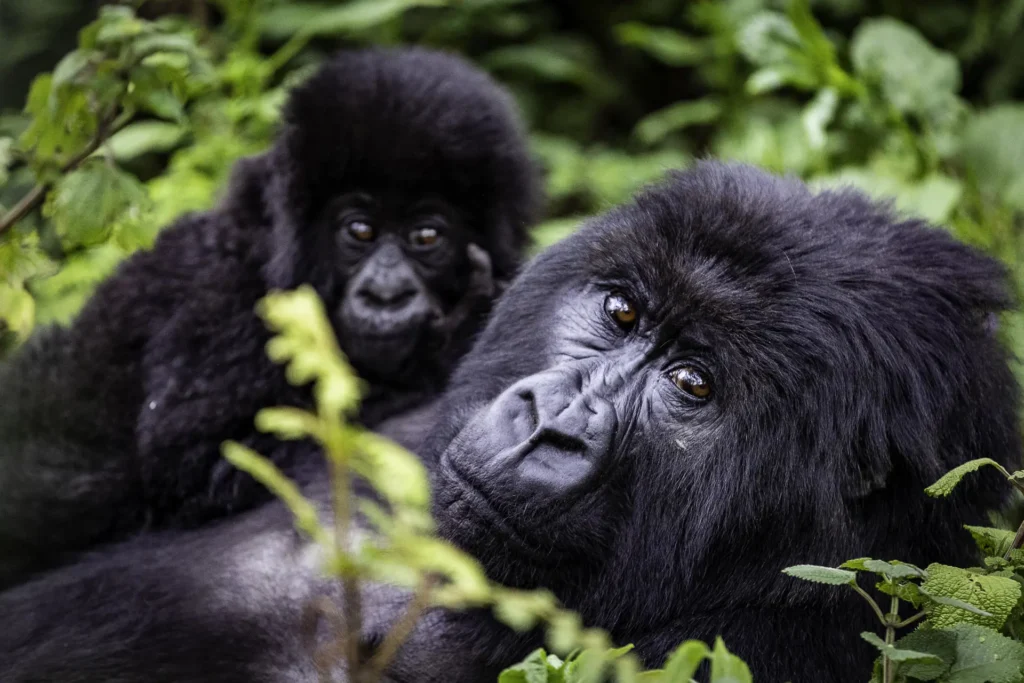
The park's landscapes include steep volcanic slopes, bamboo stands, montane forest and high-altitude vegetation. Its most famous residents are endangered mountain gorillas, which live in family groups led by dominant silverbacks and other mature individuals.
Gorilla trekking in Volcanoes National Park is conducted under strict conservation regulations. Visitors join authorised guides and trackers to locate habituated gorilla families in their natural habitat. The length and difficulty of each trek depend on the gorillas' movements, weather conditions and terrain.
The park also provides opportunities for golden monkey trekking, guided hiking, volcanic landscape exploration and learning about the history of mountain gorilla research. Travellers interested in conservation may be particularly drawn to the legacy of Dian Fossey and the continuing efforts to protect the Virunga ecosystem.
The surrounding Musanze and Kinigi areas provide a range of accommodation, including guesthouses, comfortable safari lodges and premium properties designed for luxury Rwanda gorilla safaris.
Akagera National Park occupies an important ecological position in eastern Rwanda, protecting savannah, woodland, wetland and lake habitats along the Tanzanian border.
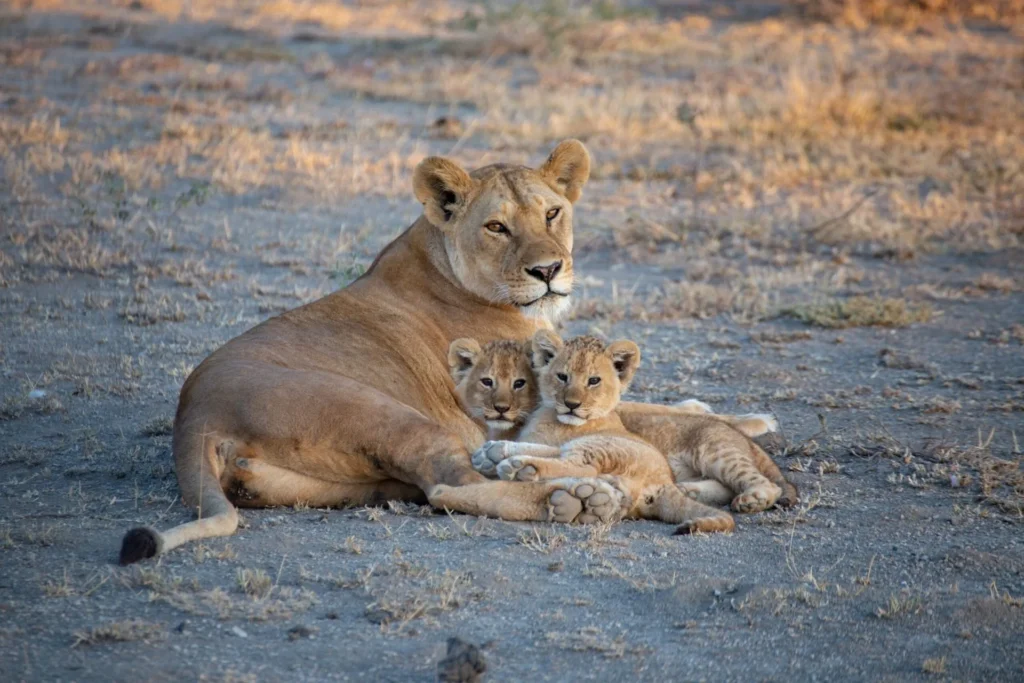
It is the country's principal destination for Big Five wildlife safaris, offering opportunities to encounter lions, leopards, elephants, buffaloes and rhinoceroses. Other animals include giraffes, zebras, hippos, crocodiles and several antelope species.
Akagera's present wildlife populations reflect a significant conservation recovery. Lions were reintroduced in 2015, eastern black rhinoceroses returned beginning in 2017, and southern white rhinoceroses were introduced in 2021, with further animals added in 2025.
The park is jointly managed through a partnership involving the Rwanda Development Board and African Parks. Its recovery demonstrates how sustained wildlife protection, habitat management and community engagement can restore an ecosystem affected by earlier human pressures.
Visitors exploring Akagera National Park encounter a landscape that changes from southern lakes and wetlands to northern plains and rolling hills. Wildlife distribution varies according to habitat, rainfall and seasonal movements.
Game drives are the principal visitor activity, but boat excursions provide opportunities to appreciate the park's aquatic environments. Birdwatching is another important attraction, with African Parks documenting close to 500 bird species.
Nyungwe National Park protects one of the most important montane rainforest landscapes in the Albertine Rift region. Located in southwestern Rwanda, it offers a distinctly different experience from both Volcanoes National Park and Akagera.
Nyungwe is particularly well known for chimpanzee trekking, forest hiking, birdwatching and its elevated canopy walkway. The forest supports 13 primate species, according to Rwanda's official tourism information, alongside an extraordinary diversity of plants, insects and birds.
The park's rugged terrain includes deep valleys, forested ridges, waterfalls and extensive areas of mature vegetation. Rainfall contributes to its ecological richness, while altitude creates cooler conditions than those experienced in eastern Rwanda.
For visitors interested in Rwanda rainforest safaris, Nyungwe offers opportunities to understand forest ecology beyond the search for individual animals. Guided walks introduce travellers to plant communities, bird calls, forest structure and the relationship between wildlife and habitat.
The Nyungwe canopy walkway provides an unusual perspective from above part of the forest floor. Official tourism information describes a suspended walkway approximately 160 metres long and reaching around 70 metres above the forest below.
Gishwati-Mukura National Park is Rwanda's fourth national park and an important example of forest restoration.
The protected area consists of the Gishwati and Mukura forest landscapes, which have experienced significant historical pressure from land-use change and habitat fragmentation.
Conservation work focuses on protecting remaining forest biodiversity, restoring degraded habitats and improving ecological connectivity. The park is relevant to visitors interested in environmental restoration, conservation education and the future of Rwanda's forest ecosystems.
Unlike the country's more established tourism destinations, Gishwati-Mukura has a developing visitor infrastructure. Travellers should confirm available activities, guiding arrangements and access requirements before including it in their plans.
For many international travellers, Rwanda gorilla trekking is the primary reason to visit the country. Mountain gorillas are among the world's most closely monitored endangered primates, and the opportunity to observe them in the wild is highly regulated.
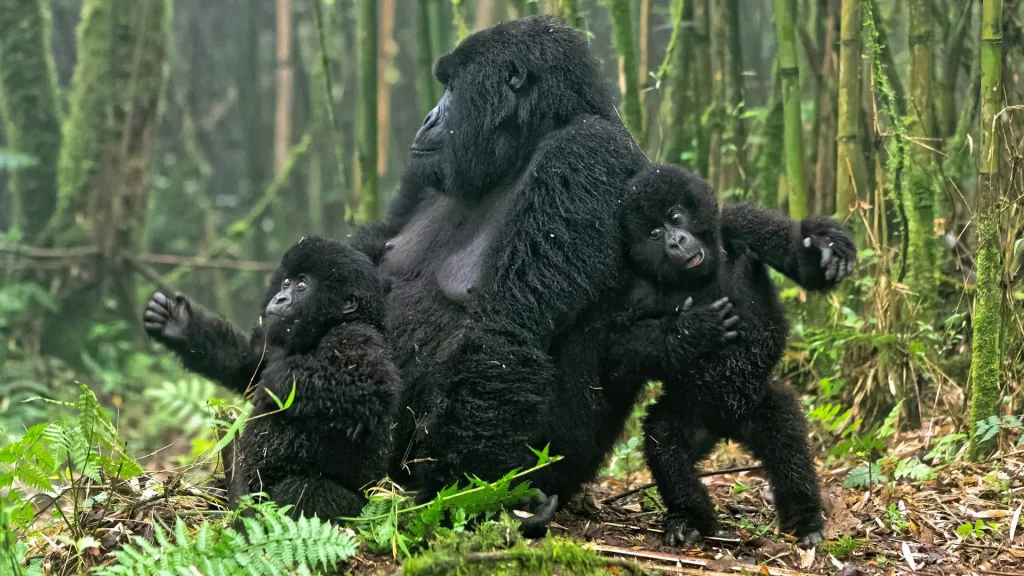
Gorillas live in social family groups that may contain a dominant silverback, adult females, juveniles and infants. Their daily activities include feeding, resting, grooming, travelling and interacting with other group members.
A gorilla encounter is particularly memorable because visitors can observe these behaviours within the animals' natural environment rather than in captivity.
Visitors normally report to the park headquarters near Kinigi for an early-morning briefing. Park personnel explain the rules, provide information about the assigned gorilla family and organise the tracking groups.
After the briefing, visitors travel to an appropriate trailhead and begin walking with authorised guides and rangers. Trackers help locate the gorilla families, but their movements can change from day to day.
The hike may involve muddy paths, steep slopes, bamboo forest, dense vegetation and uneven ground. Some groups are encountered after comparatively short walks, while others require more demanding hiking.
Once the gorillas are located, the standard viewing period is limited to one hour. Visitors must follow instructions concerning distancing, movement, photography and behaviour around the animals.
The standard international Rwanda gorilla trekking permit costs USD 1,500 per person, according to Rwanda's official tourism information. Special rates may apply to eligible visitor categories, and all tariffs should be checked at the time of reservation.
The minimum age for gorilla trekking in Rwanda is 15 years.
Permits are limited, and travellers should secure their preferred dates before finalising arrangements that depend on the trek.
Mountain gorillas are vulnerable to habitat disturbance and diseases transmitted by humans. Responsible tourism therefore requires strict health precautions and controlled visitor behaviour.
The conservation value of gorilla trekking tourism extends beyond the immediate wildlife encounter. Tourism revenue contributes to protected-area management and supports conservation-related economic activity.
Travellers can contribute by following ranger instructions, respecting wildlife distances, avoiding litter and supporting responsible local tourism services.
Although mountain gorilla safaris receive considerable international attention, Rwanda's wildlife extends across several distinct ecosystems.
Akagera supports large herbivores, predators and numerous smaller mammal species. Elephants, buffaloes, giraffes, zebras and antelopes occupy different habitats within the park.
Lions and leopards are present but can be difficult to locate, particularly in thick vegetation. Rhinoceroses may also be challenging to observe because of their movements and habitat preferences.
A Rwanda wildlife safari should be approached as an opportunity to explore a functioning ecosystem rather than as a checklist of guaranteed animal sightings.
Rwanda's forest habitats support chimpanzees, golden monkeys and several other primate species.
Golden monkeys are associated with the Virunga bamboo forests, while chimpanzees are a major attraction in Nyungwe.
The behaviour, habitat and tracking conditions of each species differ, making primate-focused travel particularly rewarding for visitors interested in animal ecology.
Rwanda's wetlands, grasslands, forests and mountains support extensive bird diversity.
Birdwatchers may encounter waterbirds in Akagera, forest specialists in Nyungwe and species associated with high-altitude habitats around Volcanoes National Park.
Smaller animals, insects, amphibians and reptiles are also important components of the country's biodiversity, although they often receive less attention than large mammals.
The best time to visit Rwanda depends on the experiences travellers want, rather than one universally ideal month.
Rwanda's climate is influenced by elevation and seasonal rainfall. Mountain forests are generally cooler and wetter than lower-altitude savannah environments.
June to September is commonly regarded as a relatively dry period and is popular for Rwanda gorilla trekking holidays.
Forest trails may be less muddy, although rainfall can still occur. These months are also attractive for wildlife viewing in Akagera, where seasonal conditions influence vegetation and animal movements.
December to February often provides another comparatively favourable travel period.
Visitors may experience suitable conditions for trekking, photography and general sightseeing, although weather remains variable.
March to May is typically associated with heavier rainfall. Forest vegetation becomes exceptionally lush, but trails may be slippery and outdoor activities more demanding.
Rainfall can also create atmospheric photographic conditions, particularly in mountain and rainforest landscapes.
October and November are generally wetter months. Gorilla trekking in Rwanda continues throughout the year, subject to park conditions and operational requirements.
Travellers should select their dates according to their interests, physical comfort, accommodation preferences and tolerance for wet-weather activities.
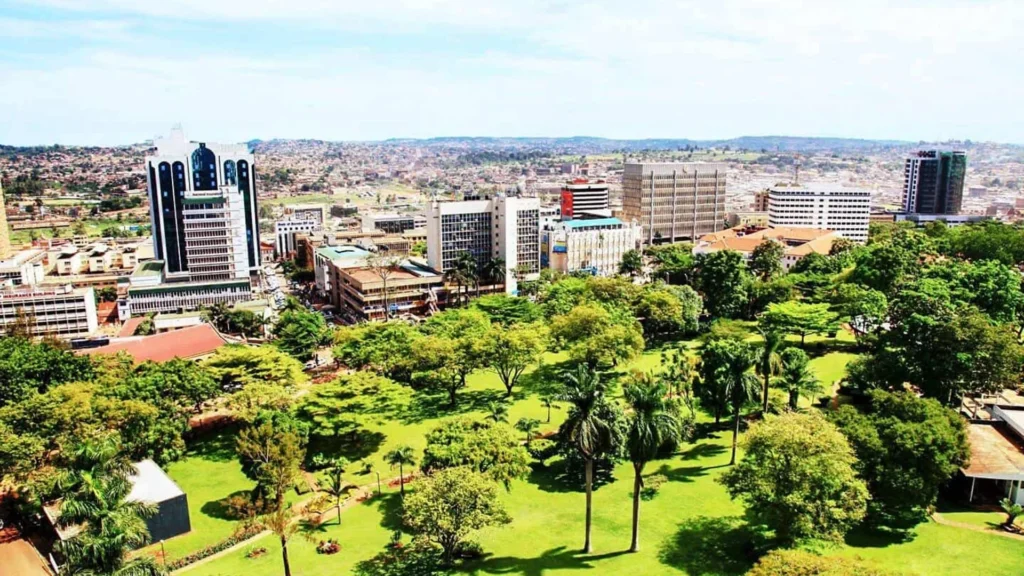
Kigali is the country's capital and principal international gateway.
Most overseas visitors arrive through Kigali International Airport before continuing to the national parks.
The city provides accommodation, restaurants, shopping facilities, cultural attractions and transport connections.
A visit to the Kigali Genocide Memorial offers important historical context for understanding Rwanda's past and the country's subsequent development. Travellers should approach the memorial with sensitivity and allow sufficient time for reflection.
Kigali also has galleries, markets, contemporary cultural spaces and restaurants that introduce visitors to different aspects of modern Rwandan life.
For safari planning, Kigali is particularly useful as a starting point for road transfers to Volcanoes National Park and Akagera.
Lake Kivu lies along Rwanda's western border with the Democratic Republic of Congo and forms part of the wider African Great Lakes landscape.
The lake is surrounded by hills, settlements and agricultural areas, creating a scenic contrast to the national parks.
Important lakeside destinations include Rubavu, Karongi and Rusizi, historically also associated with the names Gisenyi, Kibuye and Cyangugu.
Visitors can enjoy lakeside accommodation, guided boat excursions, selected water activities and cultural experiences.
The region is also relevant to travellers interested in coffee production, rural landscapes and the relationship between communities and the lake environment.
Lake Kivu is often used as a relaxation destination between wildlife activities, but it deserves attention as a cultural and geographical attraction in its own right.
Rwanda's compact size can make travel appear straightforward on a map, but its mountainous landscape affects road journeys.
Major roads connect Kigali with important tourism regions, while routes into rural areas and protected landscapes may involve narrower roads, steep gradients and slower travel.
The distance between destinations is only one factor in estimating journey times. Road conditions, weather, traffic, park access points and accommodation locations must also be considered.
Travellers planning Rwanda safari transport should prioritise realistic travel days rather than attempting to visit too many locations in a short period.
Private vehicles with experienced driver-guides are widely used for organised Rwanda safari tours.
They offer flexibility for photography, rest stops, luggage arrangements and route adjustments.
For Akagera, the suitability of the vehicle for game viewing and park conditions is especially important.
Public transport connects many towns, but it is less convenient for activities requiring early park briefings or access to remote trailheads.
Independent travellers should carefully research onward transport before booking accommodation outside major towns.
Rwanda's position makes it possible to combine the country with Uganda gorilla trekking, chimpanzee tracking and other East African wildlife experiences.
Border procedures, entry requirements and transport arrangements should be checked separately for each country.
Accommodation choice influences the comfort and efficiency of a Rwanda safari holiday.
Musanze and Kinigi are the main accommodation areas for visitors participating in gorilla trekking.
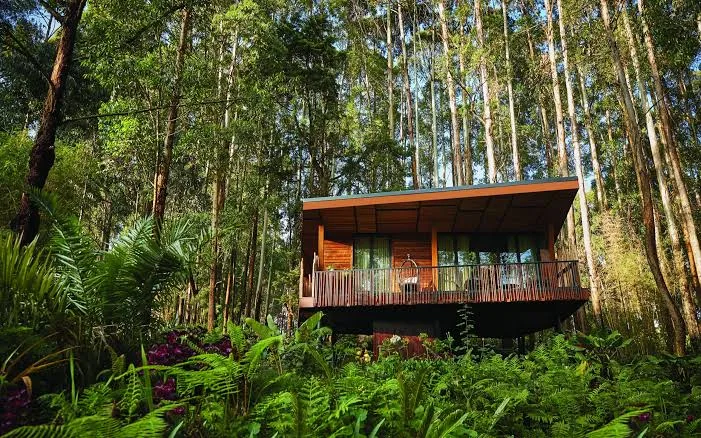
Properties range from simple guesthouses to high-end lodges with views of the volcanic landscape.
Proximity to the park briefing point is important because trekking activities normally begin early.
Akagera offers accommodation in and around the park, including safari lodges and camps.
Staying within the park can provide convenient access to wildlife activities, although location and gate arrangements should be checked carefully.
Nyungwe accommodation includes forest-edge properties and lodges in surrounding areas.
The location of a property relative to the relevant activity starting point matters, particularly for early chimpanzee tracking.
Kigali offers the widest variety of city accommodation, while Lake Kivu provides lakeside hotels, guesthouses and resorts.
Travellers should compare facilities, meal arrangements, location and transfer requirements rather than relying solely on accommodation category.
The total Rwanda safari cost depends on several factors, including park activities, accommodation, transport and travel duration.
For visitors undertaking gorilla trekking, the permit is a substantial expense.
Other costs may include national park fees, guiding, vehicle hire, fuel, meals, accommodation and optional experiences.
A private Rwanda safari may cost more per person for a solo traveller than for a small group sharing transport expenses.
Luxury accommodation can also significantly increase the total budget, particularly near Volcanoes National Park.
Travellers comparing quotations should confirm which services are included rather than judging value by price alone.
Rwanda's tourism industry is closely connected with conservation and protected-area management.
Gorilla conservation requires long-term habitat protection, scientific monitoring, veterinary support and cooperation with neighbouring communities.
Akagera provides another important example of conservation recovery, with the return of lions and rhinoceroses following sustained management efforts.
Forest restoration initiatives in Gishwati-Mukura demonstrate the importance of protecting habitats beyond the most famous national parks.
Visitors can support responsible tourism by choosing reputable guides, following park regulations, respecting communities and avoiding activities that disturb wildlife.
International travellers should confirm passport validity, visa eligibility, health requirements and insurance before departure.
Rwanda's official tourism website states that nationals of all countries are eligible for visas on arrival, although applicable fees, documentation and entry conditions should be checked for the traveller's nationality.
Visitors combining Rwanda with Uganda, Kenya or Tanzania must consider the separate immigration requirements of each destination.
Comprehensive travel insurance is strongly recommended, particularly for travellers undertaking hiking and other outdoor activities.
Yes. Rwanda offers a distinctive combination of mountain gorilla trekking, savannah wildlife, rainforest primates, scenic landscapes and cultural experiences.
Rwanda combines contrasting ecosystems within a relatively compact country. Its major attractions include mountain gorillas, chimpanzees, golden monkeys and Big Five wildlife.
Rwanda has four national parks: Volcanoes, Akagera, Nyungwe and Gishwati-Mukura.
Mountain gorilla trekking takes place in Volcanoes National Park in northwestern Rwanda.
Yes. Akagera National Park supports lions, leopards, elephants, buffaloes and rhinoceroses. However, seeing every species during one visit is not guaranteed.
Yes. Rwanda has established tourism infrastructure and organised wildlife activities. First-time visitors should still plan carefully around park locations, activity requirements and travel times.
Yes. Rwanda is a year-round destination, although rainfall and trail conditions vary seasonally.
No. Rwanda offers accommodation and travel arrangements across different budget categories. However, gorilla permits represent a substantial fixed cost for international visitors.
Yes. Rwanda and Uganda safaris are popular among travellers interested in mountain gorillas, chimpanzees and traditional wildlife viewing.
Difficulty varies according to terrain, weather and the location of the gorilla family. Reasonable fitness and appropriate footwear are recommended.
No. Gorillas live in their natural habitat and move freely. Tracking teams have extensive experience locating them, but wildlife encounters cannot be guaranteed.
A well-organised private safari with an experienced driver-guide is convenient for many visitors, particularly when combining several destinations.
Rwanda offers far more than a single wildlife attraction. Its volcanic mountains, rainforest ecosystems, savannah landscapes, lakes and cultural heritage create opportunities for a rewarding African travel experience.
Whether your interests include Rwanda gorilla trekking, Akagera wildlife safaris, Nyungwe chimpanzee tracking, birdwatching, conservation or broader East Africa safari travel, careful planning will help you appreciate the country's diversity.
Gorilla Rwanda Safaris assists travellers with destination advice, gorilla permits, accommodation, transport and personalised travel arrangements.
Contact our team to discuss your travel interests and discover how Rwanda's extraordinary wildlife and landscapes can become part of your next African adventure.